Table of Contents
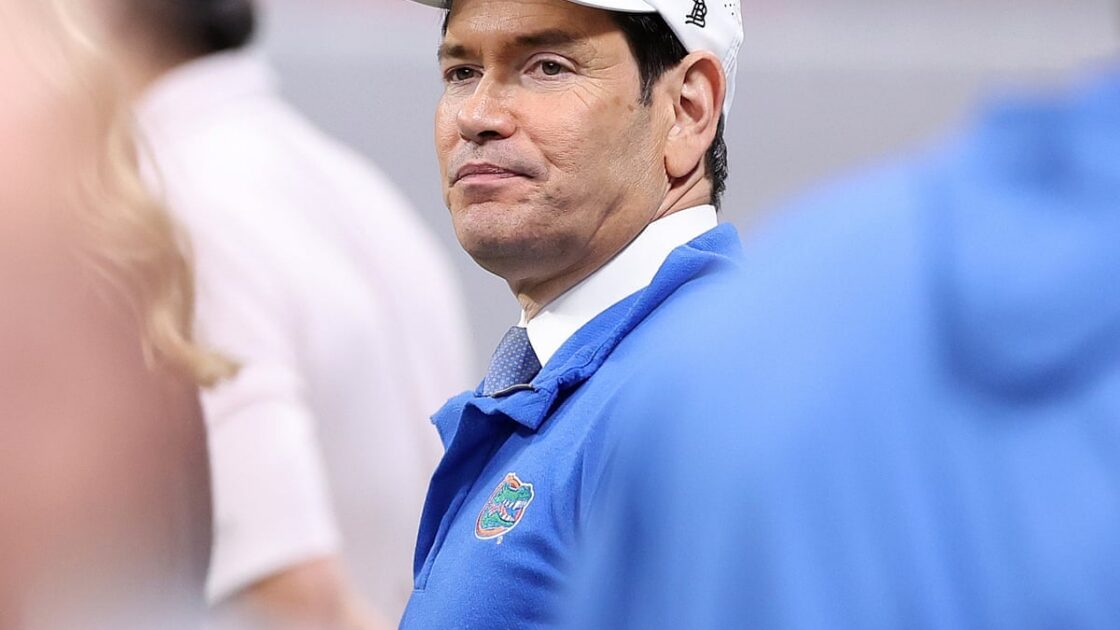
US Secretary of State Marco Rubio has drawn scrutiny for spending more than $1.2m of taxpayers’ money on frequent personal trips to watch the University of Florida’s football team play. Ethics watchdogs questioned the necessity of the top diplomat’s repeated travel between Washington DC and Gainesville, where his son Anthony plays as a running back for the Gators.
Investigation Findings and Travel Costs
An investigation by the Washington Post revealed that Rubio has attended at least 10 games over the last two seasons, including five during the fall. Out of 23 total trips made to Gainesville on military aircraft, 15 were classified as personal, as reported by the newspaper.
While security protocols restrict Rubio from flying commercially—a rule that also applies to the defense secretary and the directors of the FBI and CIA—his use of government transport reportedly outpaces his predecessors. Using published Department of Defense rates for the hourly cost of military aircraft, the Post calculated that these flights alone cost upwards of $1.2m.
On November 7, Rubio arrived in Gainesville aboard an Air Force C-37, a VIP transport aircraft, and watched from the sidelines as the Gators lost 23-7 to Oklahoma. Anthony Rubio did not participate in the game.
Defense and Reimbursement Questions
In a statement provided to the Post, Rubio defended his frequent trips to Florida, which often involved flying from Joint Base Andrews in Maryland to Homestead Air Reserve Base near Miami, followed by another flight to Gainesville. He stated that he intends to continue attending events that matter personally to him and his family.
Statistics indicate that Anthony Rubio, a senior and the third of the official’s four children, has appeared in only four competitive games across four years at the university, with two of those appearances coming this season. Data from ESPN shows he holds a career total of 14 carries for 75 yards and a single touchdown.
Government officials utilizing military transport are required to reimburse the public treasury for the cost of an economy-fare ticket, an amount significantly lower than the actual operational cost of the journeys. Both Rubio and the State Department declined to disclose how much he has reimbursed the public purse for the trips, according to the Post.
Watchdog Reactions and Precedent
Cynthia Brown, senior ethics counsel at the nonpartisan watchdog Citizens for Responsibility and Ethics in Washington (Crew), told the Post that the travel appears to be more of an optics concern than an explicit violation, though she added it warrants closer examination. She questioned whether such travel undermines the integrity of public service and the obligation to safeguard taxpayer funds.
Brown pointed out that while the actions may not be technically improper, Rubio acts as the sole decision-maker regarding the frequency and distance of his travel. The Post cited two former government officials stating that Antony Blinken, who served as secretary of state under Joe Biden, took personal trips on government planes only a couple of times per year.
The situation drew comparisons to a past inquiry involving Pete Biden, when Rubio himself—then serving as a Republican senator for Florida—demanded an investigation into then-transportation secretary Pete Buttigieg for using government jets for personal travel. The transportation department’s inspector general ultimately cleared Buttigieg of wrongdoing after finding he took eight trips totaling $59,000.
Defending the current secretary’s travel, assistant secretary of state Dylan Johnson stated that Rubio’s use of military aircraft guarantees operational continuity, government continuity, and constant access to secure communications. Johnson affirmed that Rubio will continue utilizing the transport.