Table of Contents
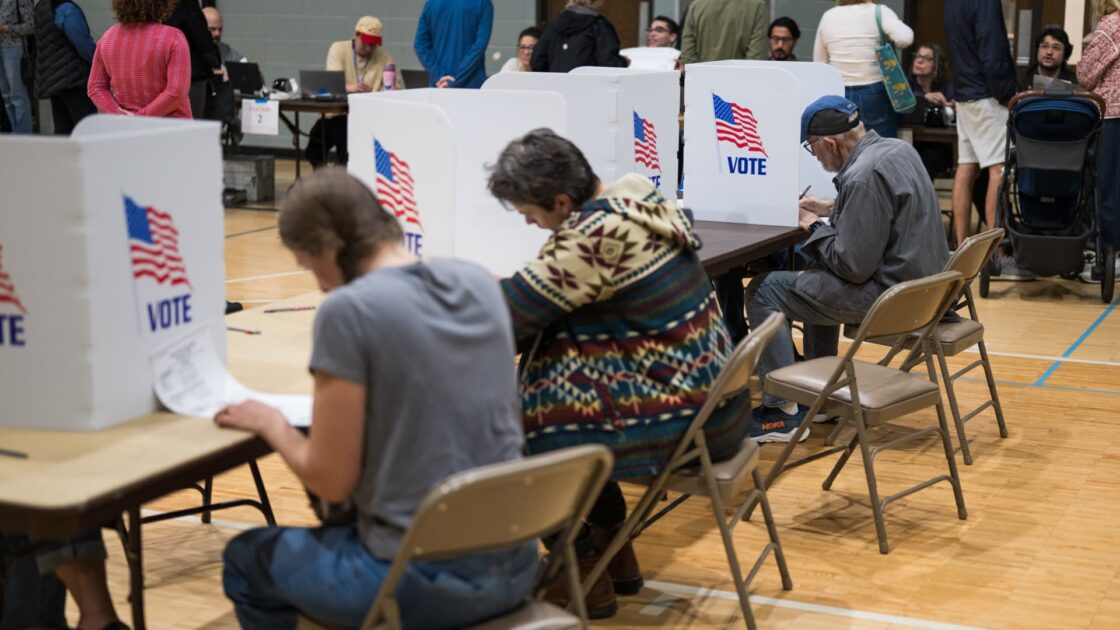
The outcome of Tuesday’s election carries broad market implications, particularly for municipal bonds. While attention has focused on congressional control, state-level decisions could create the most immediate repercussions for the muni market.
Red vs. Blue Tax Approaches
Ballot initiatives nationwide are set to change tax laws, creating a stark contrast between politically different states. Dan Close, head of municipals at Nuveen, stated that blue states are implementing graduated income tax structures to capture revenue from high earners, whereas red states focus on affordability by cutting property taxes.
In California, voters are considering a billionaire tax and a measure to make a temporary tax hike permanent on individuals earning over $371,000. Close explained that if tax increases pass, the tax exemption on municipal bonds will become more valuable. As a result, investors will likely seek shelter in the muni market, pushing bond prices higher.
Conversely, Florida voters are deciding on a proposal to increase the homestead exemption for non-school district property taxes, raising the exemption to $150,000 in 2027 and $250,000 by 2028. Tom Kozlik, head of public policy and municipal strategy at HilltopSecurities, noted that local governments would need to find alternative revenue sources or raise overall tax rates to compensate for the lost funds, which could require some revenue balancing.
Close added that credit research remains essential because property tax rollbacks could cause credit deterioration on a case-by-case basis.
Rising Debt Supply and Congressional Priorities
Voters are also weighing in on new state and local government debt authorizations, which could pressure a market already dealing with high supply levels. According to the Securities Industry and Financial Markets Association, year-to-date issuance through September reached $473.8 billion, representing a 7.8% increase over the same period the previous year, following a 2025 total of $587.3 billion.
Cooper Howard, director of fixed income research and strategy at the Schwab Center for Financial Research, stated that supply is the primary issue emerging from the election, noting that strong demand must continue to match the issuance volume. However, Howard pointed out that new supply enters the market gradually over a period of years.
Additionally, the composition of the next Congress could influence muni investors as lawmakers address national affordability issues. Kozlik indicated that tax and affordability initiatives expected in the first quarter of next year could affect housing, higher education, and public power financing.
Investment Opportunities
Close suggested that investors might find opportunities in states with proposed tax increases before the election. For example, Washington state voters will decide whether to repeal a 9.9% tax on individuals earning over $1 million annually that is scheduled to take effect in 2028. Close noted that anticipating the passage of tax measures could present buying opportunities in blue states.
Howard views municipal bonds as attractive for individuals in tax brackets of 24% or higher, citing solid fundamentals and strong credit quality, with roughly 70% of the broad muni index rated triple-A or double-A. Kozlik expressed a similarly positive outlook, recommending that investors focus on bonds rated AA or higher for a secure portfolio addition.