Table of Contents
Juneau, the capital of Alaska, faces significant logistical challenges in food distribution due to its geography. With a population of 35,000, the city is accessible only by water or air, forcing residents to rely on a unique blend of imported goods and deep-rooted traditions of community sharing to sustain themselves.
The Reality of Food Supply
While a commonly cited figure suggests that Alaska imports 95% of its purchased products, experts argue this statistic fails to account for the state’s robust non-commercial food economy. Meghan Stangeland, south-east food systems manager at the non-profit Ecotrust, notes that this number only reflects economically transacted goods. “There’s so much food economy in the state of Alaska that is not economically transacted,” she explained, highlighting the vital role of subsistence harvesting and sharing.
In 2014, the state estimated that Alaskans harvested roughly 46 million pounds of wild food. For many, particularly in rural areas, this is a matter of survival rather than just culture. Ricardo Worl, senior communications officer at the Sealaska Heritage Institute, emphasized that in Tlingit traditions, food is shared among extended families and elders. “When we harvest, even if it’s only a couple of fish, we’ll share the best parts, like the heads and the bellies, with grandparents or elders,” Worl said.
Challenges in Local Agriculture
Commercial farming in Juneau is hindered by a short growing season, acidic soil, and a lack of flat, non-marshy land. Joe Orsi, a retired research fishery biologist, is among the few local producers. He manages a third of an acre using terraced beds and a hoop house. Despite the labor-intensive nature of his work, Orsi views it as a blessing, noting that his annual income from the farm is modest.
Other local initiatives, such as John Krapek’s Juneau Greens, have adapted to these constraints by shifting to a subscription-based model. Krapek, who operates 100 hydroponic grow beds, found that direct relationships with customers and local chefs were essential for sustainability. “When you’re at our scale, we really have to sell every piece of lettuce to make it work,” Krapek stated.
Institutional Support and Education
To bridge the gap between local production and community needs, Ecotrust operates the Salt and Soil program, which functions as a food hub. Because federal nutrition programs often struggle to accommodate consignment-based marketplaces, the non-profit launched the “Healthy Foods = Healthy Families” initiative to provide local food to those who might otherwise lack access.
Educational efforts are also helping to preserve traditional knowledge. At the Sealaska Heritage Institute’s Indigenous Science Building, students learn both modern and traditional food preservation methods. Anya Nelson, the institute’s director of Indigenous science and higher education, noted that these practices reflect generations of observation. “There’s so much science in that,” she said, referring to traditional methods of preserving salmon without refrigeration.
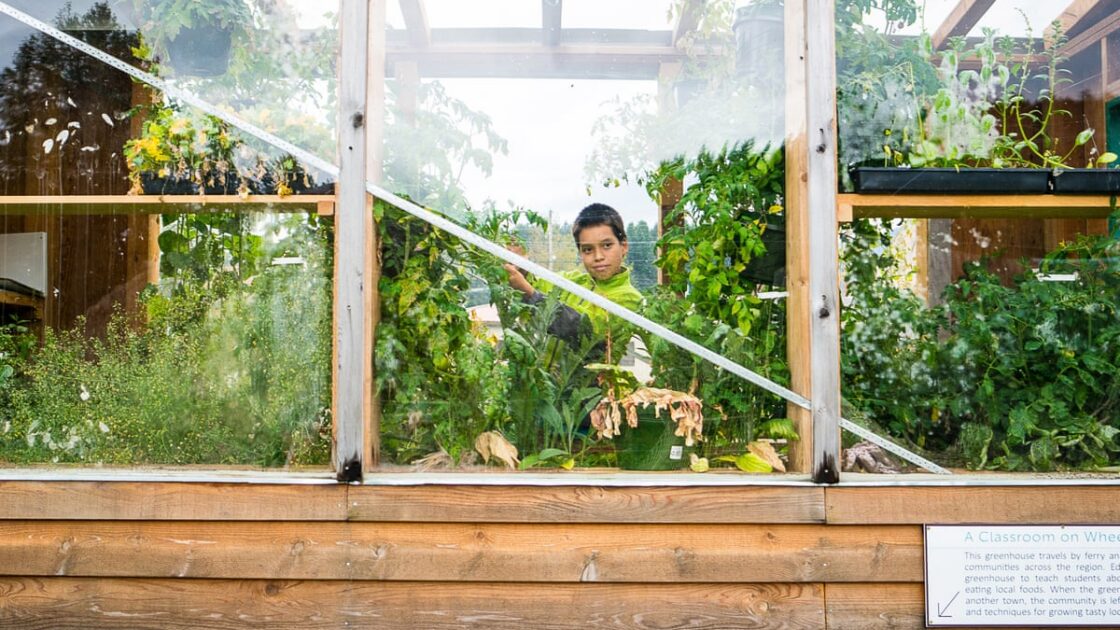
Meanwhile, programs like Discovery Southeast’s school gardens and Ecotrust’s mobile greenhouse, Moby, are fostering local interest in agriculture. Joel Bos, who runs the school garden program, observed that the act of sharing the harvest is what encourages student participation. As these programs continue, many communities that have hosted the mobile greenhouse have gone on to establish their own permanent growing structures.