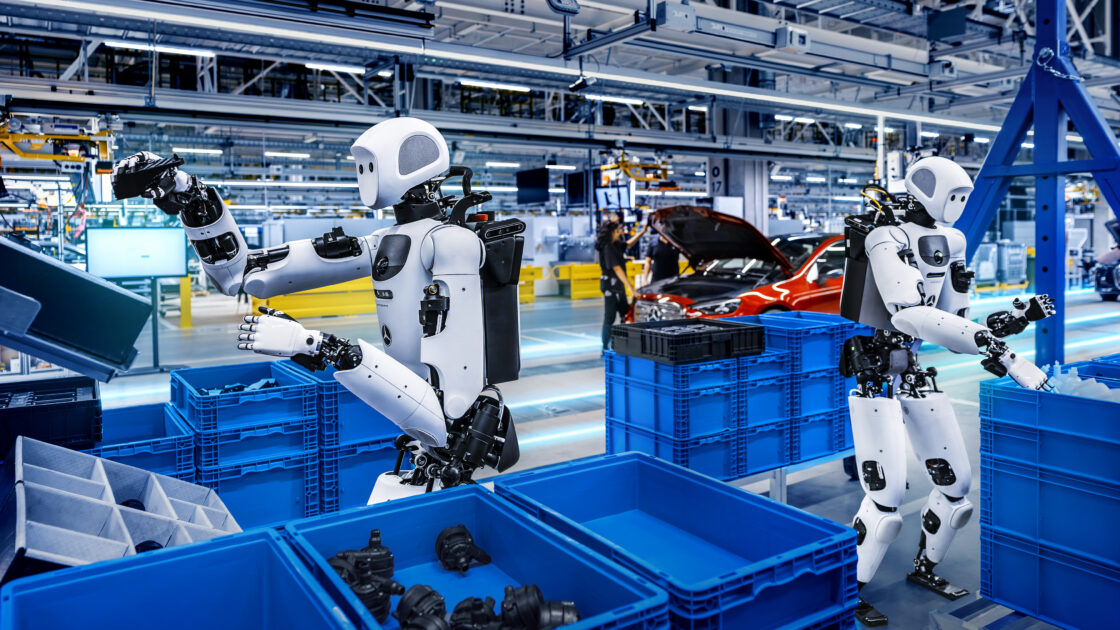
Google DeepMind has introduced a new generation of its AI-powered Gemini Robotics platform, marking a significant step toward human-level real-world task execution. Version 2.5 has already been tested in actual factory environments and is accompanied by an open-source safety benchmark.
Advanced Layers and Enhanced Dexterity
The physical AI platform utilizes multiple computational layers between user commands and physical actions. Gemini Embodied Reasoning acts as the vision-language model, processing instructions and live video feeds to formulate action plans. Meanwhile, the vision-language-action component, Gemini Robotics 2.5, generates the specific movements for robot actuators.
DeepMind reports that the updated model excels in high-dexterity assignments, having been tested across more than 200 activities such as serving food with tongs and handling laboratory pipettes. Demonstrations showed Apptronik’s Apollo 2 humanoid robot utilizing the software to tie a bow using its five-fingered hands, successfully manipulating a deformable object—a notoriously difficult challenge for robotic systems.
Real-World Factory Testing
In laboratory evaluations, Gemini Robotics 2.5 achieved a 30 to 100 percent higher success rate and operated 20 to 30 percent faster than its predecessor. To test these capabilities outside controlled environments, Google collaborated with Apptronik and Mercedes-Benz.
During trials in several European factories, Gemini-powered Apollo 2 robots successfully kitted automotive parts, reaching a 96 percent success rate.
DeepMind director Kanishka Rao noted that closing the remaining four percent gap to match human reliability in repetitive tasks will present a steep road ahead.