Table of Contents
Global stock markets experienced a broad decline on Tuesday, driven by ongoing volatility in the technology sector and uncertainty surrounding Nvidia following the resignation of CEO Jensen Huang. Major indices in the U.S., Europe, and Asia-Pacific retreated as investors weighed economic data, central bank policies, and corporate developments.
Market Performance and Tech Sector Volatility
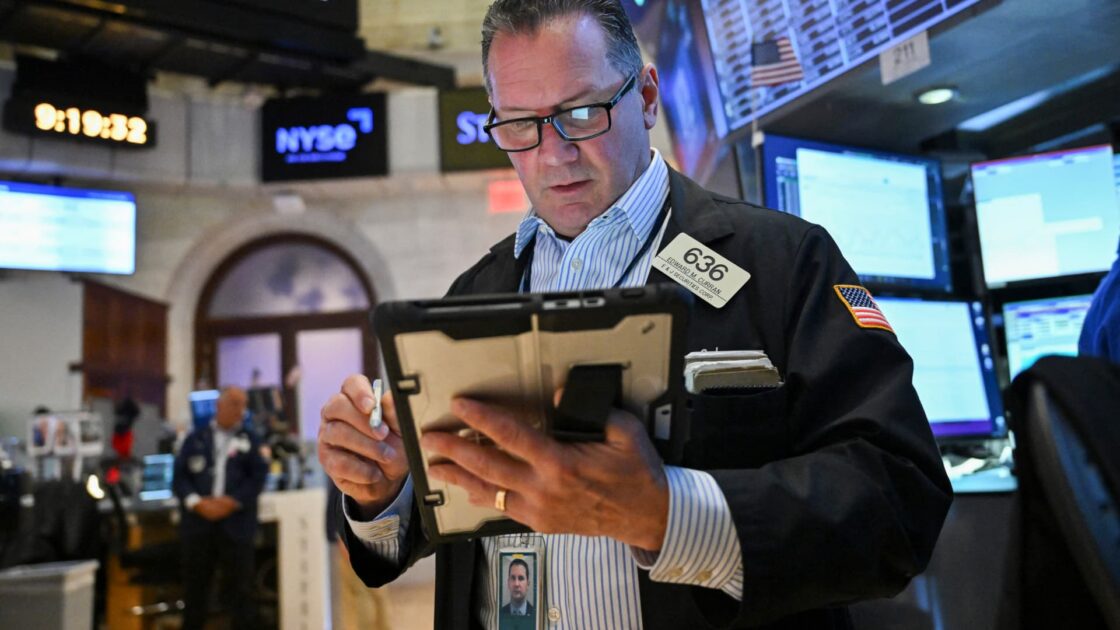
U.S. equities opened lower on Tuesday, with the Dow Jones Industrial Average slipping 0.6% or 303 points, while the S&P 500 and Nasdaq Composite fell 0.3% and 0.2%, respectively. In Asia, the Kospi in South Korea dropped 2.59%, and Japan’s Nikkei 225 declined 1.34%. European markets also saw a negative start, with Germany’s DAX down 0.67% and the U.K.’s FTSE 100 falling 0.64%.
Nvidia shares remained under pressure, trading slightly lower in premarket deals. Investor Steve Eisman noted on CNBC’s “Squawk Box” that “neocloud” stocks, which rely on borrowed funds for data centers, are facing significant risks due to the fallout from the Nvidia situation. Meanwhile, Morgan Stanley analyst Erik Woodring identified Nvidia as the most “under-owned” large-cap tech stock as of the end of the third quarter, though he suggested Apple could now hold that position given recent share price movements.
In other tech news, sources told CNBC that Nvidia has warned customers that new legislation regarding remote access to its artificial intelligence chips by Chinese companies could lead to U.S. legal action. Additionally, Anthropic is expected to price its upcoming initial public offering above its proposed range of $70 to $78 per share, according to sources speaking to CNBC.
Economic Data and Central Bank Policy
In the United States, the Commerce Department reported that retail sales rose 0.2% in October, meeting expectations, though a 1.6% decline in motor vehicle sales impacted the headline figure. Import prices increased by 1.1%, exceeding the 0.7% forecast. St. Louis Federal Reserve President Alberto Musalem suggested that the central bank might need as many as four interest rate hikes in the coming months to effectively curb inflation, noting that current policy is not sufficiently restrictive.
In the United Kingdom, the Office for National Statistics reported that annual wage growth slowed to 3.5% for the July-to-September period. Market pricing indicates a 90% probability of a quarter-point interest rate hike by the Bank of England in December. Meanwhile, the European Commission upgraded its growth forecast for the euro area to 1.4% for 2026, despite rising inflation pressures and ongoing energy market disruptions.
Corporate Developments and Global Trends
Home Depot shares fell nearly 3% on Tuesday. Despite beating third-quarter earnings and revenue estimates, the retailer provided a conservative outlook for the holiday quarter, citing housing headwinds and cautious consumer sentiment. In China, the KWEB internet ETF hit its lowest level since November 2022, with major companies like Alibaba, Bilibili, and Kingsoft Cloud reaching 52-week lows.
Deutsche Bank shares dropped 6% following reports from media outlets, including the Financial Times, regarding leaked internal documents. The documents detailed the bank’s handling of problematic clients, including allegations of processing $600 million in suspicious payments linked to Jeffrey Epstein. In a statement to CNBC, Deutsche Bank emphasized that the matters date back many years and that the institution has undergone a fundamental transformation since 2018.
Oil prices declined on Tuesday, with Brent crude falling 0.71% to $92.44 a barrel, as concerns over a global supply surplus outweighed geopolitical tensions in the Middle East. The International Energy Agency recently projected that the market would return to a surplus in the fourth quarter.
Berkshire Hathaway’s equity portfolio value increased by approximately $1.2 billion this quarter through Nov. 16, according to estimates from Keefe, Bruyette and Woods. This follows the conglomerate’s recent moves to increase its stake in Delta Air Lines while reducing its position in Bank of America.