European leaders failed to break a deadlock over the bloc’s next long-term budget on Thursday. The outcome leaves negotiators under pressure to meet their year-end target before a busy 2027 election cycle complicates matters further.
Budget proposals and divisions
National leaders remain divided over the European Union’s next long-term budget, which establishes spending priorities and limits from 2028 to 2034. The plan requires unanimous approval from all 27 member states alongside a majority vote from the European Parliament. Representatives met on Wednesday and Thursday to evaluate a revised proposal from European Council President António Costa featuring a spending plan of 1.58 trillion euros ($1.73 trillion), marking a 10% reduction from original proposals for the Multiannual Financial Framework, or MFF. These talks take place against rising government borrowing costs, inflation, sluggish growth, and growing budget deficits across the continent. Failing to meet the year-end deadline risks worsening the political deadlock surrounding the discussions.
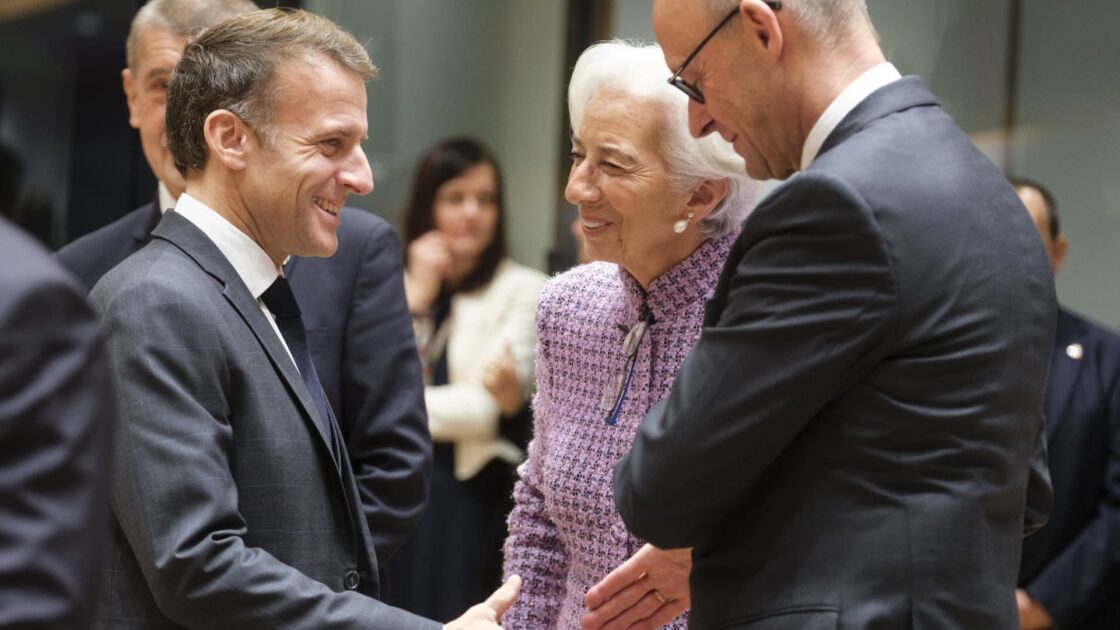
Following a 12-hour summit in Brussels on Thursday, budget talks featured walk-outs as conflicts arose regarding spending priorities and aid for Ukraine, as reported by the BBC. A European Commission spokesperson was unavailable for comment on Thursday. German Chancellor Friedrich Merz told reporters that the discussions brought new movement toward reducing the overall budget size, and leaders will meet again in mid-December. He stated that the European Union consists of 27 member states rather than 23 or 24. In September, Merz and the leaders of Denmark, the Netherlands, Austria, Finland, and Sweden asserted that a 2-trillion-euro proposal needed a reduction of several hundred billion euros. The six nations, financing nearly 40% of all budget contributions, urged in a letter to Costa and Irish Taoiseach Micheál Martin that funding focus on defense, competitiveness, innovation, and migration control.
Costa described the revised budget plans as realistic when presenting them last week, noting that the 10.2% reduction still maintains a 120% increase in competitiveness funding and a 232% boost for defense compared to current allocations. Following Thursday’s meeting, Costa stated that participants failed to reach an agreement, noting that while some member states demanded further reductions, most opposed them and others sought to reverse previous cuts. Romanian MEP Siegfried Mureşan criticized the council’s approach on Wednesday, stating that the parliament seeks greater investments while the council proposes cuts, and warning that prime ministers cannot dictate an insufficient budget to the European Parliament.
Upcoming elections and regional risks
Key EU economies including Spain, Poland, and Italy face elections over the next 12 months, while France’s spring presidential election remains a primary concern for regional leaders. Marine Le Pen, a far-right candidate leading in French presidential polls, previously advocated for France to exit the EU and reduce its budget contributions. Incumbent French President Emmanuel Macron emphasized on Thursday that his window to influence EU spending is closing. According to France 24, Macron told reporters after the talks that after December 31, he will lack the political and democratic standing to reopen and conclude budget discussions due to the proximity of the French presidential election.
France, the EU’s second-largest economy behind Germany, faces pressure to significantly reduce its 5.1% national deficit toward the EU’s 3% guideline. The country is concurrently navigating months of protests, riots, and strikes regarding education funding and a cost-of-living crisis.