Table of Contents
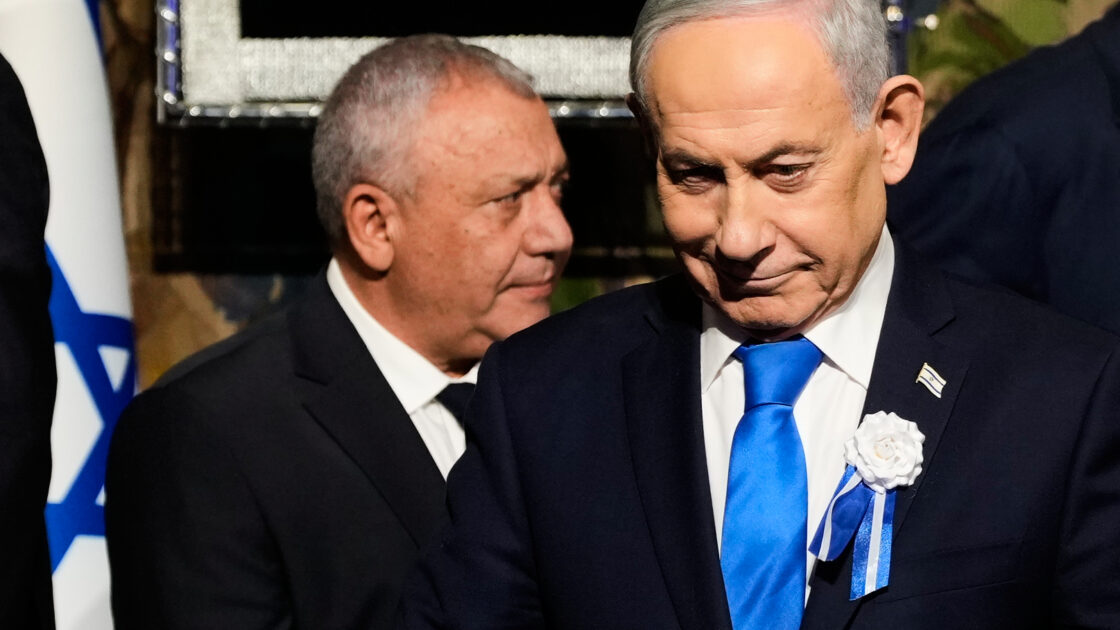
Israel’s caretaker Prime Minister Benjamin Netanyahu has renewed his call for a unity government with opposition leader Gadi Eisenkot. Netanyahu argues that keeping him in power through such a coalition is essential for Israel’s national security.
Netanyahu’s Appeal and Eisenkot’s Response
In a video statement, Netanyahu shared that his meeting with Eisenkot strengthened his belief in the necessity of a national unity government. He stated that this coalition could eliminate the Iranian threat permanently, claiming that Tehran would not hesitate to use nuclear weapons against Israel. Eisenkot, leader of the Yashar party and the person tasked by President Isaac Herzog to form the next government, dismissed Netanyahu’s appeal as a bluff. As reported by Al Jazeera, Eisenkot stated that these tricks do not work on him or the citizens of Israel, though he did confirm that Yashar and Netanyahu’s Likud Party were discussing the shared government proposal.
Parliamentary Numbers and Coalition Options
During the October 27 election, Eisenkot’s four-party bloc secured 48 of the 120 Knesset seats, while Netanyahu’s right-wing and religious bloc won 53. Two Palestinian-led factions, the Joint List and Ra’am, captured a combined 19 seats. Eisenkot’s bloc recently demonstrated its potential by utilizing the backing of both Palestinian-led factions to win a 63-to-50 vote approving the Arrangements Committee and setting up temporary committees for finance, foreign affairs, and defense. Together with the Arab-led factions, Eisenkot’s bloc holds 67 seats.
Another pathway is a minority government supported by Ra’am’s eight lawmakers, which would give Eisenkot 56 votes to Netanyahu’s 53 if the Joint List abstains. However, allies within Eisenkot’s alliance hold differing views on working with Arab parties. Yasser Manna, a researcher at the Jerusalem Center for Studies on Israeli Affairs, told Al Jazeera that this opposition restricts Eisenkot’s options, elevating the importance of negotiations with ultra-Orthodox parties like Shas and United Torah Judaism. Partnering with both ultra-Orthodox factions would bring Eisenkot’s bloc to the 61-seat majority threshold.
Navigating Trust and Leadership Obstacles
President Herzog has given Eisenkot until December 6 to form a government, with a potential 14-day extension. Eisenkot has stated he is open to members of Likud and the Religious Zionist Party if they back a government under his leadership and program. Daniel Levy, former Israeli peace negotiator and president of the US/Middle East Project, told Al Jazeera that meetings during coalition formation serve political leverage and spin. Eisenkot served as an observer in Netanyahu’s war cabinet during the first eight months of the war on Gaza before leaving in June 2024. Manna noted to Al Jazeera that a deep crisis of trust exists between the two leaders despite their similar security approaches.
An early test is scheduled when Eisenkot’s allies attempt to replace Knesset Speaker Amir Ohana with Yashar lawmaker Matan Kahana. Even with policy alignment, the question of leadership remains a primary hurdle, as Eisenkot has rejected a rotation arrangement with Netanyahu. While caretaker status allows Netanyahu to wait out the mandate and exploit divisions, Manna told Al Jazeera that a renewed security crisis could intensify pressure for a national government or alter coalition priorities.
If talks with ultra-Orthodox parties fail, Levy told Al Jazeera that Eisenkot could prompt his allies to choose between accepting Palestinian-led party support or leaving Netanyahu in power. Alternatively, Eisenkot might propose a temporary government solely designed to remove Netanyahu and pave the way for new elections.