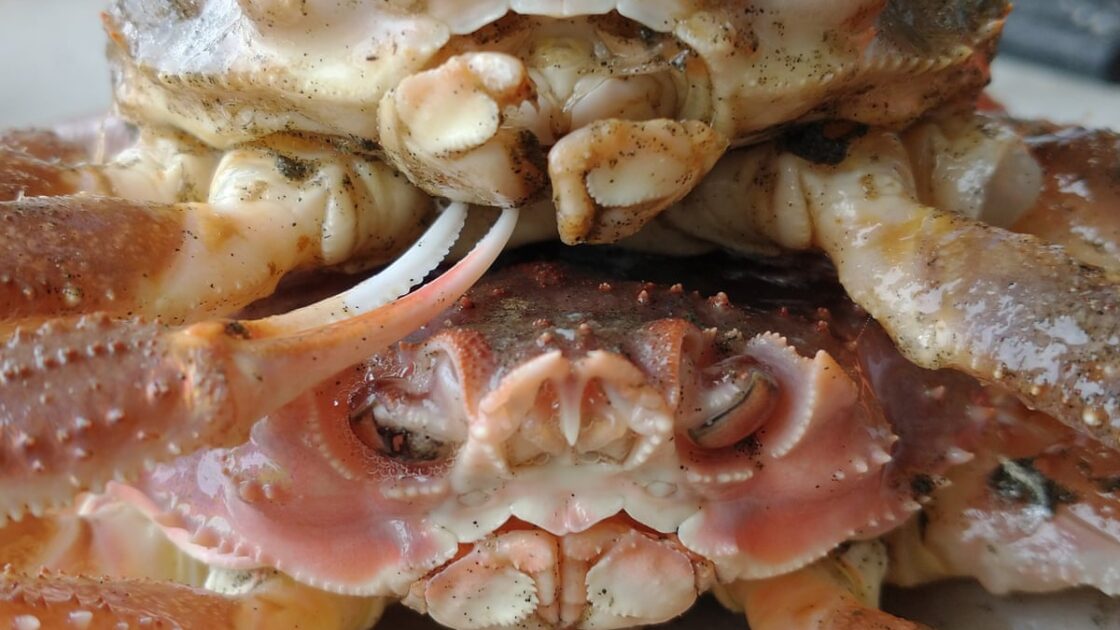
A severe marine heatwave in the Bering Sea has decimated snow crab populations and triggered a massive surge of hybrid crabs that currently lack specific fishing quotas. Researchers aboard the trawler Alaska Knight discovered that catches off the coast of Alaska are now dominated by hybrids possessing physical characteristics of both snow crabs and tanner crabs.
Unprecedented Rise of Hybrid Crabs
These hybrid specimens display a unique mix of features, including a squashed M-shaped mouth and a combination of red and green eyes inherited from their parent species. Erin Fedewa, a biologist at the National Oceanic and Atmospheric Administration’s (NOAA) Alaska Fisheries Science Center, noted that while occasional hybrids were once rare in overlapping habitat ranges, scientists recorded more than 13 times the historical average in 2025.
The 2026 survey confirmed that this upward trend is continuing, with commercially sized adult hybrid males now outnumbering snow crabs. This phenomenon stems from an extreme marine heatwave in 2018 and 2019 that left the Bering Sea nearly ice-free by early spring. The resulting mass starvation caused the death of approximately 10 billion snow crabs, marking one of the largest marine mass mortality events on record.
According to research by Fedewa and her colleagues, the disappearance of snow crabs—which compete with and potentially prey upon younger crabs—removed ecological barriers and allowed the hybrids to thrive. Although snow crabs initially showed signs of recovery after the fishery was closed between 2022 and 2024, the latest survey indicates that progress has stalled.
Fisheries Management Challenges
The sudden abundance of hybrids has created complications for regulators because the animals are not officially classified as a distinct species. Ben Daly, regional supervisor at the Alaska Department of Fish and Game, explained that under current legal definitions, an animal is classified strictly as either a snow crab or a tanner crab based on eye color and mouth shape.
While the hybrids can be sold legally as snow crabs, they consume portions of the conservative catch quotas still in place following the population collapse. Fishing fleets are pushing for separate quotas to capitalize on the abundant hybrids, but managers warn against potential overharvesting if fleets inadvertently target remaining pure snow crabs instead. The North Pacific Fishery Management Council plans to hold a meeting in January to discuss potential regulatory adjustments with scientists, managers, and stakeholders.
Meanwhile, scientists have transported live hybrids to laboratories to investigate their ecology, including whether the hybrid generation can reproduce. Experts suggest that such climate-driven hybridization events may occur more frequently worldwide as marine heatwaves become more common, highlighting the need for greater adaptability in traditional fisheries management systems.