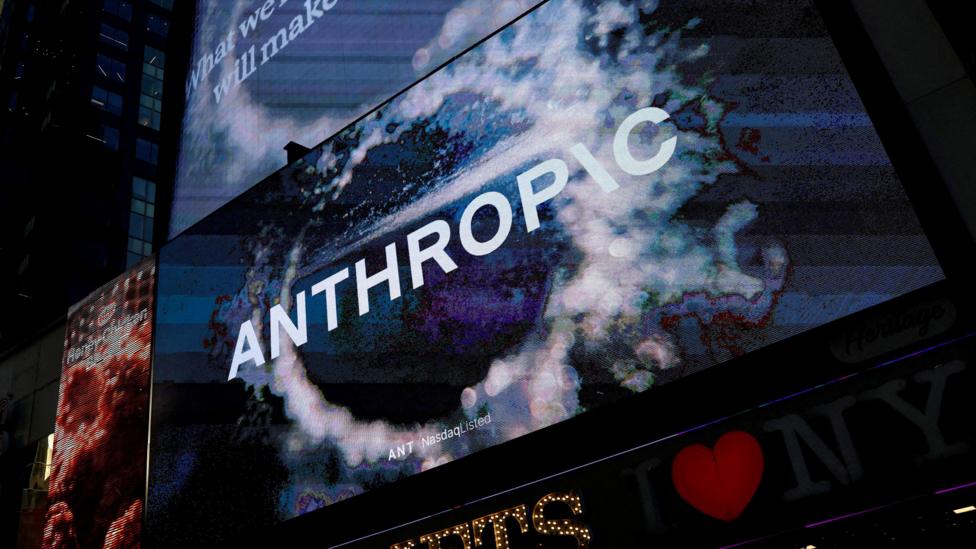
An Anthropic employee and mathematician stated that he utilized the company’s artificial intelligence chatbot to prove the renowned Riemann hypothesis. Levent Alpöge announced this on Friday, shortly after Anthropic’s public stock market debut, explaining that he spent about six weeks employing the Claude chatbot to develop a comprehensive mathematical proof.
A Historic Mathematical Claim
Should the proof be verified as accurate, it would rank among the most important discoveries in history, with Alpöge characterizing it as the dawning of something much greater across science. The announcement follows recent months where artificial intelligence companies like OpenAI have revealed numerous solutions to major advanced mathematics problems that have baffled researchers for decades. The Riemann hypothesis proof was developed using an unreleased version of Anthropic’s Claude.
Dating back nearly 170 years, the hypothesis focuses on prime numbers and is widely regarded as the most famous problem in mathematics due to its extreme complexity. Named after mathematician Bernhard Riemann, the hypothesis suggests that prime numbers follow a specific order along the number line. Because prime numbers form the foundation of higher mathematics, any breakthroughs concerning them carry widespread implications.
Alpöge mentioned that he contacted Anthropic CEO Dario Amodei on Sunday to inquire about the proper way to disclose the finding. Acknowledging the awkward timing surrounding the company’s stock listing, Alpöge noted that he finished the work as quickly as possible and felt he could not wait any longer to share it.
Verification and Broader Industry Context
The complete proof, written in a computer language called Lean used for validating mathematical proofs, spans more than 250,000 pages. Prominent mathematician Terrance Tao stated on Friday that confirming the proof will take considerable time. Tao explained that the digestion process will be lengthy, though having a human author available to help with communication will assist the task, unlike earlier AI-driven proofs this year that lacked direct human involvement.
In September, OpenAI reported that employees using an unreleased version of its technology solved part of a notoriously difficult problem involving fluid motion known as the Navier-Stokes equations in 88 hours. That project deployed over 10,000 autonomous computer-programmed bots as part of an artificial intelligence training exercise. The Navier-Stokes proof released by OpenAI remains unverified and sparked criticism from academic and higher mathematics groups regarding the application of artificial intelligence to solve complex equations.
Anthropic has also reported other advancements and solutions in the fields of mathematics and physics. Meanwhile, a coalition of mathematics scholars criticized artificial intelligence companies for publicizing major solutions merely to demonstrate the sophistication of their commercial products, arguing that such announcements harm the science of mathematics. The scholars stated in a joint letter that intellectual work faces a general threat due to a misalignment between how artificial intelligence is used and its original purpose.
Following those developments, OpenAI released what it described as solutions, proofs, or significant progress concerning 372 additional outstanding higher mathematics problems. Expert reviewers will require months, if not longer, to examine those claims and determine their validity.