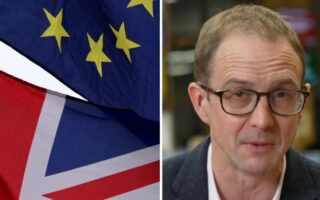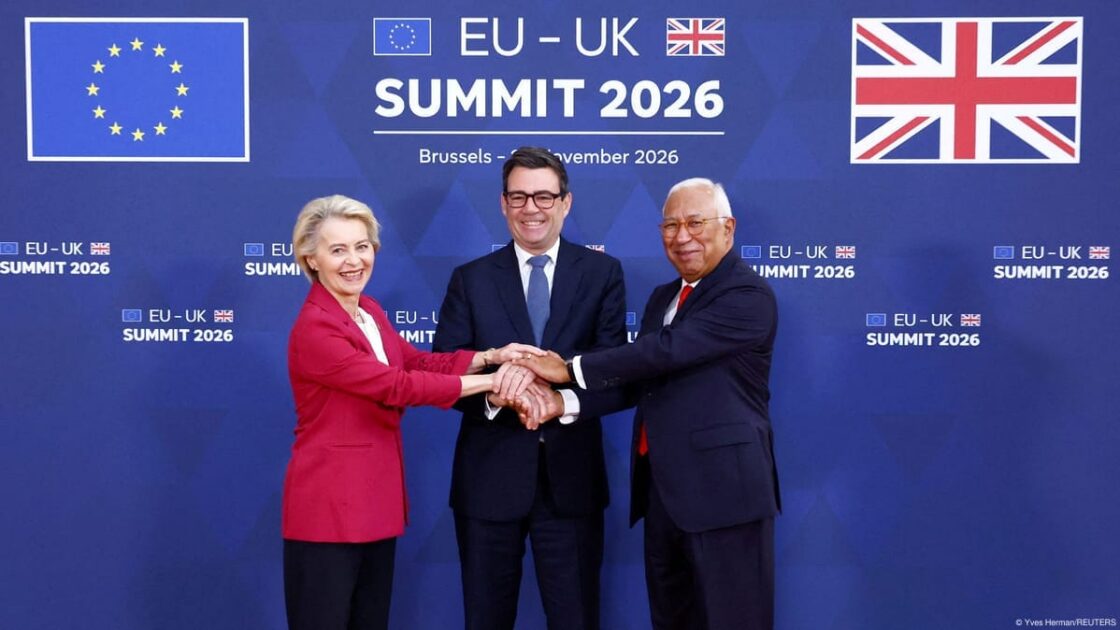
European Union top officials and UK Prime Minister Andy Burnham announced significant agreements on trade and youth mobility during a summit in Brussels on Friday. The pact marks a potential first step in rebuilding relations a decade after Britain voted to leave the bloc.
A Turning Point for UK-EU Relations
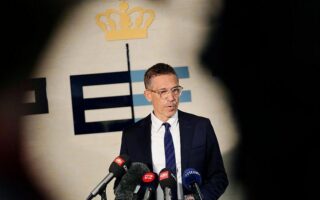
During the delegations’ meeting, Burnham described the arrangement as a landmark agreement, while European Commission President Ursula von der Leyen characterized it as a turning point in bilateral relations. Burnham stated at the joint press conference that it was a good day for Britain and for Europe. European Council President Antonio Costa noted that while the EU and UK drive on opposite sides of the road, they are heading in the same direction.
Burnham emphasized that the initiatives were designed with younger generations in mind, stating that Brexit stripped opportunities from young people and that leaders must open new horizons. Von der Leyen added that the youth experience project would foster lifelong friendships and noted that Britain will rejoin the Erasmus+ program, remarking that Europe missed them.
Von der Leyen described the trade agreement as a two-way street providing more choices for customers, and highlighted that the carbon market agreement will cut emissions and drive investments into cleaner industries. According to Deutsche Welle: DW.com – Top Stories, Burnham cautioned that the current agreements represent the limit of what can be achieved in the present Parliament given implementation requirements. Earlier in September, Burnham expressed intentions to seek political consensus on future EU relations and suggested potentially campaigning to rejoin the bloc during the next election.
Key Details of the Agreements
The summit produced three main agreements aimed at simplifying food exports by reducing red tape, linking UK and EU emissions-trading systems, and establishing a youth experience scheme. The youth program permits 100,000 individuals under the age of 30 from each side to live, study, work, or travel in each other’s territory for up to three years without standard visa restrictions.
Negotiators failed to resolve university tuition fees for EU students in Britain, which the bloc viewed as a deal-breaker. The EU urged the UK to lower tuition fees for EU students to match domestic rates. Burnham confirmed further discussions will follow on tuition fees, and von der Leyen expressed confidence that a solution will be found in the coming month.
To ease post-Brexit trade, the food agreement eliminates certificates and border checks for food and animal products, while Britain agreed to align more closely with EU animal health and food safety standards. Linking the emissions-trading systems allows mutual recognition of carbon allowances and exempts traded goods from carbon border taxes.
Data from the AFP news agency cited by Deutsche Welle: DW.com – Top Stories indicates that London projects the deal could increase the British economy by 3.8 billion pounds annually and exempt 6.5 billion pounds worth of steel, aluminum, and other industrial goods from extra taxation. Additionally, leaders agreed to institute a structured dialogue regarding migration, covering engagement and returns concerning third countries, alongside formal talks on economic security and supply chain cooperation.
Polling data from YouGov shows that a majority of surveyed individuals have considered Britain’s decision to leave the EU wrong since mid-2022, with the percentage rising to a record 60% in September.