Table of Contents
The German automotive sector is facing a period of intense instability following recent announcements from industry giants Mercedes-Benz and Volkswagen. As both companies signal potential site closures and investment freezes, concerns are mounting regarding the future of Germany’s status as a global manufacturing powerhouse.
Mounting pressure on domestic production
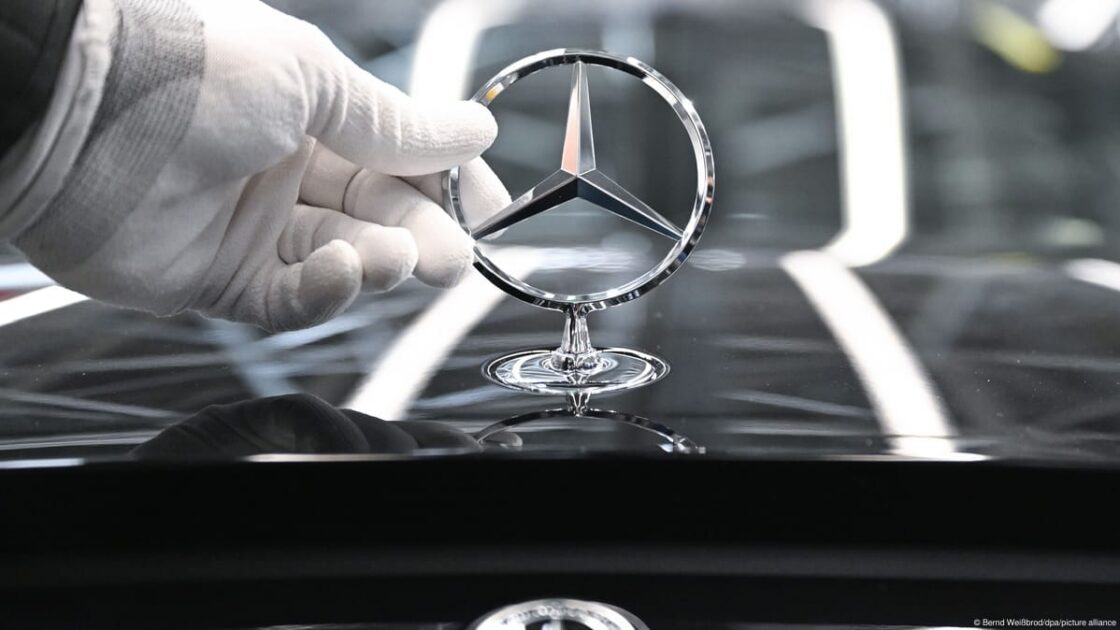
Mercedes-Benz recently announced it would halt further investments at its German factories, citing prohibitively high operating costs. In an internal interview, production chief Michael Schiebe stated that the company is now compelled to evaluate which domestic sites might need to close if the current cost structure cannot be improved. This development followed Volkswagen’s decision to scrap plans for modernizing its primary facility in Wolfsburg.
The industry is currently grappling with fierce competition from Chinese manufacturers and a broader need for restructuring. Volkswagen, for instance, is reportedly aiming to cut 100,000 jobs globally by 2030, with four of its German plants under consideration for potential closure. Thomas Puls, a senior economist at the Cologne Institute for Economic Research (IW Köln), told DW that while the situation is painful, the industry is burdened by roughly one-third overcapacity that must be addressed.
The challenge of speed and innovation
Experts suggest that Germany’s industrial strategy is struggling to keep pace with global rivals. Achim Kampker, an electric mobility engineering professor at RWTH Aachen University, told DW that Germany is currently “too slow,” hindered by excessive bureaucracy and complex business structures. According to data from the consultancy Roland Berger, Chinese automakers can bring new models to market in approximately 20 months, compared to the 48 to 60 months required by German firms.
Furthermore, the cost disparity is significant. Production costs at German plants are estimated to be between €3,500 and €5,000 per vehicle higher than those in Eastern Europe. Beyond these operational hurdles, a report by PwC suggests that German carmakers may be suffering from a “false sense of security.” The report emphasizes that the industry must urgently separate its internal combustion engine business from its electric vehicle operations and rethink its workplace culture to remain competitive.
Strategic shifts for future viability
PwC Germany’s global automotive leader, Harald Wimmer, warned that the next 12 to 18 months will be critical for the industry’s long-term survival. He noted that top Chinese manufacturers are increasingly benchmarking themselves against consumer electronics firms, such as Xiaomi, which has successfully entered the electric vehicle market. Wimmer cautioned that relying solely on traditional industry frameworks is a strategic error that could prove irreversible.
Despite these challenges, domestic production remains relatively resilient. The German Association of the Automotive Industry (VDA) projects that the sector will produce approximately 4.11 million vehicles this year, a decline of only 1% compared to the previous year. However, analysts warn that Germany must avoid the path taken by Italy in the early 2000s, where political and union resistance to cutting overcapacity led to a long-term decline in production.
As German automakers navigate these difficult negotiations, the focus remains on whether they can implement necessary reforms before the window for change closes. Kampker warned that failure to address these systemic shortcomings will likely result in further site closures and a significant migration of industrial investment and employment away from Germany.