Table of Contents
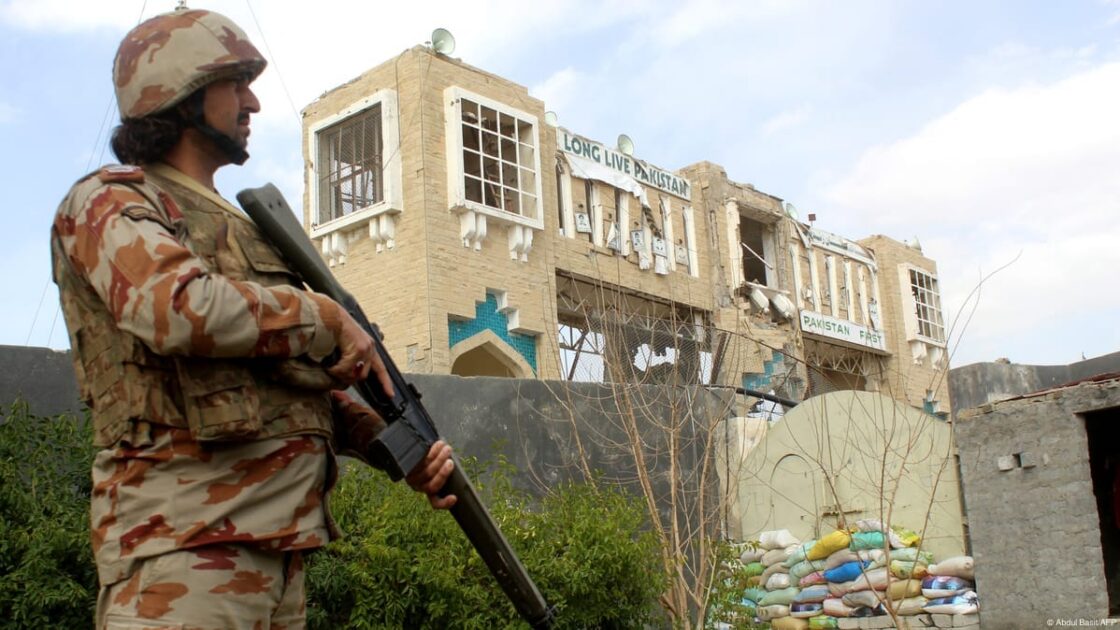
The Taliban authorities in Afghanistan claim that the Pakistani government is supporting armed Afghan groups that are opposed to their rule, an accusation Islamabad strongly denies. The allegations from Kabul follow months of border clashes between Afghan Taliban and Pakistani forces.
Tensions and Accusations at the Border
Taliban Foreign Minister Amir Khan Muttaqi recently alleged that Pakistan had launched a project to destabilize Afghanistan. He claimed that thousands of armed individuals gathered along the Durand Line, which serves as the border between Afghanistan and Pakistan, to undermine the stability achieved in the country.
In July, the anti-Taliban Afghanistan Freedom Front (AFF) reportedly clashed with Taliban forces in the Zebak district of Badakhshan province. The group stated it also carried out subsequent attacks in Nooristan and Kunar provinces in October. Meanwhile, another resistance faction, the United Front of Afghanistan, claimed it attacked Taliban forces in Kandahar province near the Pakistani border.
Zabihullah Mujahid, the main Taliban spokesperson, alleged in a September interview with Deutsche Welle: DW.com – Top Stories (dw.com) that individuals who created insecurity in Badakhshan crossed from Chitral in Pakistan and fled back there afterward, accompanied by Pakistani military personnel. In response, Pakistan’s Ministry of Information swiftly dismissed the allegations as propaganda. Additionally, groups opposing the Taliban assert they receive no external support and that their resistance is purely indigenous.
Differing Views on Islamabad’s Role
Shinkai Karokhail, a former Afghan member of parliament, told Deutsche Welle: DW.com – Top Stories (dw.com) that it would be logistically impossible for anti-Taliban groups to cross the Pakistani border into provinces like Badakhshan and Nooristan without Islamabad’s backing. Conversely, Qandil Abbas, an associate professor at Quaid-i-Azam University in Islamabad, told Deutsche Welle: DW.com – Top Stories (dw.com) that Pakistan may provide political support to Taliban opponents, but not military support.
However, Pakistani political analyst and former senator Afrasiab Khattak told Deutsche Welle: DW.com – Top Stories (dw.com) that Pakistani support for anti-Taliban groups is real, noting that Taliban opponents travel to Islamabad for meetings as part of Pakistan’s policy. Ali Ahmad Jalali, a professor at the National Defense University in Washington DC, added that it is possible Islamabad is backing these groups to maintain leverage amid a history of support for Afghan factions.
Security Demands and Mutual Accusations
Pakistani officials have repeatedly demanded that the Taliban act against anti-Pakistan militant groups, specifically the Tehreek-e-Taliban Pakistan (TTP) and the Baloch Liberation Army (BLA). Islamabad alleges these groups operate against Pakistan from Afghan territory with Taliban backing. Speaking at the Economic Cooperation Organization summit in Islamabad, Pakistani Foreign Minister Ishaq Dar stated that meaningful progress requires Afghan authorities to address the legitimate security concerns of neighboring countries regarding terrorism. On Friday, Pakistan announced that Afghanistan was not invited to the ECO gathering because Islamabad does not recognize the Taliban regime.
Analyst Jalali argued that Islamabad is demanding something the Taliban cannot or will not provide due to deep ideological and friendly ties with the TTP. Experts also note that Taliban efforts to strengthen relations with India, Pakistan’s regional rival, concern Islamabad. Malek Sitez, an Afghan international relations researcher, told Deutsche Welle: DW.com – Top Stories (dw.com) that Pakistan does not want Kabul to draw close to New Delhi, though Islamabad no longer holds its past level of influence.
Despite the ongoing accusations, Jalali believes Pakistan does not seek to overthrow the Taliban, but rather aims to pressure them into cooperating against the TTP. Aziz Barez, a political analyst, told Deutsche Welle: DW.com – Top Stories (dw.com) that Afghan opposition groups cannot fully trust Islamabad either, knowing such backing could be temporary if Pakistan and the Taliban reconcile.