Table of Contents
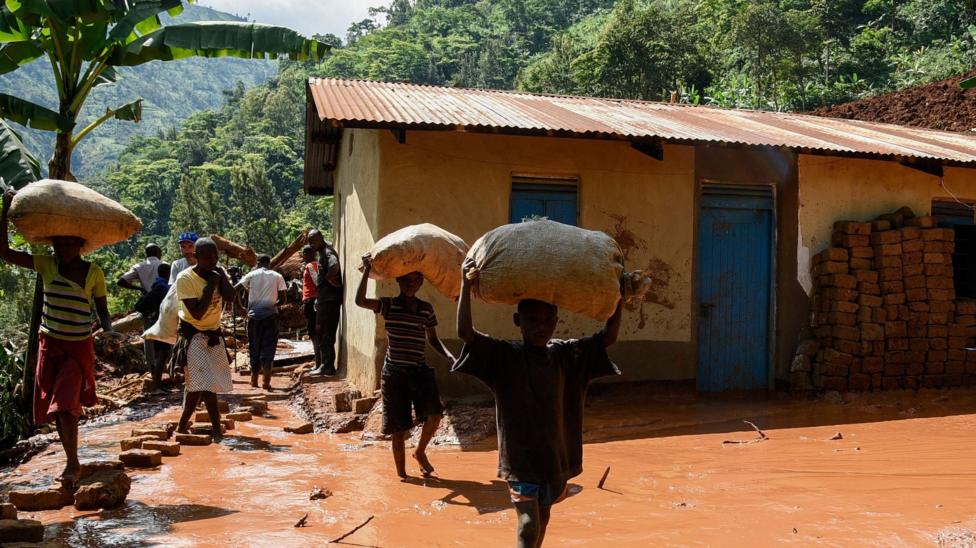
Survivors of a 2019 landslide in eastern Uganda that claimed over 50 lives have escalated their pursuit of relocation and compensation to the United Nations. The 48 complainants allege that the Ugandan government violated the national constitution by failing to implement effective disaster management strategies in the landslide-prone Bududa district.
Legal Challenge for Climate Adaptation
The case, currently before the UN Human Rights Committee, is considered a potential global precedent for climate adaptation litigation. As heavy rains continue to threaten the region, survivors argue that existing government relocation efforts fail to adequately address their safety, land rights, and long-term livelihoods. At least 33 of the 53 people who died in the 2019 disaster were children, and survivors report that recurring heavy rainfall continues to cause significant distress.
William Tsama, a claimant who lost four family members in the 2019 event, stated that his legal pursuit is intended to serve as a lesson. “Victims in such situations, ignored by governments, can take them to court to compel them to help their citizens,” he said. Tsama added that he is seeking a secure future for his descendants, noting, “I want to get a new good place for my people, so even if I die, they will be okay.”
Government Resettlement Programs
While Uganda introduced a resettlement plan for high-risk areas in 2011, progress has been slow. Last month, the government initiated a new program offering affected households 18 million Ugandan shillings—approximately $4,300 or £3,300—to facilitate relocation. The package allows families to choose between two acres of land plus a housing grant, or an equivalent cash allowance.
The government has mandated that residents in designated high-risk zones must vacate their homes between November and December or face forced eviction. However, some survivors have expressed concern regarding whether the provided financial assistance is sufficient to cover the costs of rebuilding their lives. Beyond the immediate threat of landslides, residents report that shifting rainfall patterns and soil degradation have severely impacted their ability to farm and maintain their livelihoods.
Seeking Systemic Change
The survivors, supported by the Ugandan environmental organization Greenwatch, began their legal action in 2020. They are demanding compensation for their losses and the implementation of emergency measures, such as accessible early-warning systems. Samantha Atukunda Kakuru Mwesigwa, executive director of Greenwatch, told BBC News that the case aims to force government policy to adapt to a changing climate, ensuring that loss and damage are prioritized in disaster management.
The broader implications of climate-related disasters are being felt across East Africa and beyond, with significant casualties reported in Kenya, Rwanda, and Nepal. Vesselina Newman, a lawyer for ClientEarth, emphasized that poorer nations are disproportionately affected by climate change despite contributing less to global emissions. “High income countries must provide financial assistance and ensure that sufficient money goes directly to countries like Uganda, so they can roll out life-saving adaptation measures,” she explained.
The UN Human Rights Committee has requested that the Ugandan government provide a response to the complaint within six months.