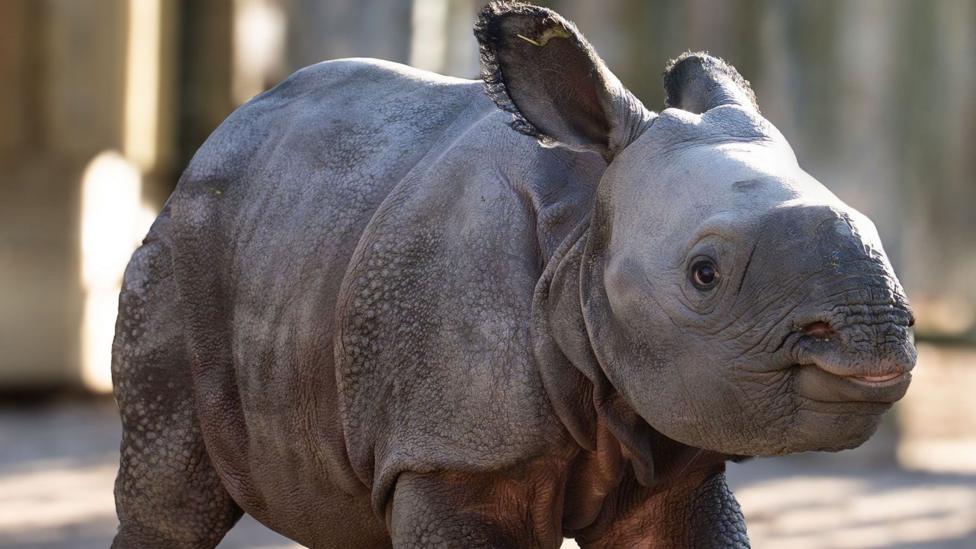
A rare greater one-horned rhinoceros has been filmed taking its first steps shortly after being born at Chester Zoo in Cheshire. The calf arrived this week following a 15-month pregnancy for its 19-year-old mother, Asha.
A Vital Addition to Conservation Efforts
Staff at the zoo confirmed that both the mother and the newborn are in good health. According to Tom Garland, a member of the rhino team, this calf is the fourth offspring for Asha and the late father, Beni, who passed away earlier this year due to a sudden illness. “It’s always exciting to welcome a new calf and Asha has been a brilliant mum to all her youngsters,” Garland stated. “Every birth is important for the future of this species and it’s wonderful to see another healthy arrival.”
The greater one-horned rhino was pushed to the brink of extinction during the early 20th century due to trophy hunting and the loss of natural habitats. Today, the species remains vulnerable, with an estimated 4,000 individuals remaining in the grasslands, forests, and wetlands of Nepal and India.
Maintaining Genetic Diversity
The new arrival is part of a broader European conservation breeding initiative designed to ensure a genetically diverse and healthy population of the species under human care. Conservation scientist John O’Hanlan noted that monitoring Asha’s pregnancy was a significant experience. “She’s one of relatively few greater one-horned rhinos in Europe actively breeding, so every successful birth is important in maintaining a healthy and genetically diverse population,” O’Hanlan explained.
Mark Brayshaw, the zoo’s Head of Mammals, emphasized that the presence of the rhinos serves an educational purpose, helping visitors recognize the importance of wildlife protection. While the species is better protected in the wild than in previous decades, Brayshaw warned that the population remains at risk because many individuals are concentrated within a single national park in India, leaving them susceptible to environmental shifts and disease.
The zoo continues to monitor the pair as they bond in their enclosure.