Table of Contents
Serbia’s newly elected parliament is convening for the first time in Belgrade following an October 25 vote that significantly altered the nation’s political landscape. The session marks the official entry of a grassroots, student-led movement into the legislature, effectively ending the long-standing dominance of President Aleksandar Vucic and his Serbian Progressive Party (SNS).
A Shift in Parliamentary Power
The election results have fundamentally redrawn the country’s power structure. The Student List movement secured 140 seats in the 250-member parliament, granting it a clear majority. In contrast, the Serbian Progressive Party, which previously held power, now occupies 104 seats. The movement’s success was driven by the support of 2.3 million citizens who sought a change in the nation’s governance.
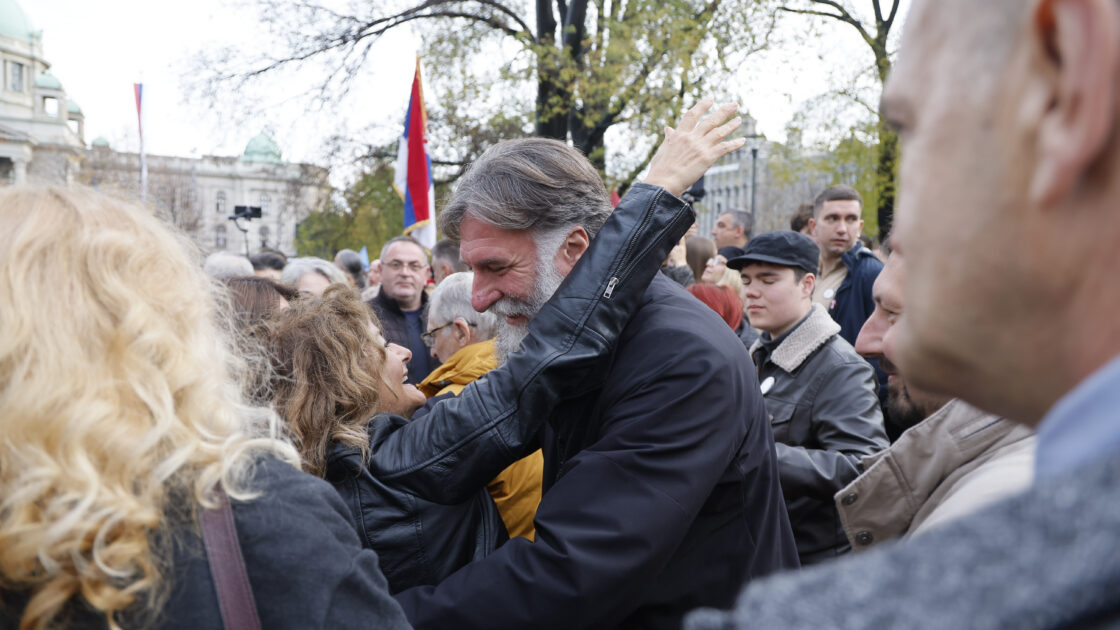
Tuesday’s inaugural session is being led by the oldest member of parliament, supported by the four youngest lawmakers from the largest electoral groups. As the new representatives arrived at the National Assembly, they were greeted by hundreds of cheering supporters. The assembly is expected to finalize the election of a new speaker later in the day.
Legislative Agenda and Expectations
The session follows a formal legal procedure, which includes verifying parliamentary mandates based on a report from the Republic Electoral Commission (RIK). Lawmakers are also tasked with taking their oaths of office, appointing a secretary-general, and establishing parliamentary committees and delegations to international organizations.
Despite the procedural nature of the meeting, the public holds high expectations for the new leadership. Political analyst Djordje Vukadinovic told Al Jazeera that the situation remains unpredictable due to the current structure of the opposition. “Everyone is eagerly awaiting it. I would avoid making any predictions, because with the current opposition structure, you never know what might happen or what stance they will take,” Vukadinovic stated, adding that the formation of a new government is only just beginning.
Ahead of the session, the Student Plenum of the Higher School of Civil Engineering and Geodesy in Belgrade issued an open letter to the new MPs. They urged the lawmakers to avoid viewing their positions as “comfortable armchairs,” a term they used to describe a systemic flaw in previous administrations. “The people elected you. We are the people. You are the people. Act accordingly,” the letter warned.
Institutional Maturity and Future Challenges
Aleksandar Cupic, an incoming MP for the Student List and an engineering professor, emphasized the need for institutional maturity. He noted that the movement intends to avoid lengthy, unproductive debates and instead focus on the efficient election of the parliamentary speaker. Cupic told reporters that discussions between political groups have been more moderate than some reports have indicated.
The swearing-in ceremony initiates a 90-day constitutional window for the formation of a new government. If a cabinet is not successfully elected within this timeframe, the constitution requires the dissolution of the National Assembly and the scheduling of snap elections.
The transition is being closely monitored by international observers, particularly regarding Serbia’s future relations with the European Union and neighboring countries. Student List representative Aleksandar Baucal, speaking at the EU Enlargement Forum in Brussels, stressed that the peaceful transfer of power is merely the beginning of a broader effort to restore institutional integrity. “Serbia now faces the task of rebuilding institutions that will prevent the personalisation of power and serve all citizens, regardless of who they voted for,” Baucal said.
The European Democratic Party (EDP) also commented on the transition, stating that the session serves as a test of Serbia’s readiness for institutional reform. The party expressed hope that the country would move toward a new chapter of reconciliation, justice, and accountability.