Table of Contents
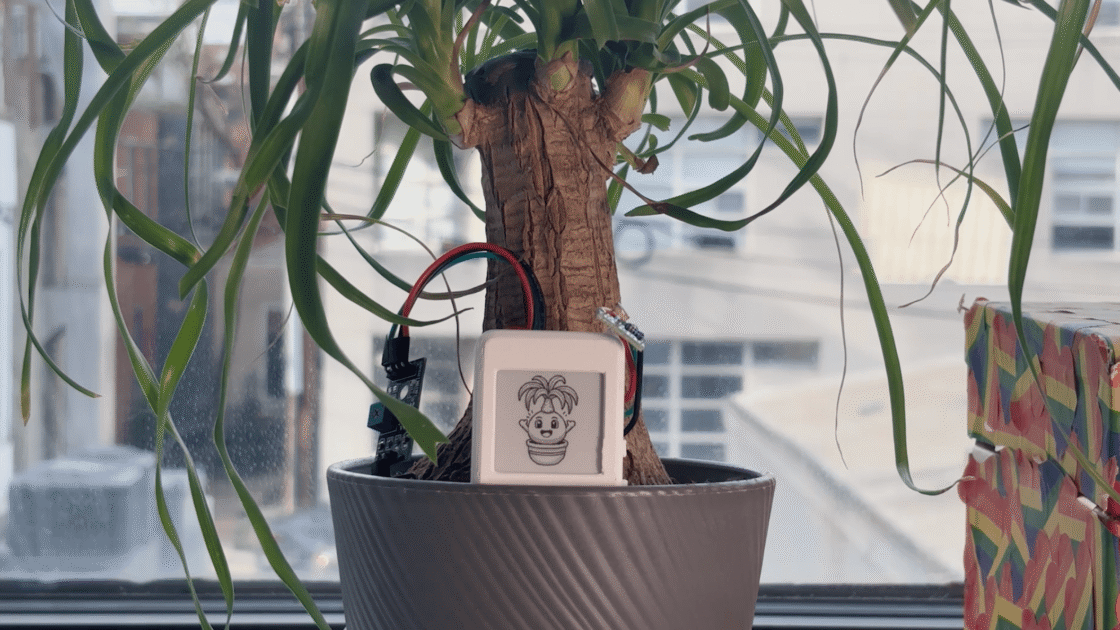
A new project called OATs, or Object Agent Twins, brings the nostalgic care of 1990s digital pets into the physical world by pairing micro-agent AI avatars on tiny E Ink displays with everyday household objects. The technology was developed by Daehwa Kim, a fifth-year PhD student in Carnegie Mellon’s Future Interfaces Group, who presented the project at the ACM Symposium on User Interface Software and Technology in Detroit in early November and earned two Honorable Mention awards.
Designing Virtual Pets for the Physical World
Kim explained to WIRED that while people spend all day staring at mobile devices and even task-handling AI agents demand attention from smartphone screens, OATs offer a way to bring those interactions out into the real world. The concept draws inspiration from Tamagotchi, the popular egg-shaped toys from the 1990s that required real-time care. Although people have encouraged Kim to sell OAT kits online, she has not yet decided whether to pursue the project as a business opportunity.
The pocket-sized hardware, which costs roughly $20 for the main module, features an E Ink display connected to internal and external sensors that track moisture, temperature, humidity, light, occupancy, and motion. Users set up their devices through a web portal where they name the OAT and select sensors for the attached object. The web app then generates positive and negative behaviors based on the object’s description, which can be fully customized for specific needs like plant care.
Real-World Uses and Limitations
Kim distributed OATs to various testers and identified three primary usage patterns. The first involves checking if an object is being used, such as attaching an avatar to a coffee machine so it gets excited when beans are ground. The second warns people near an object, like placing an OAT on a 3D printer to alert users when the device is operational and releasing toxic fumes. The third helps track personal behaviors, such as attaching a unit to a dumbbell to monitor workout frequency and encourage regular exercise to avoid disappointing the AI pet.
The system currently faces limitations, notably a short battery life of about three to four days, which drops to a single day when paired with a sound-level sensor. The device includes a USB-C port to charge its lithium-ion polymer battery, highlighting its current status as a proof of concept. During the symposium demonstration, attendees generated numerous creative ideas, resulting in an online gallery featuring custom sprites ranging from animated conference badges to panda avatars for water bottles.
The Debate Over Anthropomorphic AI
The demonstration also sparked significant discussion regarding the anthropomorphization of artificial intelligence and the ethics of giving digital sprites humanlike traits and emotions to foster human connection. This topic is already prominent across the AI industry, where companies frequently use human terms for chatbot behaviors, such as “hallucinating” or Anthropic’s “dreaming” feature for memory cleanup. Experts note that such terminology can distort moral judgments and lead people to overly trust AI tools.
Kim stated that OATs maintain very limited interactions restricted to expressive emotions and the E Ink display to address these concerns. She noted that anthropomorphism can be useful for driving behavioral changes, pointing out how people naturally name cars and bikes. As computing advances, Kim believes people will develop closer relationships with AI, but emphasized the need to be careful not to abuse that connection.