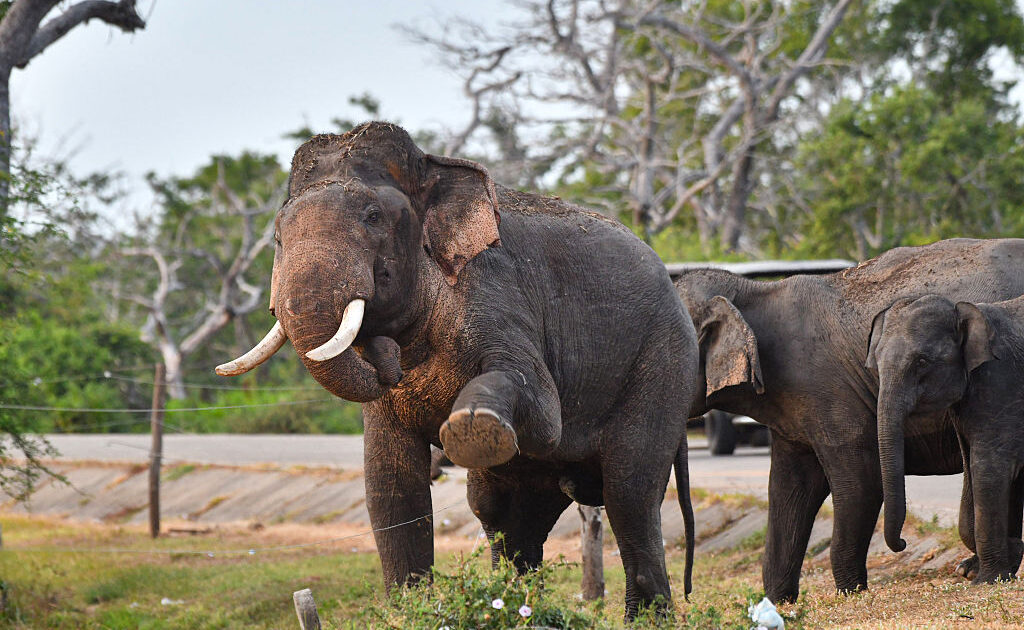
Elephants maintain some of the most complex and resilient societies in the animal kingdom, capable of surviving individual deaths, calf growth, and new arrivals. Long-term studies on African savanna elephants demonstrate that survivors typically rebuild lost connections following poaching or sudden mortality spikes. However, a new study reveals that this resilience fails when steady losses accumulate over time.
Community Fracturing in Sri Lanka
Anastasia Madsen, a behavioral ecologist at the University of California, San Diego, along with her colleagues, examined 12 years of observational data regarding wild Asian elephants in Sri Lanka. The researchers discovered that once population losses began exceeding newcomers, elephant society did not simply shrink, but instead broke apart entirely.
Habitat Changes at Udawalawe National Park
Udawalawe National Park, situated in southern Sri Lanka, was established during the 1970s surrounding a reservoir located on one of the nation’s four major rivers. Shermin de Silva, an ecologist at UC San Diego and senior author of the study who initiated the Udawalawe Elephant Research Project in 2006, described the area as primarily a tropical deciduous forest prior to the reservoir’s construction.
The reservoir attracted agricultural activities and settlers, with some residing within the boundaries of what later became the protected park. Following their relocation, the cleared agricultural land transformed into grasslands that resemble an African savanna, according to de Silva. Providing significantly more food than the original forest, the park gained renown for its large elephant populations.
Nevertheless, this savanna landscape represented only an interim phase in the forest’s ecological succession. In the absence of fires and land clearing, invasive species such as lantana established dominance over the terrain. De Silva noted that certain areas have become impenetrable thickets that elephants generally avoid due to a lack of edible vegetation. This habitat degradation poses a challenge because elephants naturally migrate toward food sources, resulting in a park that attracts fewer external elephants while producing fewer surviving calves as forage becomes scarce.