Table of Contents
Selecting a new heating system often involves a dizzying array of specifications, floorplans, and duct diagrams. However, a growing number of private homeowners are choosing to dive into these technical details themselves rather than relying entirely on tradespeople.
The Rise of DIY Heat Loss Calculators
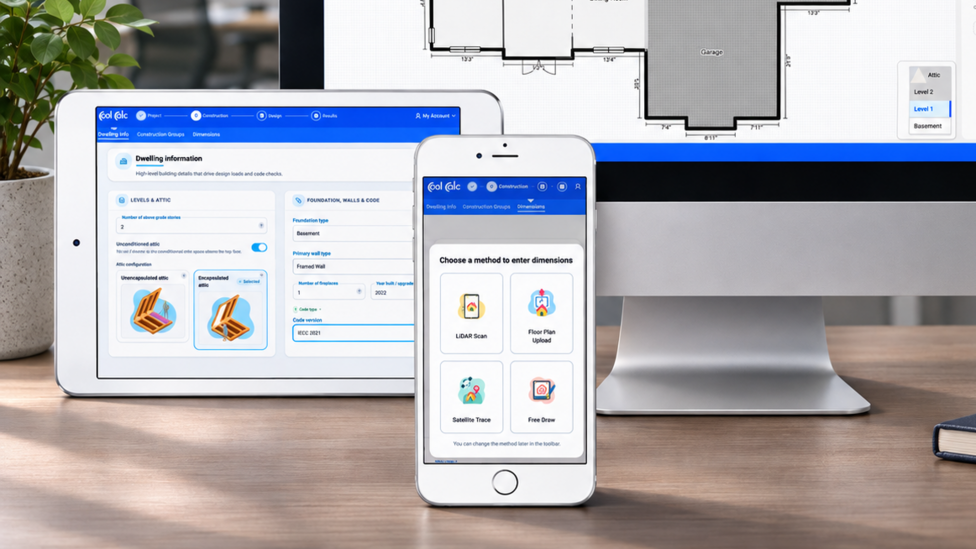
Approximately 150 new users sign up daily to Cool Calc, an app that calculates the heat requirements of properties in the US, according to founder and chief executive Bill Fiore. Slightly more than one third of these new sign-ups are private homeowners rather than professionals. Fiore notes a general trend of consumers wanting to perform their own calculations because they are bombarded with information and want to verify how powerful a heat pump they need.
A heat loss calculation determines the watts of heat a home loses in cold weather, calculated room by room, and serves as a vital component for designing an efficient heating system. Getting this estimate right is particularly crucial for heat pumps, which must be sized precisely to match projected heat loss. An inaccurate calculation can lead to an underpowered device that struggles to warm the property, creating anxiety for homeowners investing significant money.
While people are increasingly turning to AI for help, Fiore cautions that this often results in misinformation because it lacks credible backing. Cool Calc plans to integrate with AI chatbots to improve the quality of the advice they provide. Kevin Kircher at Purdue University also urges caution, pointing to a study he and his colleagues conducted examining heat loss calculations given to roughly 75 US homeowners by tradespeople. Kircher states that the calculations often overestimated design heat loads by a factor of two or more, which leads to oversized systems consuming excessive power. Furthermore, some participants reported charges exceeding $1,000, and in one case $2,500, just for a heat loss survey.
Comfort Issues and Alternative App Options
Oversized heating systems not only waste energy but can also create an uncomfortable living environment, explains Dan Dempsey, a former senior engineering fellow for a major US heating and cooling provider. Dempsey, who participated in Kircher’s study, spends his retirement analyzing heating and cooling performance in family and friends’ homes using smart thermostat data. He observes that oversized systems tend to cycle on and off in quick succession, causing noticeable temperature swings instead of maintaining a steady target temperature.
Various free or partially free applications exist for people seeking to understand their home’s heat loss, such as AutoHVAC and Cool Calc in the US, or the web app Heatpunk in the UK. Numerous factors affect heat loss, including insulation levels, double or triple glazing, and radiator sizes. Andy Rankin, founder and managing director of Midsummer Energy, explains that Heatpunk allows users to draw floor plans and input property data to estimate performance, attracting thousands of monthly users, mostly professional installers. The app also suggests specific Midsummer Energy heat pump models based on the results, which Rankin describes as an effective marketing tool.
In the UK, another installation company named Dwellow recently launched its own heat loss estimator. Ian Mclaren, Dwellow’s co-founder and director, suggests that encouraging initial self-surveys from homeowners can reduce the time professional heating engineers spend analyzing properties. Mclaren states that verifying homeowner information instead of starting from scratch can turn a survey into a quick, more efficient, and less costly half-hour trip.
The Limits of Self-Surveys
Despite the popularity of apps, professional oversight remains essential, according to Maurizio Sibilla of the Centre for Advanced Built Environment Research at the University of West England, Bristol. Sibilla argues that better installer practice, clearer customer-facing evidence, and improved methods are the true solutions, rather than expecting homeowners to handle the engineering themselves. He adds that providing customers with calculation data and post-installation performance metrics can reassure them that the system operates correctly.
Adam Chapman, chief geek at heat pump training firm and network Heat Geek, expresses skepticism about the value of DIY calculations, suggesting they may overly intellectualize the process. He questions what homeowners genuinely gain from the exercise, noting that his firm guarantees efficiency with fewer radiators and pipework upgrades than other systems. Chapman emphasizes that capturing a home’s heat loss accurately requires meticulous surveys capable of spotting hidden issues, such as retrofitted windows lacking proper foam insulation or missed cavity wall insulation.