Table of Contents
Analysis by BBC News suggests that more than 76,000 sewage spills were recorded in Scotland last year following the installation of new monitoring equipment. The addition of 1,009 monitors in 2024 expanded coverage of the Scottish Water network from 6% to 30%, revealing tens of thousands of incidents that had previously gone unrecorded.
Understanding Sewage Overflows
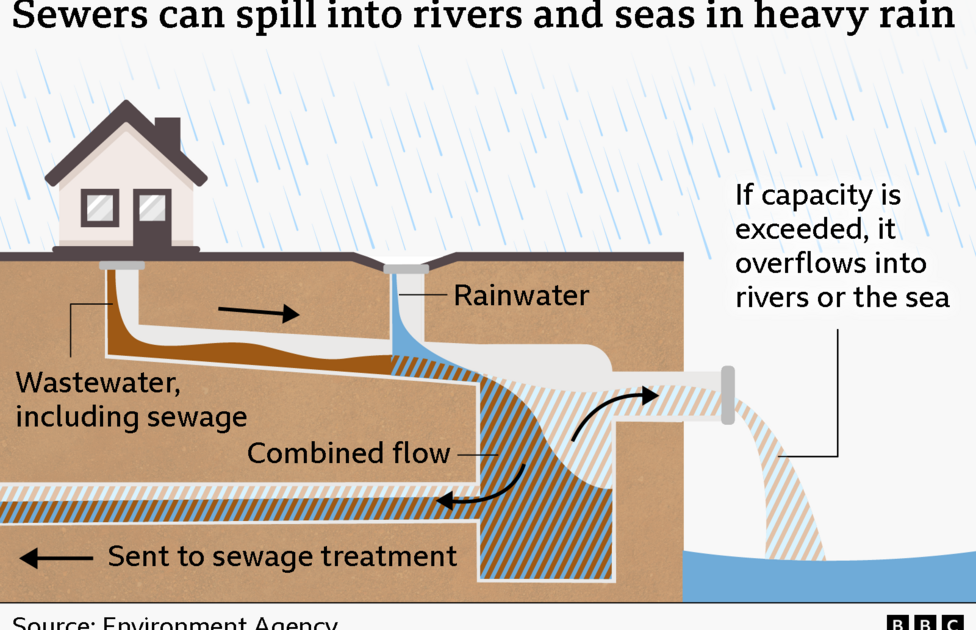
Sewage spills occur at overflow sites designed to release excess water into natural waterways during heavy rainfall. These sites act as relief valves to prevent the sewer system from becoming overwhelmed, which could otherwise lead to flooding in homes, businesses, and streets. While these spills can last anywhere from a few minutes to several hours, they are permitted to release untreated or partially treated waste.
Scottish Water currently manages over 4,200 overflow sites across its network. In 2024, the number of monitored overflows increased from 273 to 1,275. Across the year, more than 100,000 spills were recorded, totaling nearly 277,000 hours, which averages to approximately 274 spills per day. However, only about 12% of these overflows are legally required to report data to the Scottish Environment Protection Agency (Sepa). Sepa stated it utilizes a “risk-based approach” to prioritize monitoring based on environmental needs and population density.
Regional Impact and Data Findings
Data indicates that the River Clyde in Glasgow was among the most affected areas, experiencing nearly 6,150 spills last year. When including the Clyde Estuary, the Firth of Clyde, and various tributaries, this figure rises to nearly 14,200 incidents. The Clyde Estuary also recorded the highest total duration of spills, exceeding 25,000 hours. Additionally, the Barcloy Mill Burn in Dumfries and Galloway recorded the highest frequency of individual spills, with nearly 3,500 incidents.
Local activists have expressed concern regarding the hidden impacts of these discharges. Ruth Plevin, a member of the River Almond Action Group, noted that while infrastructure investment is welcome, the presence of invisible pollutants like microplastics, pharmaceuticals, and agrichemicals remains a significant worry. She emphasized the need for clean and safe water, stating, “It’s precious and I think we need to regard it as precious.”
Water Quality and Future Monitoring
The relationship between sewage discharges and water quality remains a subject of investigation. Brian Allen, a representative for Surfers Against Sewage, has been conducting independent water testing at Belhaven in East Lothian. His findings suggest that 77% of samples showed excellent water quality, though he noted that it is currently unclear if this trend is consistent across the rest of Scotland. He welcomed the increased transparency from Scottish Water, noting that while his area experiences near-daily discharges, the direct link to water quality is not yet fully understood.
Simon Parsons, director for wastewater at Scottish Water, explained that the vast majority of spills—roughly 99%—consist of rainwater, surface water, road run-off, and grey water rather than human waste. He stated that the expanded monitoring program has provided a clearer picture of the network, allowing the utility to identify specific areas that require investment and operational improvements. “We can actually identify those areas where we need to think about investment,” Parsons told the BBC.
While Scotland’s monitoring coverage has grown to approximately 50%, it remains lower than the 100% coverage currently in place in England. Scottish Water aims to achieve full monitoring coverage within the next five to six years.