Table of Contents
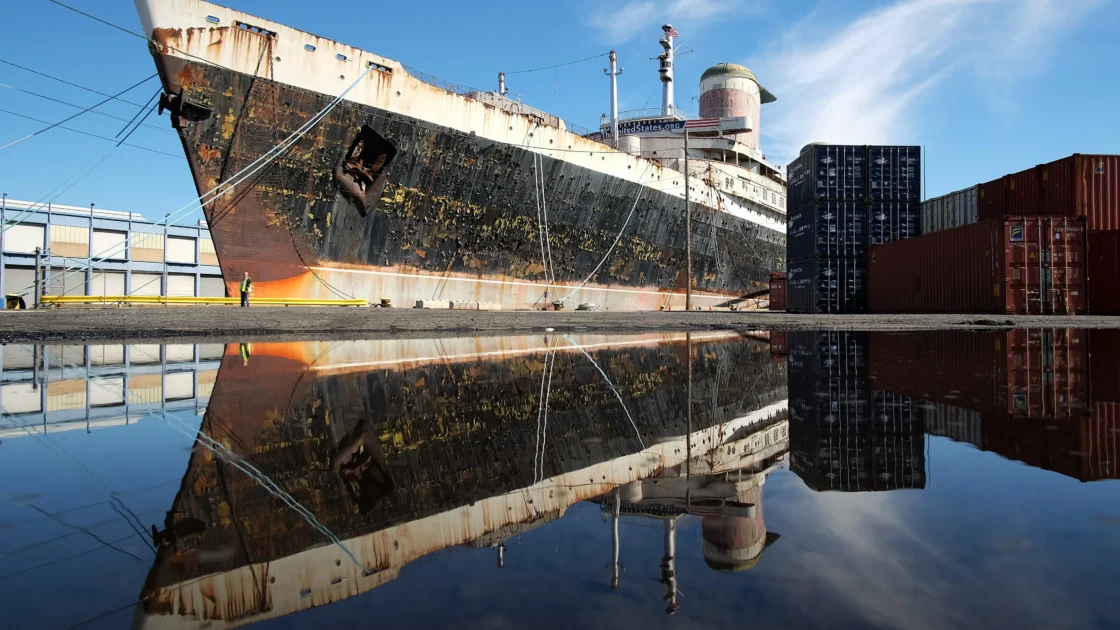
The retired ocean liner SS United States was deliberately sunk off the coast of Florida on Wednesday, marking the end of its service as a surface vessel and the beginning of its new role as the world’s largest artificial reef. The ship descended beneath the waves at 10 p.m. ET, coming to rest in an upright position 180 feet below the surface of the Gulf of Mexico.
A Historic Legacy
Measuring nearly 1,000 feet in length, the vessel is longer than the Titanic. Its interior, featuring hundreds of rooms, corridors, and elevator shafts, is expected to provide a habitat for marine life and a destination for divers. Susan Gibbs, chair of the SS United States Conservancy and granddaughter of the ship’s designer, William Francis Gibbs, expressed a mix of grief and hope regarding the transformation, telling NPR’s Morning Edition that the ship continues to offer value to the world.
Launched in 1952, the ship famously broke the trans-Atlantic speed record on its maiden voyage, earning the Blue Riband—a title it still holds today. While it was designed with the capability to be converted into a military transport vessel capable of carrying 14,000 troops over 10,000 miles without refueling, it was never utilized for that purpose. Throughout its active years until 1969, the liner hosted notable passengers including Marilyn Monroe, Walt Disney, Harry Truman, Walter Cronkite, and a young Bill Clinton.
The Sinking Process
The SS United States Conservancy had previously explored options to convert the ship into a museum or hotel. However, following legal and financial challenges, the organization sold the vessel to Okaloosa County, Florida, in 2024, which ultimately decided to sink it.
The project was managed by Coleen Marine, a marine engineering firm specializing in artificial reefs. Company president Coleen O’Malley explained that the 18-month preparation process involved cleaning the exterior to support aquatic life and repairing the hull to ensure the ship sank in an upright position. According to O’Malley, the primary challenge was managing air displacement to ensure a controlled descent while maintaining the ship’s recognizable structure.
Future Commemoration
Both O’Malley and Gibbs were present off the coast of Destin and Fort Walton Beach to witness the vessel’s final descent. Following the sinking, the SS United States Conservancy announced plans to establish a museum in Florida dedicated to the history of the ship.