Walking through an elm-rich woodland in Upwood, Cambridgeshire, writer Sarah Lambert explores the habitat of the wrinkled peach, a rare and striking mushroom whose survival is closely tied to the fate of elm trees.
Searching for the Wrinkled Peach
Above the woodland floor, a lively breeze moves through tall elm trees where skeletal branches point to the impact of Dutch elm disease. Below, fallen trunks are scattered across the ground, featuring pale bonnet fungi, tripe fungus, and bark marked by elm bark beetle etchings and deadwood beetle emergence holes.
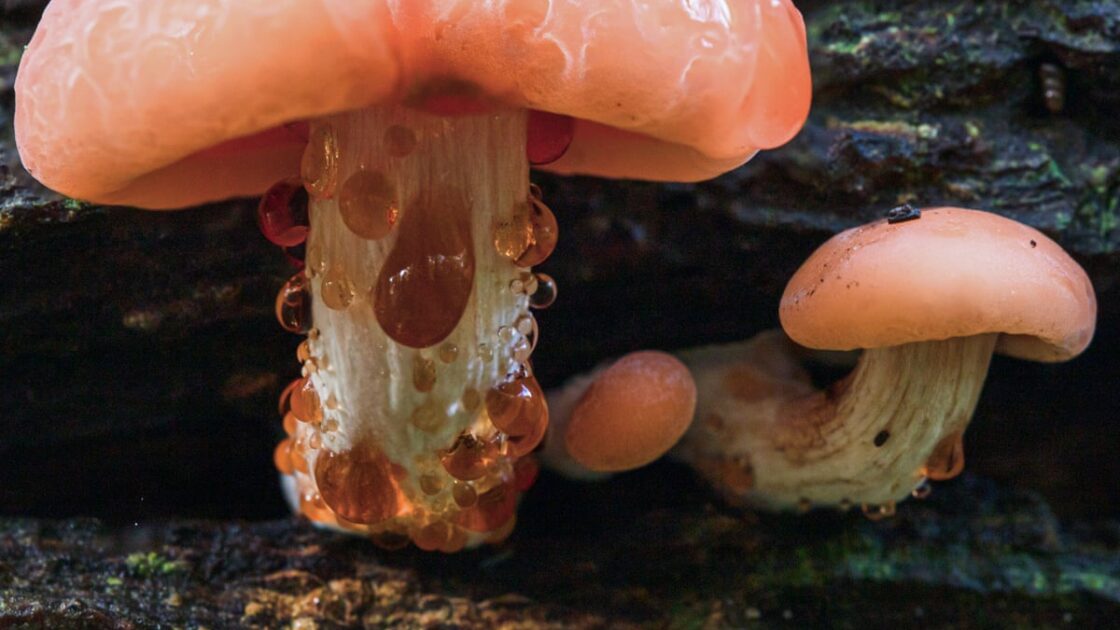
Raveley Wood belongs to a chain of small, elm-abundant woods situated along the Cambridgeshire fen edge. The search focuses on the wrinkled peach, often considered the most beautiful mushroom in Britain due to its salmon-pink wrinkled cap, matching gills, and jewel-like ruddy-orange droplets that gather on the stem through guttation.
The fungus relies directly on the elm tree. Typically growing on decaying logs that have lost their bark, the species was uncommon in Britain until Dutch elm disease arrived in the late 1960s, causing it to thrive among dead trees for a couple of decades. Following a decline in mature elms across Europe and Britain, the species is now categorized as vulnerable, though it continues to survive in the elm woods of Cambridgeshire.
Discovering a Tiny Specimen
Moving away from the trampled path, the search involves navigating fallen branches and low bramble across clay soil bearing deep fissures from the summer drought. Because of the extreme summer weather, the fungi season appears slow to start, leaving many species scarcer than usual. After an hour of checking trunk after trunk with no success, the search nearly ends.
Just as the journey concludes, the low afternoon sun illuminates a tiny pink speck on an elm log. Measuring less than a centimeter across, it represents the smallest wrinkled peach the writer has ever encountered. The cap shows minimal wrinkling, yet its slightly grubby stem features a small gathering of sparkling droplets. Kneeling in the leaf mould to check for the reported scent of peach or apricot yields no distinctive odor.
Finer specimens may appear later in the season, but for now, this tiny pink speck provides enough beauty.