Table of Contents
Ring has introduced a new $250 indoor security drone and a $1,000 roving security robot under its newly established Ring Robotics brand. The Drone Cam is scheduled to launch on January 27, while the business-focused Ring Rover Cam will arrive earlier on December 16.
The Return of the Indoor Security Drone
CEO and founder Jamie Siminoff stated that he first conceived the idea for a flying security sentry in 2016 prior to Amazon’s acquisition of Ring. The company previously unveiled an indoor security drone named the Ring Always Home Cam in 2020, but encountered engineering obstacles that required additional sensors. These additions increased power and battery demands, prompting the development team to shift processing intelligence from the device into the cloud.
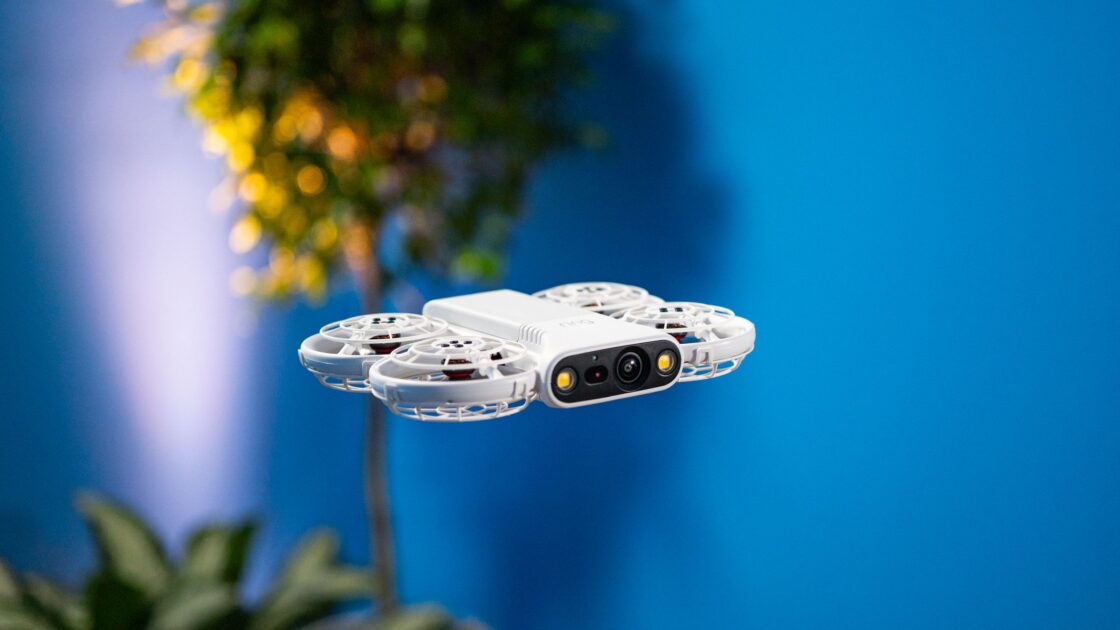
Weighing 165 grams, the Drone Cam lifts from its charging dock and autonomously flies through a home while streaming a first-person view to a smartphone. Equipped with spotlights for dark environments, the device operates using a custom AI Pilot agent on Ring’s servers to determine its flight path. Users cannot manually control the drone, but they can program custom patrol schedules and routes, or configure it to respond automatically to signals from motion, door, and window sensors.
The drone relies on an indoor Wi-Fi network and the Alexa Home Map from existing Echo devices to navigate, limiting its operation strictly to the interior of a home. Each battery charge provides five to eight minutes of flight time. Because it weighs well under the 250-gram threshold and operates exclusively indoors, the Drone Cam does not require Federal Aviation Administration registration, and Siminoff confirmed the hardware complies with all US regulations while being assembled in Texas.
Privacy, Security, and Public Concerns
Addressing privacy safeguards against unauthorized access, Siminoff highlighted the company’s TAKE technology, which stands for Throw Away the Key Encryption. The system encrypts video during transmission and rotates keys every few minutes, though Ring temporarily retains a key to process cloud-based artificial intelligence features before deleting its copy. Every Ring account also mandates two-factor authentication for access.
To mitigate risks of surreptitious surveillance by bad actors, the drone is intentionally designed to be loud. Siminoff explained that the prominent buzz of the propellers prevents remote snooping without alerting anyone present in the home. Regarding physical safety, Siminoff noted that accidentally touching the propellers causes a noticeable feeling, but users will be fine, though a Ring spokesperson advised against flying a damaged device and instructed customers to contact support.
Broader privacy concerns persist regarding Amazon’s surveillance history and cooperation with law enforcement agencies. Thorin Klosowski, a senior security and privacy activist at the Electronic Frontier Foundation, told WIRED that adopting such surveillance tools is a personal choice and urged individuals to consider the emotional impact on family members or visitors.
“I think the companies who make these sorts of surveillance products are invested in us feeling less safe at home,” Klosowski told WIRED. “If there is a way to sell a product that helps alleviate the problem they are creating, I think they will do it.”
The Ring Rover Cam for Businesses
The second product under the Ring Robotics brand targets commercial clients rather than residential consumers. Utilizing hardware components similar to Amazon’s discontinued Astro home robot, the Ring Rover Cam is built to monitor warehouses and factories covering up to 5,000 square feet.
The Rover Cam incorporates the same cloud-based AI Pilot agent as the drone to navigate spaces and bypass obstacles. It features a telescoping 4K camera that extends to survey the surroundings, a ceiling-projected light circle to indicate the robot’s location, two-way talk capabilities, and a built-in siren. The device responds to sensor alerts, automatically inspects designated zones, and returns to its dock after a patrol lasting approximately 30 minutes.
The Drone Cam will be available for purchase starting January 27.