Table of Contents
Nvidia boss Jensen Huang shares the up-close charisma and innovative spirit of the late Apple founder Steve Jobs, though he opts for a leather jacket over a turtleneck. As reported by BBC News, Huang now faces intense scrutiny as his company sits at the very epicentre of the global artificial intelligence boom.
Powering the AI Revolution
Every major development in artificial intelligence relies on having the most powerful frontier AI models, which in turn depend on advanced microchips. For years, Nvidia has led this space through technology rooted in repurposed graphics and Taiwanese manufacturing prowess. Chips with names like Gracehopper, Vera, and Rubin power the creation of the AI models currently transforming industries worldwide.
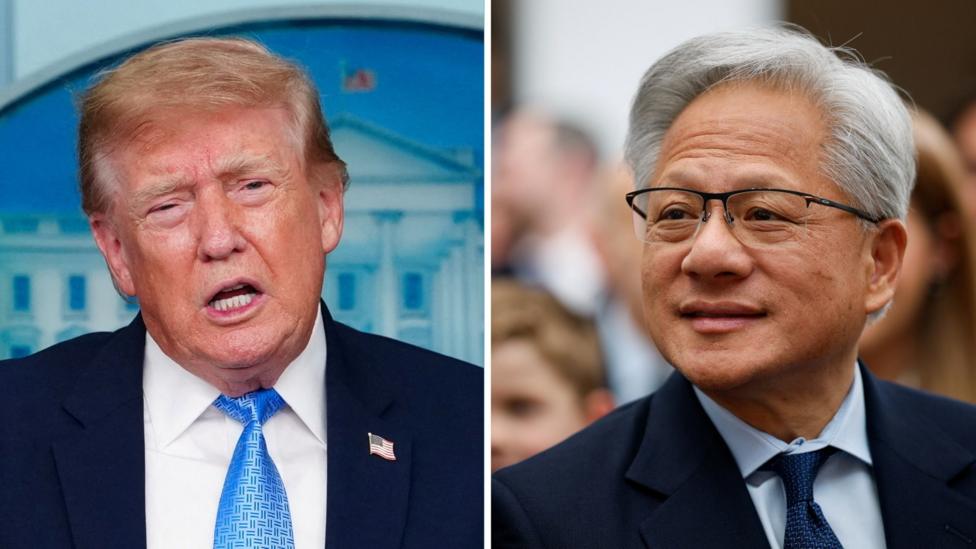
During a state visit to the UK in September last year, Huang offered words of encouragement for the country’s tech future while lobbying to lift US export bans on high-performing AI chips to China, specifically the H200. He suggested to BBC News that he was uniquely positioned to meet both US President Donald Trump and Chinese President Xi Jinping in Beijing.
Differing Views on Security Risks
Huang argued that the advancement of human society is not a zero-sum game, expressing confidence that he had persuaded Trump of his case. “President Trump is very clear. He wants America to win and and President Xi wants China to win, and it’s possible for both of them too. And the reason for that is because it’s not a zero-sum game. The advance of human society is not a zero-sum game,” Huang told BBC News.
However, many national security figures disagree, viewing the race for advanced AI as entirely zero-sum and demanding strict action to curb Chinese advancement. Huang countered that it is more beneficial for the US if global powers remain dependent on the American tech stack, asserting that computing technology should not be treated as a national security concern.
Huang also told BBC News that “any military is smart enough to build their military on top of their own indigenous technology, and not rely on an adversary to build their technology, build their military capability.”
Market Impact and Financial Health
At the time of these public arguments and lobbying efforts to lift export bans, Huang was actively disputing the national security risks of his technology reaching China. Nvidia currently generates approximately $400 billion in hard revenues this year. Although the company recently experienced a 4% drop in value due to emerging risks at the intersection of technology and global politics, the chipmaker remains valued at over $4 trillion.