Table of Contents
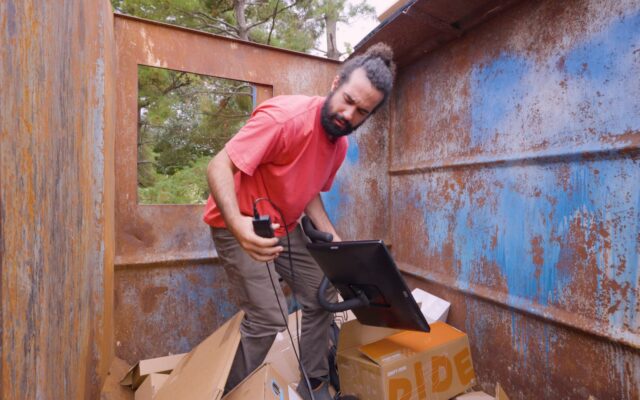
Global food waste is projected to reach $540 billion this year, a critical issue addressed by Matt Rogers, CEO of the startup Mill. Originally created as an in-home food recycling system, Mill has expanded its operations into the commercial sector by introducing an on-site processing system powered by artificial intelligence to help commercial kitchens monitor and reduce waste.
Commercial Expansion and New Partnerships
Beginning in 2027, Whole Foods will implement Mill’s technology to convert in-store fruit and vegetable waste into chicken feed. Additionally, Mill announced a partnership with Compass Group to deploy its services across corporate dining facilities, hospitals, universities, and stadiums starting next year, as reported by Kyla Mandel for TIME.
Early Investments in Carbon Dioxide Removal
Discussing overlooked climate solutions, Rogers highlighted carbon dioxide removal as an area requiring significantly more attention and funding. Having started heavy investments in climate solutions roughly 14 years ago, Rogers focused early on removing carbon dioxide from the atmosphere to help build a new field before a clear market existed.
This long-term strategy involved funding early National Academy of Sciences research and supporting nonprofits that advanced policy discussions in Washington. That foundational research later influenced recommendations that Congress incorporated into the Inflation Reduction Act, ultimately leading to billions of dollars in federal funding and numerous active companies in the carbon removal sector today.
Systems-Level Thinking from Nest to Mill
Reflecting on his time building the Nest thermostat, Rogers emphasized that creating advanced technology is insufficient without transforming the entire surrounding ecosystem to ensure products are easy to use, affordable, and efficient.
To make Nest successful, the team collaborated with the U.S. Environmental Protection Agency (EPA), the Department of Energy (DOE), and utility companies to provide rebates and prove energy-savings capabilities. Rogers noted that combining promising technology with appropriate policies, incentives, and partnerships is essential to turning engineering innovations into practical real-world changes.
The Role of Artificial Intelligence in Climate Action
Regarding artificial intelligence, Rogers stated that AI can play a positive role in addressing the climate crisis if used as a practical tool rather than relied upon autonomously. AI holds significant potential to support better infrastructure, fortify municipal and industrial systems, and develop high-grade critical materials when paired with science and engineering.
Acknowledging valid concerns about AI’s carbon footprint and increased fossil fuel usage, Rogers emphasized the shared responsibility of builders and AI researchers to apply models selectively. Solutions that help rocks recapture carbon or enable electric grids to manage compute distribution at scale are worth exploring, whereas digital tasks that add pressure to the grid without environmental benefits should be rejected.