Table of Contents
Almost 200 countries signed a landmark climate pact in Paris in 2015 to limit global warming to 1.5C and avoid severe environmental impacts. Despite advances in renewable energy, a recent United Nations report indicated that the warming threshold will likely be breached within the next few years unless urgent and stringent action is taken.
What is the Paris climate agreement?
The Paris Agreement serves as the cornerstone of international efforts to address rising global temperatures. It entered into force on November 4, 2016, committing nearly all nations to reducing the greenhouse gas emissions responsible for global warming. The United States, the world’s second-biggest emitter, withdrew from the pact in January 2026 under President Donald Trump. The US previously withdrew during Trump’s first term before rejoining in 2021 under President Joe Biden. Iran, Libya, and Yemen are the only other UN member states outside the agreement.
What does the Paris Agreement say?
The agreement outlines several key commitments, including pursuing efforts to limit global temperature rises to 1.5C while keeping them well below 2.0C compared to pre-industrial times, which generally refers to the late 19th century. Countries also agreed to achieve net zero—a balance between human greenhouse gas emissions and active removals—in the second half of this century. Nations must set individual emission-reduction targets that are reviewed every five years to raise ambitions, while richer countries provide climate finance to help developing nations adapt and switch to renewable energy.
The 1.5C target typically applies to a 20-year average rather than a single calendar year. Although 2024 was more than 1.5C warmer than pre-industrial levels, the formal threshold has not yet been breached.
Why does keeping global warming to 1.5C matter?
Climate scientists warn that every 0.1C of warming increases planetary risks like longer heatwaves, intense storms, and wildfires. Furthermore, UN scientists state that warming of 2C or more would trigger far greater impacts on top of those experienced at 1.5C. These include widespread exposure to extreme heat, rising sea levels from melting glaciers and ice sheets, heightened food security risks, and the spread of climate-sensitive diseases such as dengue.
Additional risks involve increased species extinction threats and the destruction of virtually all coral reefs. Crossing certain tipping points could also make some changes irreversible, accelerating events such as the collapse of the Greenland Ice Sheet, warm Atlantic Ocean currents, or further loss of the Amazon rainforest.
What does the Paris Agreement promise for poorer countries?
The pact reaffirmed a 2009 pledge for developed nations to mobilize $100bn annually by 2020 to assist developing economies with climate adaptation and green transitions. OECD data shows that while $83.3bn was raised in 2020, the goal was met each year following 2022. Recent funding has primarily focused on emission reduction efforts, with about a quarter dedicated to adaptation.
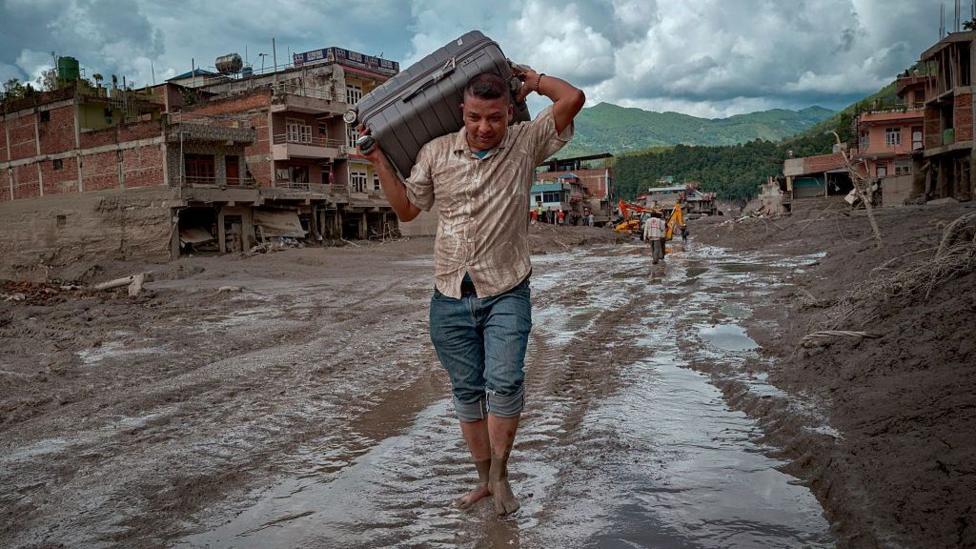
In 2023, nations agreed to create an exclusive loss and damage fund to help countries recover from climate impacts. Nepal became the first approved recipient following an August 2026 flash flood that killed over 1,400 people. At COP29 in 2024, richer countries committed to providing $300bn a year by 2035, though developing nations criticized the amount as paltry.
What has happened since the Paris Agreement?
World leaders gather annually at COP summits to evaluate progress on their Paris promises. At COP28 in 2023, countries agreed for the first time to contribute to transitioning away from fossil fuels and to triple global renewable energy capacity by 2030. However, the final deal at COP30 in 2025 omitted direct mentions of fossil fuels, with host Brazil instead publishing a voluntary roadmap for discussion at COP31. That upcoming summit is scheduled for November 9 to 20, 2026, in Antalya, Turkey, co-hosted by Australia.
Additionally, a 57-country “coalition of the willing” has launched independent conferences to discuss phasing out fossil fuels, holding their first meeting in Santa Marta, Colombia, in April 2026, with another planned for Tuvalu in July 2027.
Is the world on track to meet the 1.5C target?
The long-term 1.5C target remains unbroken, but the latest UN Emissions Gap Report warns that decades of insufficient climate action mean the limit will likely be exceeded soon. Under the lowest possible scenario, mid-century warming will still reach 1.7 to 1.8C. The UN notes that returning to 1.5C by 2100 is achievable only through urgent and stringent greenhouse gas cuts of 18% between 2025 and 2030. Current government pledges cover only half of these required cuts, and without further action, global warming could approach 3C by the end of the century.