

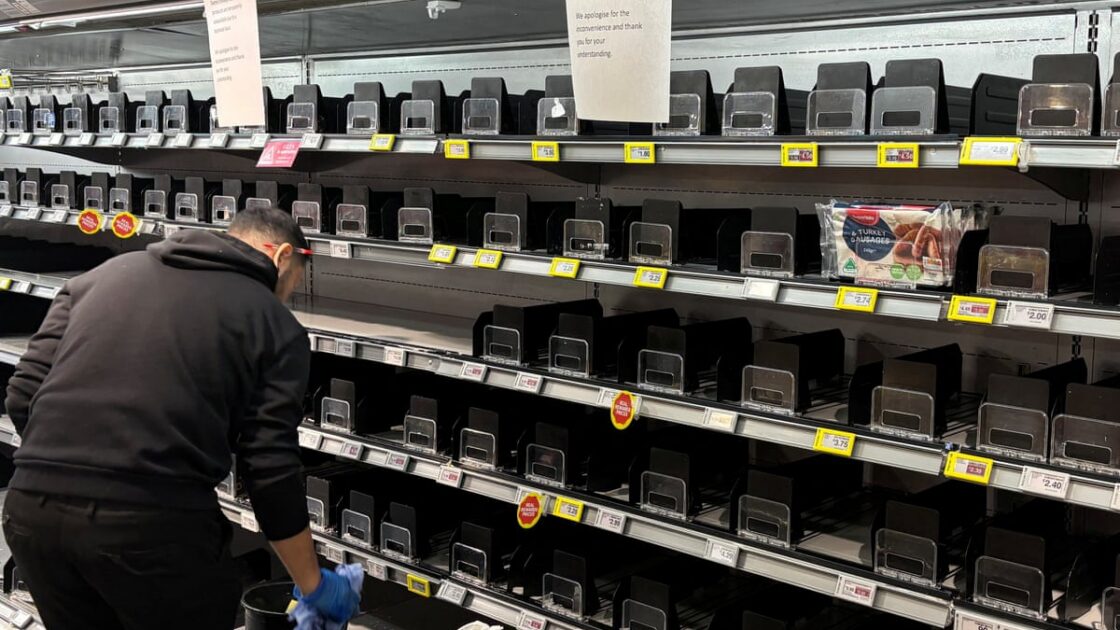
UK food and meat suppliers have been caught in a wave of cyber-attacks after hackers manipulated supermarket refrigeration systems across Europe. The National Cyber Security Centre stated it is assisting affected organizations, though the domestic impact remains minimal so far.
Impact on UK and European Suppliers
Retailers across Belgium, Estonia, Finland, Ireland, Luxembourg, the Netherlands, and Sweden experienced refrigeration failures, with some freezer temperatures climbing to 50C. Similar incidents occurred in France last month, involving legacy internet-connected technology utilizing default passwords. While no major UK grocery chain has suffered direct impacts, the British Association of Independent Meat Suppliers reported that some of its members became collateral damage in the hacks.
Association representatives confirmed that no meat was lost, though affected units at one company reached up to 100C while others began defrosting. These targeted units were empty at the time. A London fruit and vegetable wholesaler, Langridge Organic, also faced an intrusion when hackers altered unit parameters to defrost at 150C for over four hours. Managing director Alex Pearce noted that staff prevented stock damage by unplugging the cold storage units from the internet.
Langridge utilizes refrigeration control software developed by Copeland. Copeland announced it is in discussions with affected customers and has advised software fixes.
Cybersecurity Warnings and Threat Analysis
Speaking at the annual review launch of the NCSC, director of operations Paul Chichester stated that the agency is actively monitoring the situation and closing technology loopholes before exploitation. Chichester noted the attacks did not use artificial intelligence and relied on long-standing vulnerabilities.
NCSC chief executive Richard Horne described the incidents as the beginning of a broader threat landscape driven by AI exposing hidden IT vulnerabilities. Meanwhile, chief technology officer Ollie Whitehouse emphasized that everyday connected domestic devices remain vulnerable, urging manufacturers to build safer technology and consumers to invest in secure equipment.
Cybersecurity firm Lupovis reported recording 256 attempted attacks on dummy Danfoss fridge controls between October 20 and October 30. Lupovis chief executive Xavier Bellekens stated that authentication attempts mostly used factory-default credentials and relied on bulletproof hosting. Bellekens added that the infrastructure involved shows overlaps with malicious operations previously linked to Russia.