Table of Contents
BMW announced plans to expand its navigation-guided, partially automated driving features into urban environments beginning in 2027. The rollout will start in Germany before expanding to additional international markets.
Urban Capabilities and Operation
The upcoming system uses built-in GPS navigation to help steer, accelerate, and brake on both highways and city streets. On local roads, the technology assists with executing lane changes, making turns, yielding to other vehicles, and navigating roundabouts.
Operating as a Level 2 driver assist system, it demands that motorists keep their eyes fixed on the road and remain prepared to take manual control at any moment. While highway driving permits drivers to take their hands off the steering wheel, city driving requires drivers to keep their hands on the wheel at all times.
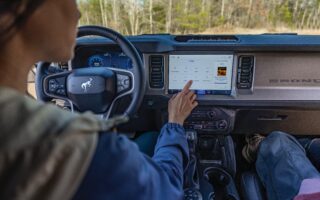
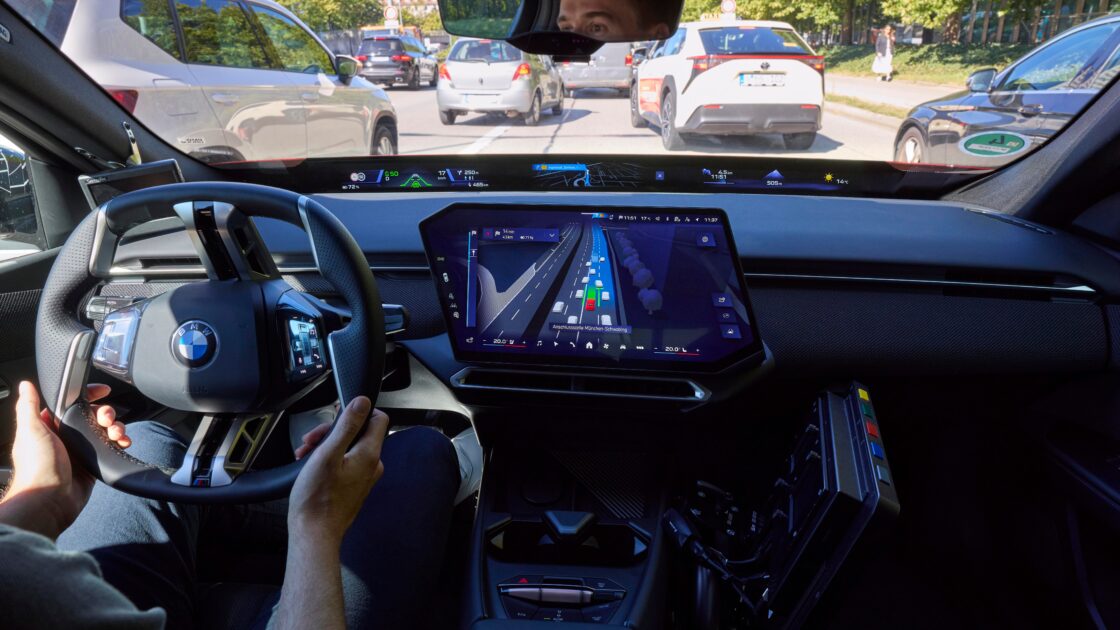
The automaker designed the technology to work cooperatively with motorists instead of conflicting with their control. Drivers can steer, brake, or accelerate manually at any time to modify their driving path without deactivating the system. Meanwhile, the vehicle displays its surroundings and system operations directly in the driver’s line of sight through a heads-up display, alongside a 3D map featured on the main dashboard screen.
Rollout and Regulatory Compliance
BMW is joining a growing list of automakers rushing to release partially autonomous city driving features to compete with Tesla and its Full Self-Driving system. The company recently unveiled its next-generation Neue Klasse platform, which features a driver assist system partially driven by Qualcomm technology.
Vehicles such as the BMW 3 Series, 7 Series, X5, iX3, and iX4 already include the necessary cameras and sensors built directly into the hardware. BMW plans to enable the new functionality via an over-the-air software update.
The system complies with recent European safety regulations that permit vehicles to recommend and execute automated driving maneuvers on city streets. BMW stated that independent experts have already road-tested the configuration to verify it satisfies technical benchmarks, with formal government approval anticipated in early 2027.
Safety Concerns and Liability
As partially automated vehicles become more common on public roads, safety researchers express rising concerns regarding driver attention and crash risks. Evidence indicates that most driver-assist systems across various brands perform with lower safety margins than human drivers. Motorists frequently develop a dangerous overreliance, trusting the technology to handle driving tasks after minimal use, which results in slower-than-safe reaction times when manual intervention becomes necessary.
Implementing a Level 2 urban driving feature places BMW into contentious legal and operational territory. Similar to Tesla, BMW emphasizes that drivers retain full responsibility for the vehicle during partially autonomous urban operation. Tesla enforces identical rules for its FSD feature, though legal cases have seen some vehicle owners successfully argue that automakers share liability when crashes happen.