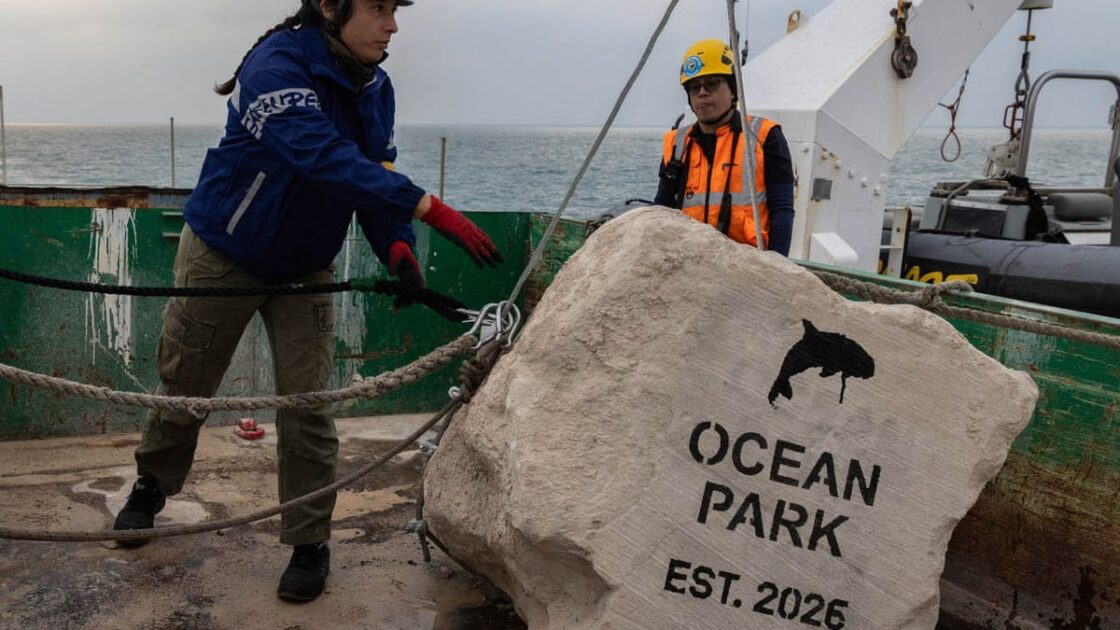
Greenpeace activists have deployed boulders into the North Sea to catch the dragnets of industrial trawlers operating within a designated marine protected area. Crew members aboard the Greenpeace vessel Arctic Sunrise dropped the massive stones to construct an underwater barrier protecting the Southern North Sea marine protected area, which is identified as the most bottom-trawled marine protected zone in the United Kingdom.
Protecting Harbor Porpoises and Seabeds
The Southern North Sea serves as a critical habitat for harbor porpoises, sustaining roughly 20% of the UK North Sea population. Despite holding marine protected area status, the majority of the zone lacks fishing restrictions, allowing bottom trawlers, dredgers, and other industrial fishing vessels to scour the seabed daily.
According to Greenpeace UK, bottom trawlers recorded upwards of 37,200 fishing hours inside the protected zone throughout 2025. Will McCallum, the organization’s co-executive director, compared the activity to a bulldozer destroying a national park while massive vessels continuously strip the water of fish and harm wildlife including sharks, sea birds, and porpoises.
The newly established boulder barrier successfully blocked 116 square kilometers, roughly 45 square miles, of the Southern North Sea marine protected area from bottom trawling. The Arctic Sunrise will maintain patrols in the area over the following days to discourage other forms of industrial fishing, with activists designating the region an ocean park.
Government Inaction and Political Support
Located along the east coast of England from north of Dogger Bank down to the strait of Dover, the marine protected area aims to safeguard porpoises by preserving prey availability. Greenpeace UK argued that intensive fishing in the region directly undermines this goal, prompting the direct action after warning officials in June.
The protest aligned with the national premiere of the BBC wildlife documentary Blue Planet III, narrated by David Attenborough and focused on ocean threats. Greenpeace data indicated that bottom trawlers and dredgers tore through 55,600 square kilometers of marine protected area seabeds in 2025 alone, equaling 58 times the size of Dartmoor national park.
Several prominent figures signed their names to the boulders before they were released into the water, including Labour MP Kerry McCarthy. The former climate minister and all-party parliamentary group for the ocean member stated that industrial fishing causes severe destruction while minimal marine areas remain shielded from it, emphasizing the urgent need for a bottom trawling ban and genuine ocean sanctuaries.
The government has been reached for comment regarding the direct action.