Table of Contents
A series of major developments unfolded across Germany over the weekend, ranging from youth protests and subsequent urban violence to concerns over winter gas storage levels, union strikes, and political transitions.
Gen Z Protests and Post-Rally Violence
Demonstrations organized by the youth initiative “Gen Z regelt” drew tens of thousands of participants across multiple German cities, with organizers putting total attendance at around 100,000 people. The rallies focused on demands for increased funding for schools, psychotherapy, and addiction treatment, alongside measures against the rising cost of living, climate protection, and opposition to mandatory military service and government surveillance.
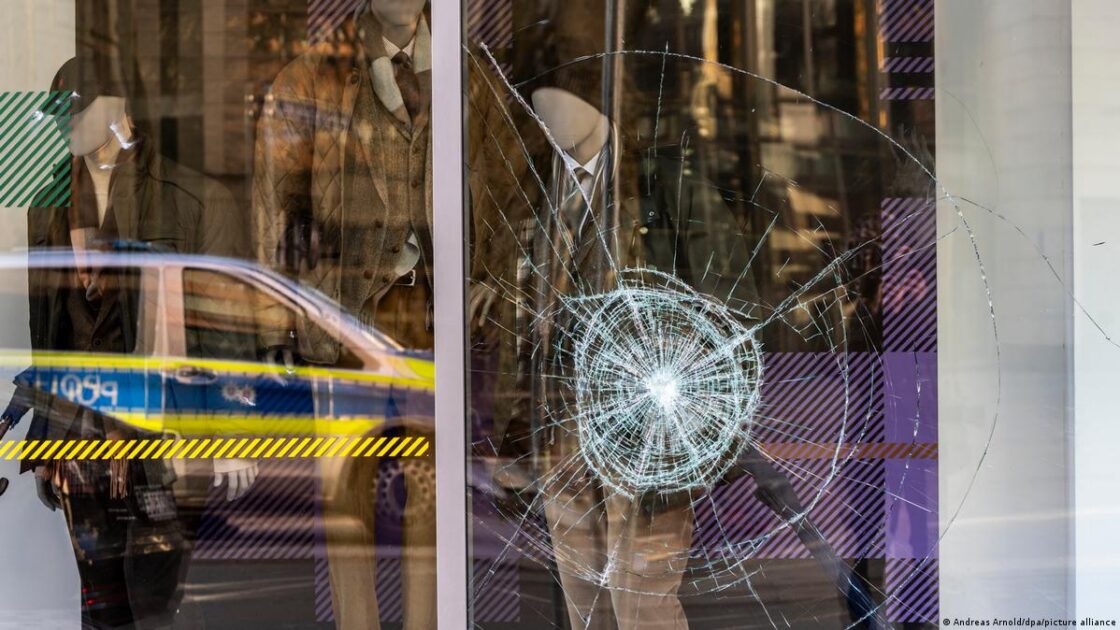
While daytime events remained largely peaceful, violent clashes erupted after dark in cities such as Frankfurt and Cologne, resulting in over 100 police officers injured, 17 stores damaged, five stores looted, and 54 individuals detained. Hesse Interior Minister Roman Poseck attributed the unrest to left-wing extremists and young troublemakers with migrant backgrounds. Meanwhile, Federal Police union chairman Andreas Rosskopf told the Rheinische Post that autonomous and masked individuals hijacked the gatherings, and a Cologne police spokeswoman suggested that looting in her city was linked to Halloween celebrations rather than the protests.
The “Gen Z regelt” initiative distanced itself from the post-rally riots, stating it had no influence on the subsequent events, and called for fresh demonstrations on November 14. German Interior Minister Alexander Dobrindt condemned the rioters, calling for severe criminal penalties, while praising police operations for preventing wider devastation.
Natural Gas Security and Industrial Strikes
Germany’s Economy Ministry maintained that the nation’s natural gas supply remains secure for the upcoming winter despite storage facilities reaching only 61.2% capacity, falling short of the 75% target set for late October. A spokeswoman for Economy Minister Katherina Reiche stated that security relies on actual withdrawals, ongoing imports, and precautionary measures. However, Sebastian Heinermann of the Energy Storage Initiative warned the dpa news agency that missing the target serves as a serious warning that increases vulnerability during exceptionally cold spells or import disruptions.
Concurrently, the IG Metall union launched limited warning strikes in the metalworking and electrical sectors at midnight, affecting facilities in Rhineland-Palatinate and Munich. Union Chair Christiane Benner initiated the walkouts after employers offered a one-time payment next year and a 1.3% step increase in July 2028 during negotiations. The union represents approximately 3.7 million workers and demands a 5% pay increase over 12 months alongside job and plant security.
Political Developments and Additional News
In Berlin, the Left Party voted overwhelmingly in favor of formal three-party coalition talks with the Greens and the Social Democrats, a move that could commence on Monday under the leadership of Elif Eralp. Former Chancellor Angela Merkel stated during an interview with MagentaTV that it is time for Germany to elect its first female president to succeed Frank-Walter Steinmeier, whose second term concludes ahead of the Federal Convention vote on January 30.
German President Frank-Walter Steinmeier warned during an ARD interview that European nations must enhance their understanding and regulation of artificial intelligence to keep pace with the United States and China. Additionally, German police reported investigating attempted aggravated assault after children across several states found sharp needles and metal screws concealed inside Halloween candy. Meanwhile, the German Federation of Organic Food Producers reported a 2.8% sales increase for organic products between July and September, reaching a record 8.1% market share.
The coalition negotiations in Berlin are scheduled to start following agreement from the Social Democrats and Greens to discuss a proposal involving the public acquisition of roughly 160,000 residential apartments.