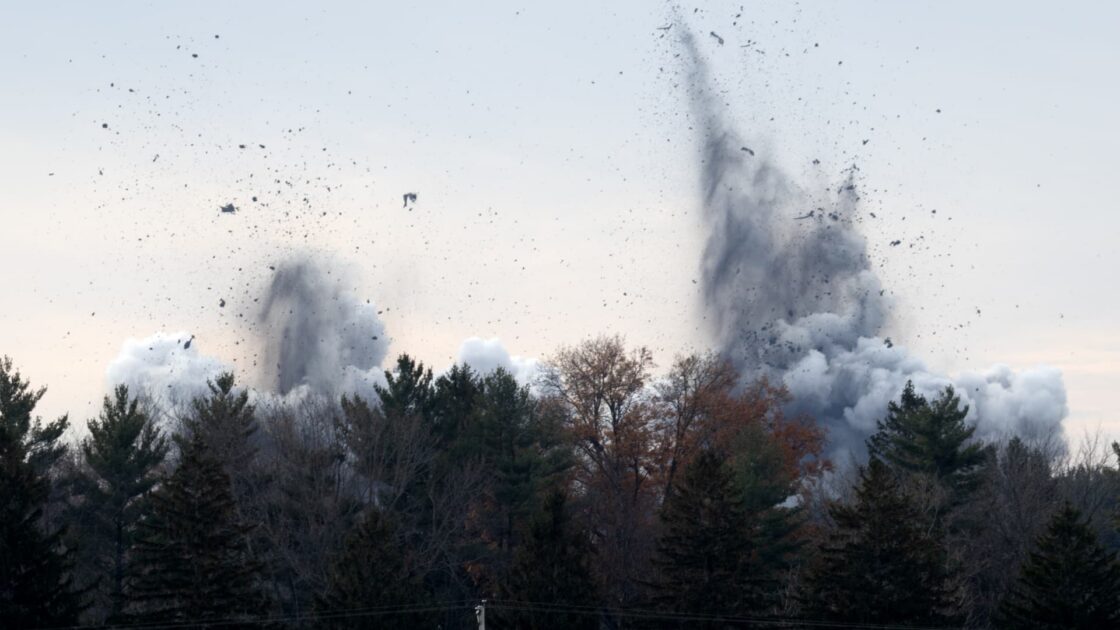
The U.S. Army conducted a controlled detonation of the nation’s entire supply of lead azide on Wednesday at an ammunition plant in Middletown, Iowa. Officials authorized the destruction of the 5 tons of degraded bomb-making chemicals, citing the risk of an uncontrollable explosion as temperatures began to drop.
Safety Measures and Public Concerns
The operation, which took place around 9 a.m., resulted in a loud boom and the release of two white plumes that dissipated shortly after the blast. While the Army implemented safety measures, including the use of concrete and sand barriers, ballistic gels, and over 100,000 gallons of water to suppress potential lead dust, the event sparked significant concern among local residents regarding environmental and health impacts.
Maj. Gen. Eric Shirley, who led the operation, stated that the Army had reached a point where “Inaction is no longer an option.” Government officials had advised residents living within a 5-mile radius to evacuate, though they maintained that the barriers were designed to contain the majority of the plume. Acting Secretary of the Army Adam Telle urged the public to remain calm, noting that the wind was expected to carry the plume southwest toward Missouri, away from the city of Burlington.
Despite these assurances, many residents expressed frustration over the lack of information and the timing of the event, which occurred just one day before the Thanksgiving holiday. Some locals sealed their homes as a precaution, while nearby schools canceled classes and local businesses temporarily closed. Resident Lucy Giehl noted that the long-term risks of lead exposure remain a concern, questioning why the issue was not addressed earlier.
Background and Legal Context
The stockpile of lead azide had been consolidated at the Iowa Army Ammunition Plant from various bases across the country in 2009. According to Robert Cekada, director of the Bureau of Alcohol, Tobacco, Firearms and Explosives, the materials were stored for potential future use in munitions production. However, an inspection in March revealed that the chemicals had begun to crystallize, rendering them highly sensitive to friction and cold temperatures.
The Army initially planned to conduct the detonation last Friday but postponed the operation three times to improve safety protocols and wait for favorable wind conditions. Environmental groups had previously filed a lawsuit to block the plan, but a federal appeals court ruled on Monday that the U.S. Environmental Protection Agency had sufficiently established safeguards to minimize the spread of lead dust, allowing the detonation to proceed.