Table of Contents
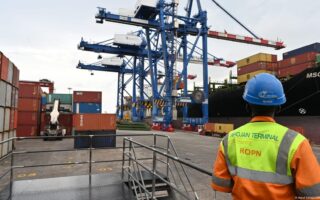
The Trump administration has announced plans to impose new trade tariffs on 14 of its major trading partners, including China, the European Union, and India. Washington accused these economies of flooding world markets with cheap goods, with China facing the highest proposed rates.
Investigation Into Structural Excess Capacity
The Office of the US Trade Representative (USTR) announced the duties following an eight-month investigation into what Washington defines as structural excess capacity. A senior US official told Reuters that this refers to countries promoting production and capacity divorced from the realities of demand and market principles through subsidies and industrial policies.
The recent probe began in March and covered industries ranging from steel and cars to computer chips and solar panels. Washington argues that state support enables foreign factories to sell goods more cheaply globally, undercutting American manufacturers and discouraging domestic investment. The senior official stated that these new duties would not be added on top of existing forced labour tariffs.
The tariffs represent the latest effort to rebuild sweeping import taxes previously struck down by the US Supreme Court in February. Trade policy expert Dmitry Grozoubinski noted that the measures use Section 301 of the 1974 trade law, which permits the US to penalize unfair trade practices. Grozoubinski described the legislation as being used like a flamethrower rather than a scalpel to set the US tariff code.
Targeted Countries and Proposed Rates
The investigation examined 16 economies and proposed tariffs for 14 of them: China, Bangladesh, Cambodia, the European Union, India, Indonesia, Japan, South Korea, Malaysia, Singapore, Switzerland, Taiwan, Thailand, and Vietnam. Mexico and Norway were spared for now.
China faces a proposed 20 percent excess capacity tariff that comes on top of the roughly 25 percent in tariffs from Trump’s first term. Vietnam also faces a proposed rate of 20 percent. The senior official noted that the new duties will not break tariff limits in negotiated trade deals, which include caps of 15 percent for the EU, Japan, and South Korea, and 19 percent for Malaysia.
India lacks a signed trade deal with the US, though talks have continued. Meanwhile, the administration pointed to Germany and Ireland’s trade surpluses, car industries in China and Japan, Singapore’s computer chips, and Norway’s fuel and seafood as evidence during the investigation.
Political Timing and Potential Challenges
The announcement arrives weeks after midterm elections where the Republican Party suffered losses amid voter concerns over the cost of living and trade tariffs. Independent political analyst Hisham Wahby stated that naming Stephen Miller as White House chief of staff indicated the administration would double down despite the headwinds.
Grozoubinski said the new tariffs will face court challenges but are likely to remain active while lower court rulings are appealed. He added that these measures stand a better chance of survival than previous attempts because foreign subsidies provide a more legally robust complaint than forced labour allegations.
Impact on US Manufacturing and Global Fallout
The administration argues tariffs will encourage companies to build domestic factories. However, Grozoubinski explained that while competing American companies gain, those relying on imported parts lose out, and businesses cannot guarantee how long the tariffs will last.
Immediate costs are expected to fall on US companies, households, and small businesses. Abroad, the tariffs threaten the US-China truce expiring in January, complicate trade talks with India, and anger allies, while at home they set up a clash with Democrats taking control of Congress in January.