Efforts to avert the collapse of talks at the UN COP31 summit have faced further delays on the second day of overtime, as countries struggle to reach a new global climate deal. A new draft agreement was published in the early hours of Sunday which the Turkey and Australia co-hosts hoped would bridge the divide between nations.
Draft Text and Differing Reactions
Although the new text still includes no specific reference to transitioning away from fossil fuels – an omission in the previous draft that sparked threats of walkouts – it does acknowledge a previous commitment made by countries to do just that three years ago. Countries were expected to reconvene to decide whether to approve a new deal, but that meeting was delayed on Sunday morning.
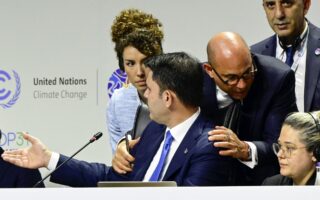
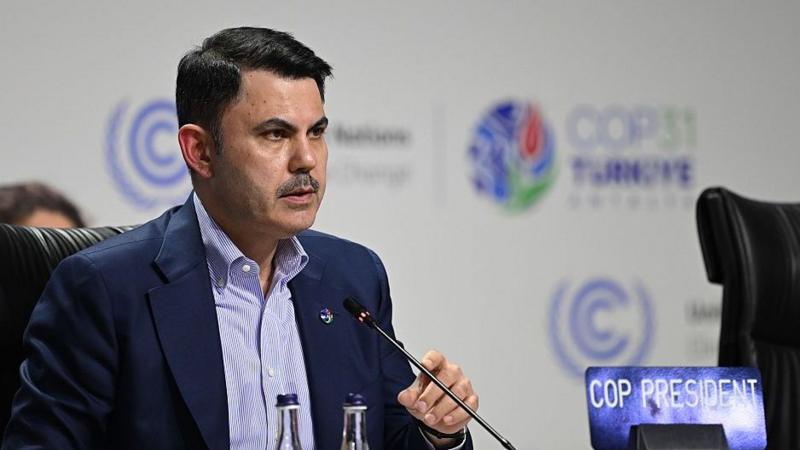
The president of the talks, Turkey’s Environment Minister Murat Kurum, told the BBC he was hopeful of a breakthrough as he entered the summit on Sunday, stating they would be happy soon enough. However, that outlook was not shared by the EU, which considers the new text to be a backward step, according to the BBC. The EU and Pacific states had been arguing against the removal of fossil fuels from the draft text, though the EU has not yet formally reacted to the latest draft.
The Africa Group is likely to be disappointed at this latest iteration as it includes no specific figure on money for adaptation and instead kicks that decision to future meetings. The new draft also includes for the first time a recognition that the world is on track to miss the crucial goal of keeping temperatures below 1.5C of warming.
These talks are approaching the longest-running in the COP history. If countries cannot reach consensus, as required by the UN’s climate talks process, the negotiations could be suspended until next year. This has only happened once before since countries started holding COP climate meetings in 1995.
Just hours before the new text was published, EU Commissioner for Climate Wopke Hoekstra said if the bloc could not get what is needed in terms of climate action, then there is no deal. Energy Secretary Miatta Fahnbulleh, the UK’s chief negotiator, struck a more hopeful tone, saying her team was still working to get an agreement.
A draft deal unveiled earlier this week called for a faster phase-out of fossil fuels, but a second, pared-down version released on Thursday stripped away all mentions of coal, oil and gas, sparking threats of a walk out. The fallout led to the summit in Antalya blowing past the original deadline of Friday. On Saturday, negotiating teams who had Sunday morning flights were rescheduling them, signaling that a deal was still not in sight and raising the risk that the meeting could lose the critical numbers needed to pass an agreement as teams eventually had to leave.
As part of a last-ditch effort to produce an acceptable text, the European Union and Saudi Arabia, who were deeply divided over the future of fossil fuels, were brought together on Saturday to seek a compromise. COP31 President and Turkish Environment Minister Murat Kurum told delegates in the early hours of Sunday he believed concerns had been addressed, asking them to look at the decision carefully and noting they were closer than ever to agreement on the remaining issues.
Core Disputes and Fossil Fuel Concerns
Ministers from Panama, Solomon Islands, Cote d’Ivoire and the EU fought to have a commitment to move away from fossil fuels put back into the final agreement, after fossil fuel producers led by Saudi Arabia pushed for its removal. Juan Carlos Navarro, Panama’s minister for the environment, stated it was not acceptable to have a COP or a cover decision that did not even mention fossil fuels and that they simply would not put up with it. Tuvalu’s Climate Minister Maina Talia told reporters it was a red line for the low-lying Pacific nation, noting they were talking about the root cause of all of this.
France’s Minister of Ecological Transition, Monique Barbut, criticized several references in the text to carbon capture, use and storage (CCUS) – the technology that takes emissions when they are released and stores them underground – describing it as a license for other countries to keep burning oil and gas. Barbut stated they could not announce to the world that they were now getting to a 1.5 temperature increase and do business like nothing was happening. In the latest text, the commitments to CCUS have been reduced, which may be enough to alleviate the EU’s concerns.
For the first time at a COP, the agreement, known officially as the Antalya Accords, could acknowledge that the goal set under the Paris climate accord of keeping global temperature rise below 1.5C has been missed, as the world enters a period called overshoot. Beyond this point, scientists warn millions more people will be exposed to sea level rise and extreme heat. Australia’s Climate Change and Energy Minister, Chris Bowen, who is leading negotiations, pushed back on the need to include language on fossil fuels, arguing the summit was about implementation and should focus on the move towards clean energy sources.
Meanwhile, another key issue raised by developing nations regarding a lack of money appears unresolved in the latest draft agreement. Earlier versions of the text included an agreement to ramp up money for adaptation to $120bn by 2035, a figure that was subsequently removed. Ghana’s Environment Minister and chair of the African Group of negotiators, Zanetor Agyeman Rawlings, stated they did not come there to beg, but to claim what was rightfully theirs for their people suffering the brunt of anthropogenic activities of developed countries. Climate activists and environmental groups, who are observers to the talks, slammed negotiations, with Mohamed Adow of Powershift Africa stating without any doubt that this has been the worst COP ever.