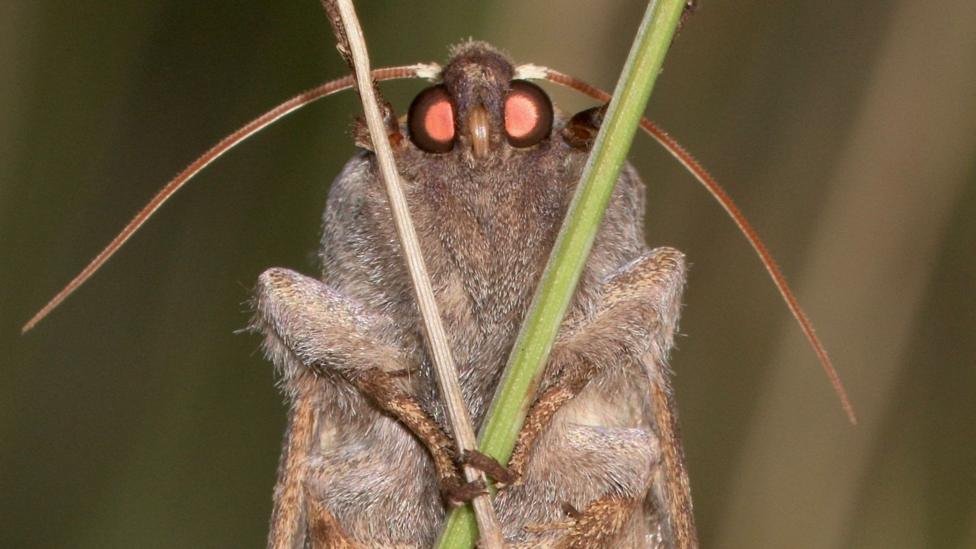
Wildlife enthusiasts have recorded a record-breaking number of sightings of an elusive moth species at a nature reserve in Essex. The Fisher’s estuarine moth was spotted 111 times at Abbotts Hall in Great Wigborough, near Colchester, in 2026.
Conservation Efforts and Population Growth
Dr Zoe Ringwood from the Essex Wildlife Trust described the work to boost the highly threatened species’ population as an important success story. The charity has committed to continuing surveys across new and existing plots along the Essex coast.
Fisher’s estuarine moths feature pale gold-brown wings decorated with light and dark spots. They naturally inhabit low-lying natural grasslands that face vulnerability from erosion. Their survival depends heavily on rare hog’s fennel plants, which have suffered due to rising sea levels.
To safeguard the species, the Essex Wildlife Trust planted hog’s fennel at Abbotts Hall in 2005 and introduced moth eggs five years later. More than 100 of these scarce insects were counted for the first time in 2025, before that record was surpassed in 2026. The charity expressed confidence that a self-sustaining population is now established at Abbotts Hall.
Dr Ringwood, who serves as the senior conservation evidence manager for the trust, stated that the milestone reflects how taking evidence-based conservation action can achieve positive results for a threatened Essex species. In addition to Abbotts Hall, hog’s fennel has been planted at nature reserves located in Fingringhoe, Wrabness, and nearby Tollesbury.