Table of Contents
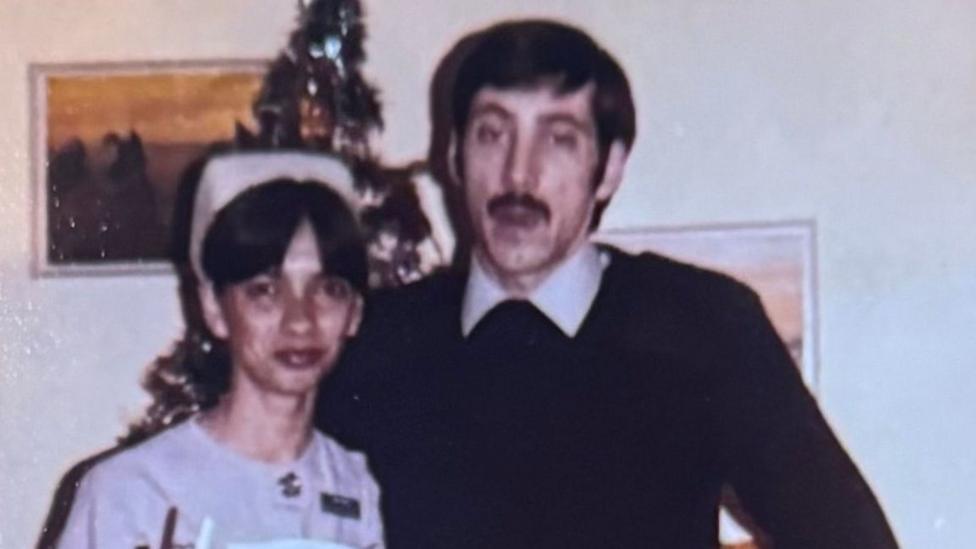
A widow is demanding accountability after her firefighter husband died from a rare form of lung cancer at age 39, which she believes stemmed from a toxic chemical lagoon fire in north Wales in August 1980. Steve Williams was one of 60 firefighters deployed to tackle the blazing Llwyneinion lagoon, where he slipped into the fluid before being pulled out.
The 1980 Lagoon Fire and Health Concerns
Jilska Williams stated that her late husband suffered a “double-whammy” from running into fires and actually falling into the lake and drinking the chemical-filled fluid. She recalled that he was checked at a hospital after the incident, given a tetanus injection, and sent home, which she described as a disaster waiting to happen. The couple later moved to Melbourne, Australia, where Steve was diagnosed with stage four small cell carcinoma in 1994 and passed away three days after their 17th wedding anniversary, leaving behind two children aged six and 10.
Steve’s family joined a group of former firefighters coming forward following a BBC documentary, Buried with Michael Sheen, which explored Wales’ toxic waste legacy. Eleven firefighters or their families reported to a BBC investigation that the fire may have impacted their health, noting an increased number of miscarriages among partners in the year following the incident alongside subsequent cancer diagnoses.
Andy Moore, a fellow firefighter who helped smother the blaze, recalled that crews lacked proper protection. He stated that personnel fought the fire in normal tunics, drips, and helmets without chemical personal protective equipment, noting he walked around the fire ground in a shirt and tie. Moore reported being diagnosed with skin cancer a year prior and highlighted that many colleagues who attended had died young from cancers.
Jim MacGrane, another firefighter present at the time, noted that six wives suffered miscarriages within 12 to 15 months of the incident. Mark Jones, whose father Ken also attended and later died of lymph and brain cancer in 2011, stated that a significant number of the 60 attendees had developed or passed away from cancer. Mark Jones expressed a desire to participate in blood testing to check for links to polychlorinated biphenyls (PCBs) found in the area.
Chemical Legacy and Expert Assessment
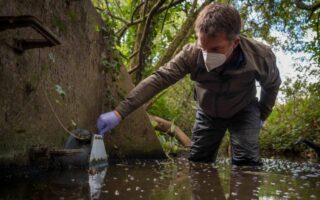
The Llwyneinion site served as a dumping ground for chemicals suspected to include cancer-causing PCBs from chemical giant Monsanto. Research teams found elevated levels of PCBs in public soil samples near the fenced-off lagoon and at 13 other suspected dumpsites across the country. PCBs were once widely used in white goods and lipsticks due to their non-flammable nature, but are now recognized as persistent “forever chemicals.”
Professor Anna Stec, a leading fire chemistry and toxicity expert at the University of Leicester, explained that establishing a direct link between chemical exposure and later health issues is exceptionally challenging. She stated that firefighters are exposed to a toxic cocktail of substances throughout their careers, making individual links difficult to prove without a multi-disciplinary approach. However, Stec added that data from the Firefighters’ Cancer and Disease Registry shows patterns where major fire incidents lead to groups of firefighters developing similar cancers, making further research worthwhile.
Response from Authorities and Unions
Wrexham Council, which purchased the site in 1980 for £1, stated that while the location does not meet the legal definition of contaminated land under current legislation, it conducts regular inspections and ongoing monitoring of streams and groundwater. The council expressed sorrow over the illnesses experienced by the fire service members and their families, noting it takes environmental and public health responsibilities very seriously. The council added that concerns were previously raised with their contaminated land officer twice, and that an emergency response plan for the site was drawn up and revisited in 2017.
North Wales Fire and Rescue Service stated it could not comment on the 1980 fire, but noted that approaches to occupational health, wellbeing, and monitoring continue to evolve as evidence develops. Eastman Chemical Company, responsible for Monsanto’s legacy production in the UK, did not respond to requests for comment.
Gareth Tovey of the Fire Brigades’ Union (FBU) announced that the union is taking the matter seriously and consulting with scientists to support the retired firefighters in their search for answers. Tovey added that he would write to Welsh fire and rescue services to inquire about current protections for personnel responding to historical toxic waste dump sites.
Meanwhile, the Welsh government announced in its draft budget a £2m commitment to initiate a new approach for managing contaminated land, alongside the development of a Wales-wide strategy to progressively restore post-industrial land.