Table of Contents
Italy has strongly criticized Ukraine for conducting military strikes against Russian vessels in Libyan territorial waters, stating that violating Libya’s sovereignty was a serious mistake. The rebuke from Rome exposes a rare diplomatic rift between Italy and Kyiv, which has received extensive military and financial backing from the Italian government since Russia launched its full-scale invasion in 2022.
Why Did Ukraine Attack Russian Vessels Off Libya?
Ukraine stated that it sank a Russian warship and hit a cargo vessel carrying military equipment near the Libyan coast. According to eastern-based Libyan forces, the strike on the warship at the port of Benghazi resulted in the deaths of two naval officers belonging to the self-styled Libyan National Army (LNA). Ukrainian Foreign Minister Andrii Sybiha defended the operations, asserting that the targeted vessels were legitimate military assets and that Kyiv possesses a legal right to defend itself against Russian aggression.
Sybiha added that the actions were not meant to harm the Libyan population and that Ukraine fully respects the territorial integrity of the North African nation. Meanwhile, Libya remains fractured between a UN-recognized administration based in Tripoli and a rival government in the east supported by the LNA and military commander Khalifa Haftar. Musa al-Koni, vice president of the Tripoli-based Presidential Council, condemned the operation as a declaration of war against the Libyan state, while the LNA vowed to retaliate against the Ukrainian forces at an appropriate time and place.
How Has Italy Responded Domestically and Geopolitically?
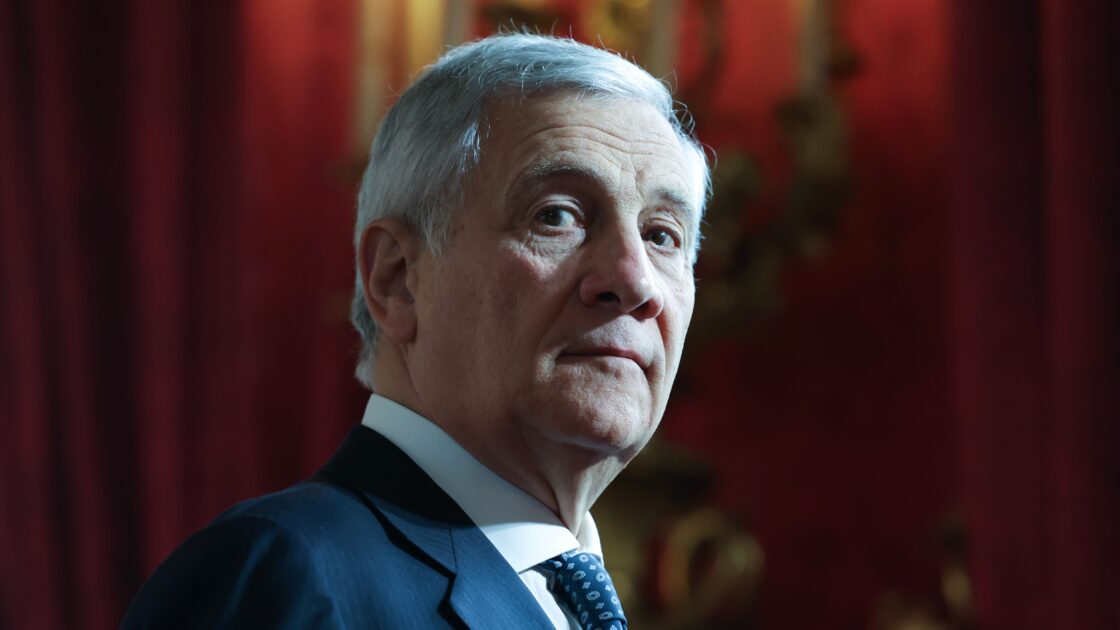
Italian Foreign Minister Antonio Tajani told the Corriere della Sera newspaper that Rome received no advance notice of the operation and that it was wrong for Kyiv to violate Libyan sovereignty. Italy’s far-right League party, a partner in the governing coalition, also condemned the strikes over fears they could destabilize Libya. Matteo Villa, a senior research fellow at the Italian Institute for International Political Studies (ISPI), told Al Jazeera that the incident empowers Deputy Prime Minister and League leader Matteo Salvini, who opposes additional weapons shipments and funding for Ukraine, by questioning whether Western military aid runs counter to Italian national interests.
Italy has provided more than 3 billion euros ($3.29bn) in military assistance to Ukraine and backed broad sanctions against Moscow. However, Alessia Melcangi, a nonresident senior fellow at the Atlantic Council, told Al Jazeera that Rome’s swift condemnation acts as damage control to maintain its influence across rival factions in both western and eastern Libya, protecting its regional standing.
What Are Italy’s Core Interests in Libya?
Rome maintains deep strategic, economic, and geographical ties with Libya, located just 300km (186 miles) across the Mediterranean. Italy relies heavily on Libya for energy and migration management, with Libya serving as the primary departure point for migrants crossing the sea to Italy and supplying roughly a quarter of Italy’s crude oil imports last year. Aldo Liga, another ISPI research fellow, told Al Jazeera that any escalation threatening Libya’s stability endangers energy flows and trade routes in the Strait of Sicily, making regional instability a direct threat to Italian security.
In his interview with Corriere della Sera, Tajani emphasized that the presence of Italian military personnel and energy firm Eni in Libya heightened Rome’s alarm. He stated that the Russia-Ukraine war must be prevented from expanding and causing new conflicts elsewhere.