Table of Contents
Gurpreet Singh Randhawa, a 40-year-old Indian national from Punjab, traveled to Russia for a driving job at a garment factory after seeing a Facebook advertisement. Instead of working as a driver, he was deployed to fight in Ukraine for the Russian military, eventually escaping his unit to surrender to Ukrainian forces in November and becoming a prisoner of war.
Recruitment and Government Data
In an interview with Ukrainian YouTuber Volodymyr Zolkin, Randhawa explained that upon arriving in Russia, he was taken to a military facility, forced to sign a contract, and sent for training after having his passport and phone confiscated. His account has not been independently verified.
Randhawa is the second known Indian national to escape the Russian military. Sahil Majothi, a 23-year-old from Gujarat, surrendered to Ukrainian forces in October 2025 after joining the military while serving a prison sentence, believing it would help secure his release.
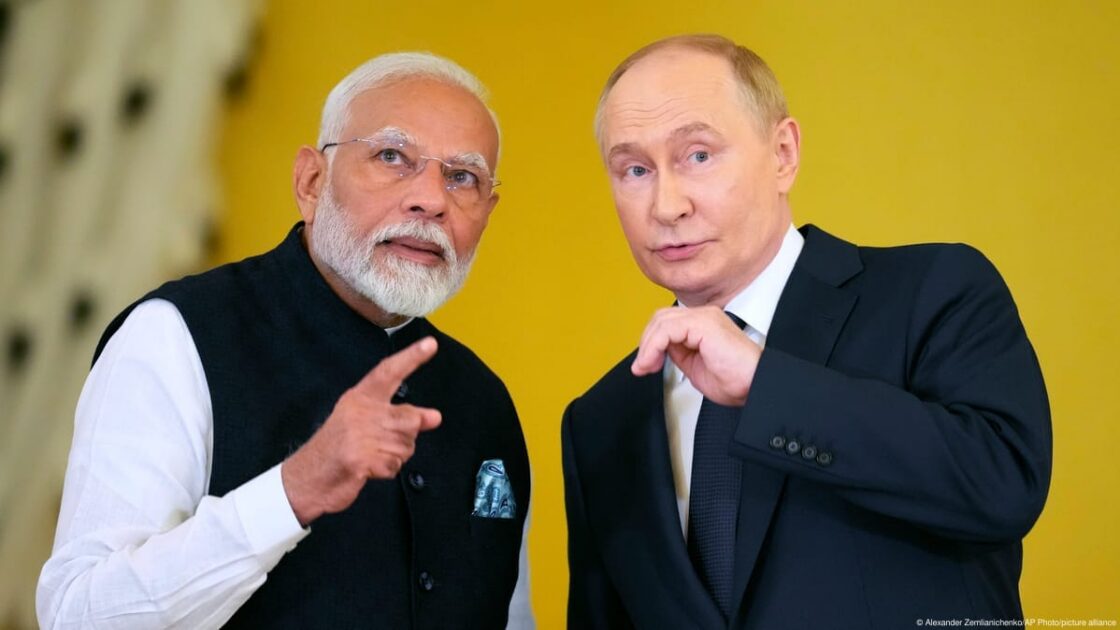
These cases highlight that little has changed since Indian Prime Minister Narendra Modi discussed the issue with Russian President Vladimir Putin in Moscow in July 2024. Although Putin assured Modi that misled Indians would be discharged, recruitment has continued.
According to an October filing by India’s Ministry of External Affairs (MEA) before the Supreme Court, approximately 267 Indians have joined the Russian armed forces since the full-scale invasion of Ukraine began. Out of this total, 139 individuals were discharged, 51 were killed, and the whereabouts of 77 remain unknown, with Russian authorities confirming seven are missing.
The MEA noted that the problem also involves Indians who knowingly enlist for financial benefits while believing they can rely on government intervention later. The ministry stated that some individuals even approached Indian authorities to renounce citizenship and obtain Russian passports, a path the government strongly discourages.
Economic Pressures and Vulnerability
Former diplomat Anil Trigunayat told Deutsche Welle: DW.com – Top Stories (dw.com) that the movement of Indian workers to Russia creates both economic opportunities and protection challenges. Inadequate oversight of recruitment networks leaves vulnerable workers exposed to exploitation, while intermediaries burden them with high fees and salary deductions.
According to Trigunayat, some workers paid between 300,000 and 500,000 Indian rupees ($5,400 / €4,900) to agents, and local and foreign intermediaries took over 30% of their monthly salaries in Russia. He added that Indians who overstayed their visas were particularly vulnerable to offers of military service for high wages and regularized immigration status.
Mohammad Sufiyan from Hyderabad stated to Deutsche Welle: DW.com – Top Stories (dw.com) that he was lured to Russia under false pretences and forced into active combat before returning home. Sufiyan noted that many people are duped or driven by economic desperation to seek employment abroad, sometimes even pursuing citizenship despite the dangers.
Rajan Kumar, a professor at Jawaharlal Nehru University, told Deutsche Welle: DW.com – Top Stories (dw.com) that some Indians traveling for work end up caught in combat zones without ever joining the military. He noted that India is negotiating with Moscow for their return and that Russia has been cooperative so far.
Limits of Diplomacy
The ongoing recruitment emphasizes Russia’s demand for manpower in its nearly five-year war in Ukraine, alongside the limited influence New Delhi holds over Moscow despite their close political ties. Mohsin Raza Khan, a professor at the Jindal School of International Affairs, told Deutsche Weller: DW.com – Top Stories (dw.com) that Putin prioritizes sustaining the war effort over the concerns of a strategic partner to avoid domestic unrest from a new mobilization.
Khan stated that sustaining the war takes precedence and neither Modi nor New Delhi has sufficient leverage to alter it. He added that domestic unemployment drives young, educated men without connections to accept the risks of a high-casualty war.
India continues to press Russia for action as the issue persists.