Table of Contents
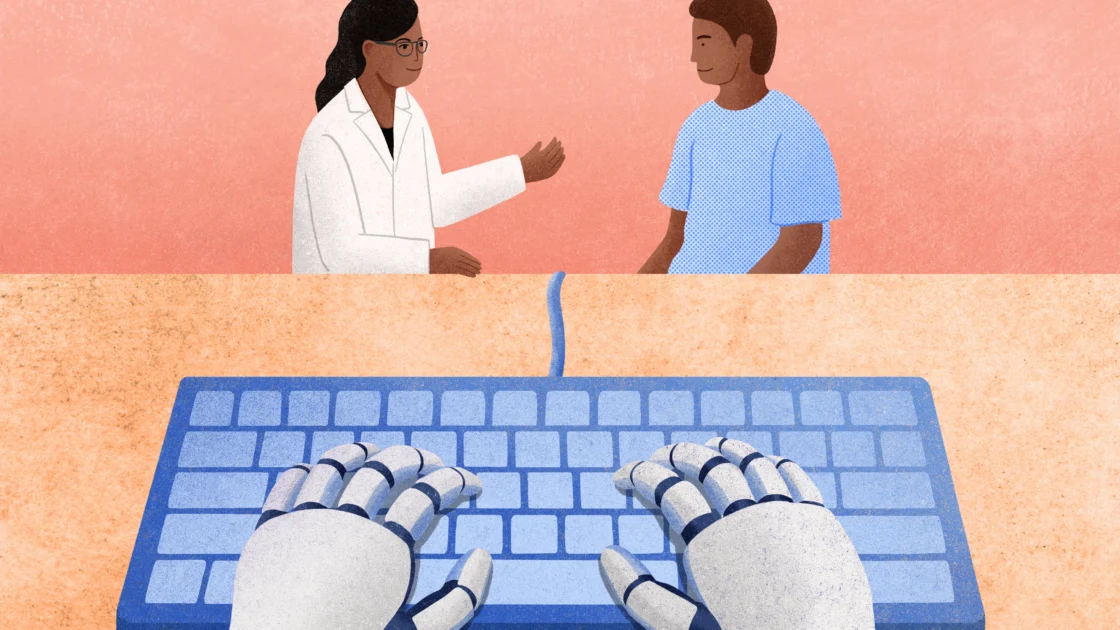
Artificial intelligence scribes are increasingly common in medical offices, helping physicians record and summarize patient visits to save time and improve eye contact during consultations. However, patients often feel concerned about privacy and how these digital tools listen in on confidential health conversations.
How AI Scribes Function During Visits
Dr. Mara Gordon, a family physician in Camden, New Jersey, explains that she asks patients for their consent before starting an AI-powered recording app on her smartphone during primary care appointments. The software utilizes automatic speech recognition to record the discussion and separate the voices of the doctor and the patient, or additional family members if present. Following the visit, a specialized large language model converts the raw transcript into a structured medical note that reflects physical exam findings, patient statements, and the physician’s clinical decision-making. Physicians utilize various applications ranging from free smartphone downloads to tools embedded directly in electronic health records.
Privacy Regulations and Security Measures
Conversations recorded via AI scribe apps are not stored locally on personal phones, but are instead uploaded directly to HIPAA-compliant cloud storage where the clinical notes are generated. According to HIPAA regulations, software companies must safeguard patient data through encryption, strict access controls, and measures against breaches, remaining legally liable for any leaks. Once the notes are processed, most scribe systems delete the original recordings and transcripts after a designated period to protect patient privacy and shield doctors from potential malpractice lawsuits.
Errors and Liability in Medical Charting
Despite advanced technology, AI scribes can produce significant errors that misrepresent complex clinical situations or confuse patient details such as gender, age, and critical phrasing like mistaking “I do” for “I do not.” Dr. Eileen Kim, an assistant professor of internal medicine at the University of California San Diego, warns that overburdened doctors may fail to adequately review flawed notes, which can then propagate errors throughout the patient’s electronic health record. Because physicians bear ultimate responsibility for their documentation, Dr. Gordon emphasizes that she carefully reviews and edits every AI-generated note before signing it into the medical record.
Broader AI Integration and Patient Choice
While patients can easily opt out of using AI scribes by having their doctor take traditional notes, avoiding artificial intelligence across the wider healthcare system is nearly impossible. Machine learning tools are already deeply embedded in medical billing, risk calculators, early warning systems, and patient communication. Ultimately, while AI scribes help streamline administrative tasks and allow physicians to connect more personally with patients, medical experts agree that human intelligence and the doctor-patient relationship remain irreplaceable.