Table of Contents
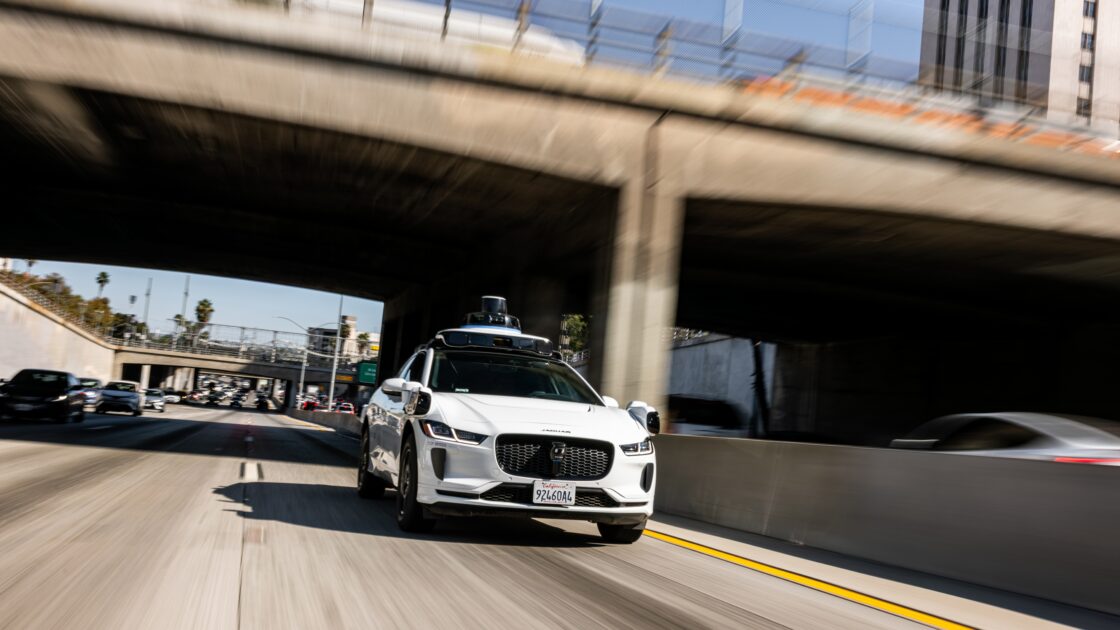
Waymo has paused commercial freeway rides across all of its United States markets following a series of traffic violations and a ban by the California Department of Motor Vehicles. The setbacks highlight how autonomous driving technology can still struggle with basic road rules and high-speed environments, as reported by The Verge.
Freeway Violations and Construction Zone Failures
On November 6th, a driverless Waymo vehicle attempted to overtake two California Highway Patrol cruisers during a traffic break on Interstate 280, a moving violation that could result in a human driver losing their license. This incident followed multiple construction zone failures. Between October and November 2026, Waymo reported 11 instances where its vehicles failed to recognize closed freeway lanes due to construction and drove into restricted areas, according to a recall filing reported by The Verge.
These recent issues prompted the California DMV to ban Waymo vehicles from all state interstates last week. This marks the second time this year Waymo has been forced to halt freeway operations. The company previously paused freeway rides after robotaxis entered active construction zones in Arizona and California, issuing a recall in June and resuming operations in late July after software updates.
Safety Experts Criticize Patch Approach
Phil Koopman, an emeritus professor in electrical and computer engineering at Carnegie Mellon University and an autonomous vehicle safety researcher, told The Verge that the previous recalls failed to solve the underlying problems. Koopman described Waymo’s software updates as “Band-Aids” that fail to address root causes while the company continues scaling up its operations.
Waymo has also faced recalls related to intersections where a vehicle failed to detect a police officer directing traffic, as well as incidents involving stopped school buses and flooded roadways. Koopman theorizes that Waymo relies on dynamic geofencing or real-time GPS feeds rather than fixing fundamental perception and reasoning flaws. In response to the California DMV order, Waymo spokesperson Chris Pappas told The Verge that the company is working diligently with regulators and noted that its vehicles have not crashed or injured anyone while entering restricted freeway areas, adding that surface street operations serving over half a million weekly trips continue safely.
The High-Speed Challenge of Autonomy
While the autonomous vehicle industry historically viewed dense cities as the main challenge and freeways as the easy part, Waymo has found the opposite to be true. Dmitri Dolgov, co-CEO of Waymo, acknowledged in a November 2025 briefing reported by The Verge that freeway driving is very hard to master at scale without a human backup driver. Operating at 60 or 70 mph presents drastically higher stakes than urban speeds of 10 to 25 mph, where stopping distances are shorter and crash lethality is lower.
Koopman told The Verge that subtle edge cases, such as gaps in construction cones or police hand gestures, trip up Waymo’s transition to end-to-end machine learning. Statistical models struggle when familiar objects appear in unfamiliar contexts, such as a stop sign on a school bus versus a post. Resolving freeway navigation is vital for Waymo’s expansion to destinations like airports, but Koopman emphasized to The Verge that regulators must demand mandatory public transparency rather than accepting quiet software patches from well-capitalized tech giants.