Table of Contents
The Trump administration has announced a new series of proposed tariffs targeting more than a dozen trading partners. Countries such as China, Vietnam, and India face some of the highest potential rates, as Washington increases pressure on these nations to conclude trade deals.
Tariffs Linked to Trade Negotiations
As reported by US Top News and Analysis (cnbc.com), the proposed levies are framed around curbing excess industrial capacity. The rates begin at 15% for entities including the European Union, South Korea, Switzerland, and Taiwan, and climb as high as 35% for Vietnam. The U.S. Trade Representative’s Office stated that it plans to cap these new duties at lower levels for nations that have completed trade agreements or remain in active negotiations with Washington.
Mark Williams, chief Asia economist at Capital Economics, stated that the overall regional impact is likely to remain limited, noting that the proposal generally restores targeted countries to their previous positions following the Supreme Court’s decision to strike down emergency tariffs in February. However, analysts indicated the measures could incentivize nations to accelerate trade talks to lock in reduced rates. U.S. Trade Representative Jamieson Greer stated on Wednesday that the policy likely will not take effect for months, while a senior U.S. official noted duties could begin as early as January.
China Policy and Reactions
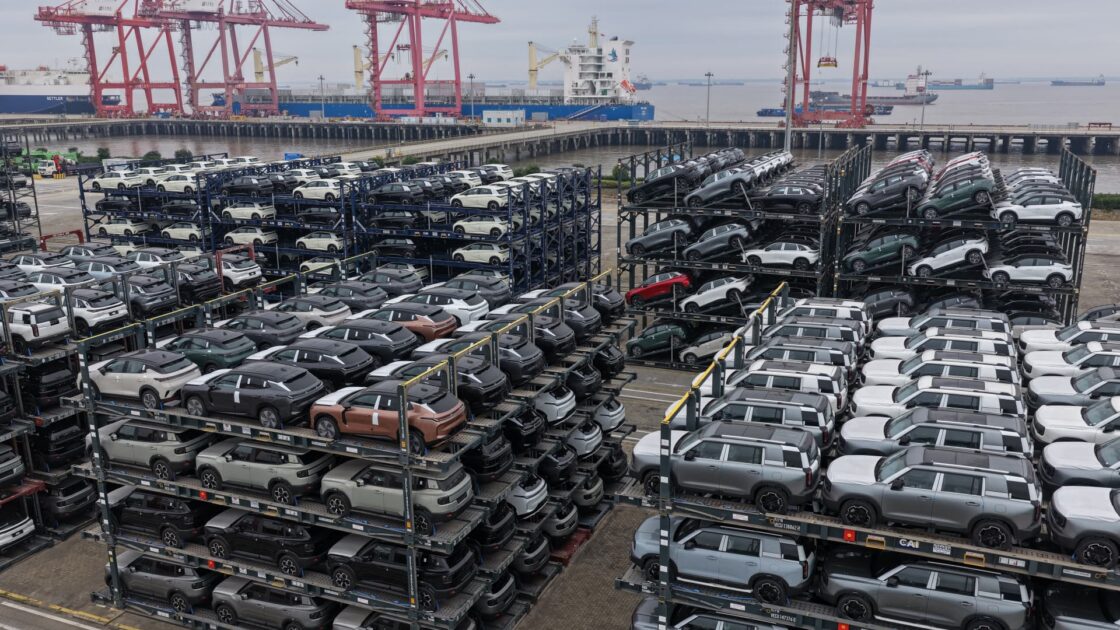
China faces a capped rate of 20%, which is in addition to an existing 25% tariff established during President Donald Trump’s initial term. The USTR warned this rate could increase to 40% if a trade truce reached in South Korea last October is not extended past January. Beijing rejected claims of excess capacity and vowed to protect its rights. On Thursday, Chinese Commerce Ministry spokesperson He Yadong urged Washington to correct its wrongdoing and return to dialogue following Section 301 investigations, while also calling for the implementation of $30 billion in reciprocal tariff cuts agreed upon in late September.
Wendy Cutler, senior vice president at the Asia Society Policy Institute, stated that Beijing appears willing to accept rates up to 20% while Washington uses the threat of higher levies as leverage to secure critical minerals, rare earths, and agricultural purchases. Williams added that the actions against other trading partners also target China, noting that the word “China” appears extensively in U.S. documents regarding Vietnam and the European Union due to concerns over slow action in restricting Chinese imports and foreign direct investment.
Impact on Vietnam, India, and Singapore
India and Vietnam face potential tariffs of 25% and 35%, respectively, which could drop to 17% and 20% through successful trade agreements. Cutler noted that both nations possess a strong incentive to finalize deals. Vietnam’s trade ministry reported Thursday that it is actively working with the U.S. on an agreement, according to Reuters. Singapore faces a maximum rate of 20% that could decrease to 10% through a reciprocal trade agreement. Singapore’s Ministry of Energy, Trade and Industry expressed strong disappointment, stating the proposal fails to account for the country’s economic structure.
During a press briefing, Deputy Prime Minister Gan Kim Yong stated that approximately $7.2 billion of direct exports will be affected, raising the effective tariff rate to 10.3% from 7.8% if the maximum levy is applied. Gan expressed surprise given the long-standing Free Trade Agreement in force since 2004, noting that Singapore imposes zero tariffs on U.S. goods while the U.S. maintains a growing trade surplus. The ministry announced plans to submit further comments during the public consultation period.
Exemptions and European Responses
Exemptions for semiconductors and other electronics are expected to mitigate the impact on South Korea and Taiwan. Although the U.S. noted South Korea’s high concentration in memory-chip production and government support, it exempted chips from the excess-capacity tariffs. Taiwan faces a 15% cap along with exemptions for mobile phones and networking equipment, leading to an estimated effective tariff rate of about 9%.
Switzerland faced a 39% tariff in 2025 before negotiating a deal to reduce duties to 15% in exchange for U.S. investments and manufacturing commitments. Following March 2026 investigations into trade practices, the U.S. recommended an additional 15% tariff. Switzerland’s Economy Ministry told CNBC that it rejected the allegations, maintained that it had already presented its arguments during bilateral consultations, and remained in close contact with U.S. authorities. European officials defended their trade relationship as balanced when accounting for services and rejected the overcapacity finding. European Commission Spokesperson Olof Gill stated that the EU expects any investigation measures to respect the existing joint agreement of a 15% ceiling on EU goods, with EU trade ministers scheduled to speak with Jamieson Greer on Monday.
Inga Fechner, senior economist for global trade at ING, stated in a Wednesday note that U.S. protectionism remains difficult to unwind despite a newly Democrat-controlled Congress. Fechner noted that tariffs in strategic sectors continue to enjoy broad political support.