The US government will soon disclose the underlying cause of the router failure that triggered a rare nationwide ground stop issued by the Federal Aviation Administration. However, concerns persist regarding whether the modernization of the national airspace system includes proper risk assessments and sufficient agency oversight of private contractors.
Impact of the Nationwide Ground Stop
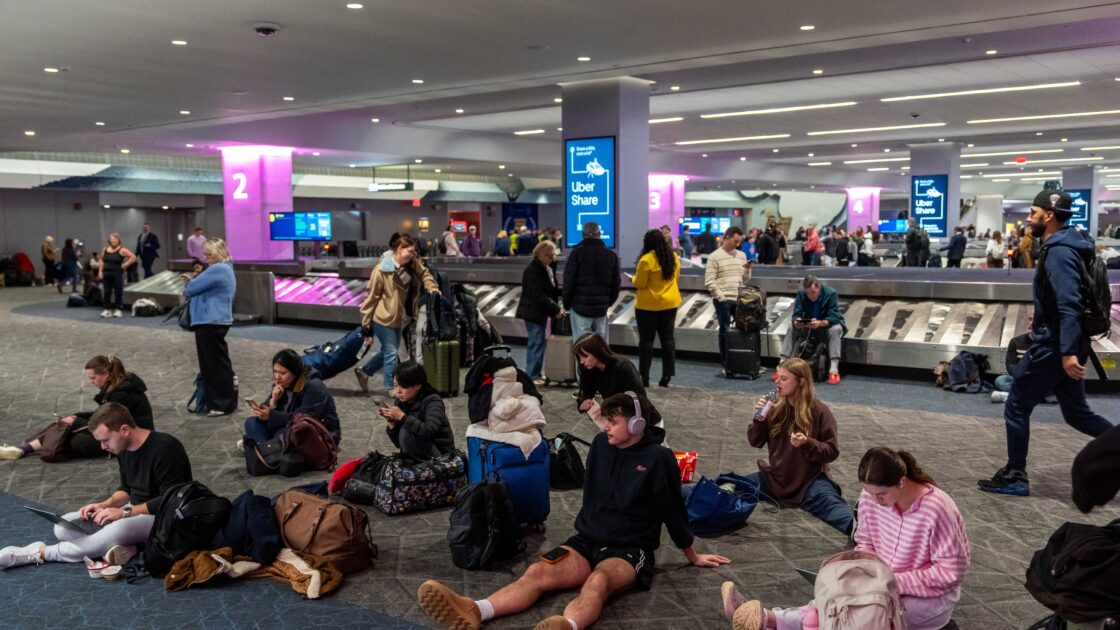
The nationwide directive halted flight departures and affected over one million passengers throughout the United States for a duration exceeding four hours on Friday, November 13. On that day alone, more than 12,000 flights faced cancellation, and that figure climbed past 20,000 over the weekend as affected travelers attempted to secure lodging or alternative travel methods. Select international flights managed to depart before normal air traffic operations resumed.
Investigation into the FTI Network Outage
Nearly a week following the incident, FAA Administrator Bryan Bedford informed journalists that government investigators are nearing the identification of the root cause behind the ground stop, as reported by CNN. Bedford added that Transportation Secretary Sean Duffy intends to reveal the investigation results during a press conference slated for Friday, November 20.
The disruption began when data started overwhelming the FAA Telecommunications Infrastructure network, generating 1,000 connection requests every four to five seconds, detailed an FAA Q&A published on November 15. This network maintains the transmission of essential flight information, alongside audio and visual communications, for air traffic control facilities nationwide.
This technical failure produced instability affecting aircraft communications and radar displays across 17 out of the 22 Air Route Traffic Control Centers responsible for managing en-route aviation traffic. The instability additionally affected multiple Terminal Radar Approach Control locations tasked with directing planes during arrival and departure phases.
An initial inquiry conducted by the agency pinpointed a radar location in Amarillo, Texas, and a radio communication facility situated in El Dorado, Arkansas, as the sources responsible for sending excessive data into the systems. L3Harris, the network service provider for the FAA, was in the process of putting in a new router at the El Dorado location during the event and had recently set up a comparable router within Texas.