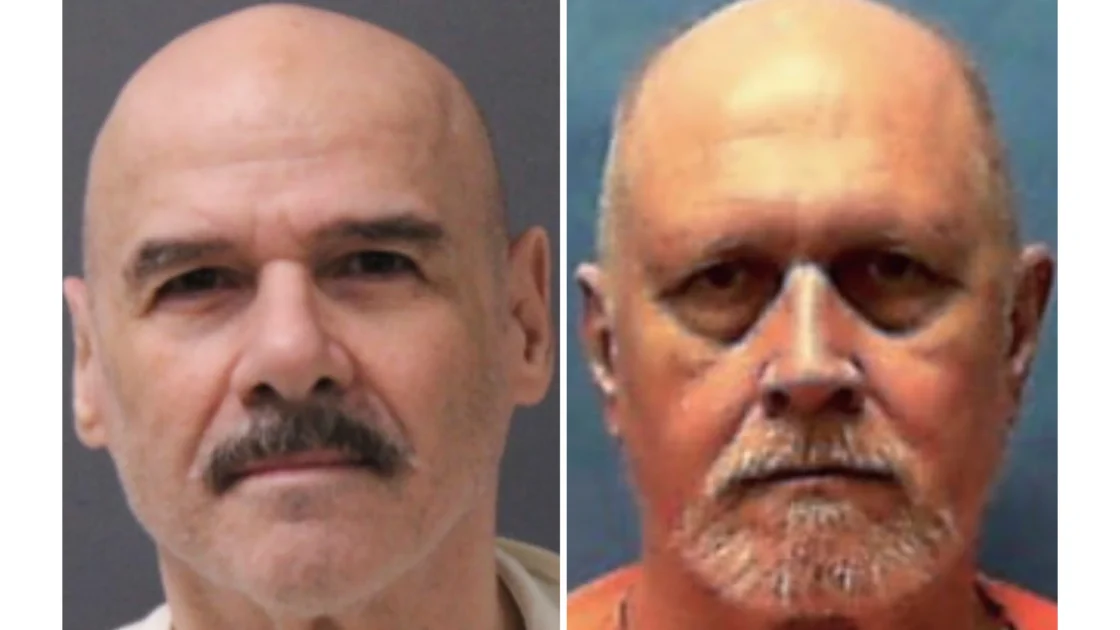
Texas officials executed Reinaldo Dennes on Thursday in a process that spanned more than an hour due to difficulties in securing intravenous access. The procedure, which took place at the state penitentiary in Huntsville, has drawn renewed attention to capital punishment protocols.
Execution Procedure and Complications
The execution process lasted 63 minutes from the time Dennes was secured to the gurney until the procedure concluded at 7:07 p.m. Prison staff struggled to locate a suitable vein for the administration of the lethal sedative pentobarbital. According to Texas Department of Criminal Justice spokesperson Amanda Hernandez, the team eventually inserted the needles into Dennes’ left foot and the left side of his neck.
During the process, Dennes vocalized significant distress. He repeatedly complained of pain, shouted about a cramp in his right leg, and asked for divine intervention to end his suffering. Following the administration of the drugs, he exhibited a series of audible gasps and snoring sounds before his breathing became quiet. He was pronounced dead at 7:08 p.m.
Prison officials maintained that all established procedures were followed correctly. Regarding Dennes’ vocalized pain, Hernandez suggested the inmate may have been exaggerating or faking his distress, noting that he began complaining before the drugs were administered and cited pain in areas where no intravenous lines were placed. “There was nothing abnormal on our part,” Hernandez stated, adding that it is not unprecedented for inmates to claim pain during such procedures.
Legal Background and Context
Dennes had been convicted of capital murder in the 1996 killing of Janos Szucs, a diamond dealer shot in his Houston office. Janice Copeland, whose husband David was a security guard wounded in the same robbery, attended the execution. She remarked that justice had finally been served after three decades.
The execution occurred on the same day Florida carried out its 20th execution of the year, involving 71-year-old Thomas Mitchell Overton. Florida has now performed more than half of the 39 executions recorded in the United States so far this year. Governor Ron DeSantis has pursued an aggressive capital punishment policy, aiming to provide closure for families of victims.
These events follow recent national scrutiny regarding the death penalty, particularly after a failed execution in Tennessee last September involving Christa Pike. Pike survived two doses of pentobarbital, which her legal team argued failed to enter her bloodstream properly, causing severe burning and blistering.
The executions of Dennes and Overton, both men in their 70s, have also highlighted the increasing age of the death row population in the United States. While Texas set a state record of 40 executions in 2000, Florida continues to move forward with plans for additional executions scheduled for December.