Table of Contents
The International Court of Justice (ICJ) has ruled that Myanmar committed genocide against the Rohingya minority ethnic group. Following seven years of deliberations, ICJ President Yuji Iwasawa delivered the historic verdict on Thursday, which marks the first time in the history of the World Court, established in 1945, that a state has been found guilty of committing genocide. The final, unappealable decision stems from a case brought by The Gambia in 2019.
Court Findings and Reparations Order
A panel of 15 judges heard the case, with nine finding that Myanmar committed genocide against the mostly Muslim population. The court detailed that Myanmar security forces killed thousands of Rohingya in Rakhine State, committed widespread sexual violence, and carried out extreme violence against children, establishing an intent to prevent births within the group. Villages were systematically destroyed and replaced with permanent structures for non-Rohingya settlers, while high-ranking officials disseminated anti-Rohingya hate speech portraying the group as subhuman. Furthermore, the court determined that Myanmar violated its obligation to prevent genocide by allowing armed civilians and allied militias to participate in the military campaign.
The ICJ ordered Myanmar to cease all violence, investigate culpable individuals, prosecute and punish the guilty, and guarantee non-repetition. In a landmark move, the court mandated restitution and reparations, requiring Myanmar to facilitate the safe and voluntary return of the Rohingya, restore damaged collective property, assist in locating the disappeared, and provide physical and psychological rehabilitation. While the court did not determine a specific monetary compensation amount, it ordered Myanmar to submit a plan within two years.
Reactions and Legal Significance
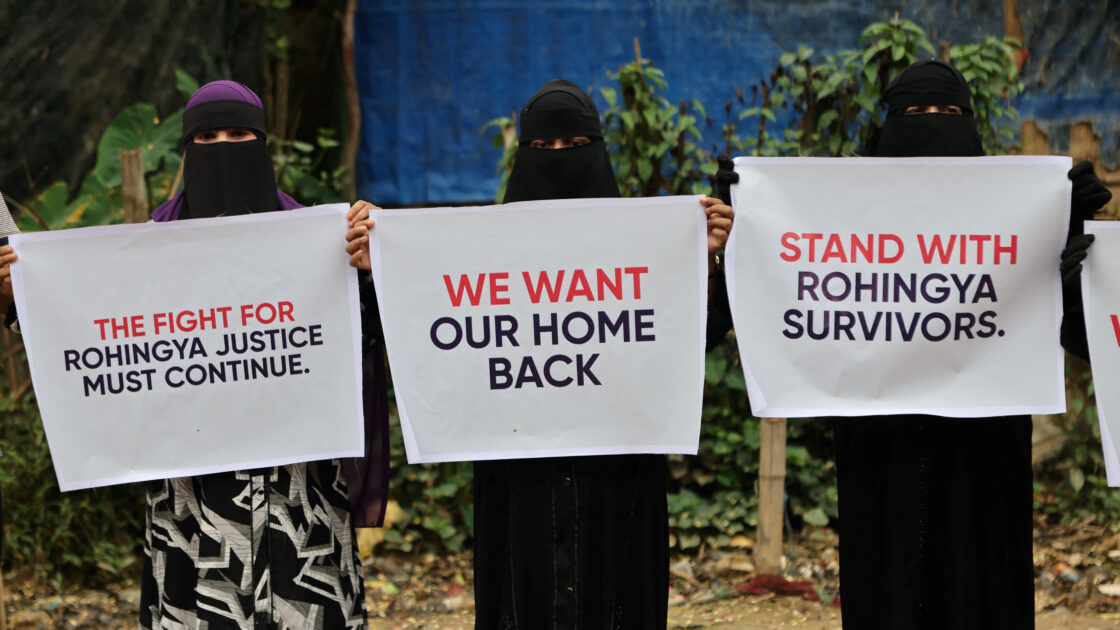
Matthew Smith, a campaigner with Fortify Rights, called the decision a huge day for the Rohingya and all people of Myanmar, noting that it provides momentum toward individual criminal accountability. Arsalan Suleman, lead counsel for The Gambia, described the judgment as a landmark victory honoring the perseverance of victims and survivors. Kyaw Min Sabber, founder of the Rohingya Human Rights Initiative, stated to Al Jazeera ahead of the ruling that the community hopes for safety, justice, and an end to arbitrary displacement and killings.
Because the 1948 Genocide Convention requires proof of specific intent to destroy a group—a threshold that is notoriously difficult to prove—the ICJ has previously never held a state responsible for genocide, even when individuals were convicted. This ruling carries notable weight and could influence other international cases, such as South Africa’s genocide case against Israel.
Background on the Rohingya Crisis
The Rohingya are a Muslim ethnic group primarily based in Myanmar’s western Rakhine State. Until a 2017 military offensive forced approximately 750,000 people to flee into Bangladesh, about 1.4 million Rohingya lived in Myanmar. The government has long maintained they are illegal migrants from Bangladesh rather than indigenous residents, rendering most of the population stateless through a 1982 citizenship law. Successive administrations, including Aung San Suu Kyi’s civilian government, continued this exclusion.
The 2017 military crackdown followed attacks by the Arakan Rohingya Salvation Army, resulting in mass killings, sexual violence, and burned villages. Today, about 1.2 million Rohingya live in crowded camps in Bangladesh, while roughly 520,000 remain in Myanmar under strict limitations. Funding for refugees has dropped following US leadership changes in January 2025 that cut foreign aid.
The Gambia’s Case and Enforcement Challenges
The Gambia initiated the proceedings in November 2019 with backing from the Organisation of Islamic Cooperation. During court hearings, legal teams argued that Myanmar deliberately targeted the Rohingya for destruction, while Myanmar’s leadership consistently denied the allegations, claiming military operations were a necessary response to armed attacks. Eleven countries intervened to support the case.
While the ICJ cannot directly enforce its rulings, The Gambia can bring the matter before the United Nations Security Council. However, severe security concerns persist regarding potential returns, as Myanmar remains embroiled in a civil war following the 2021 military coup, with ongoing fighting between the military and the Arakan Army further destabilizing Rakhine State.
All eyes are now focused on whether Myanmar will comply with the ICJ directives and submit the required report by the November 2028 deadline, while survivors urge supporting nations to maintain pressure on the military and protect refugees abroad.