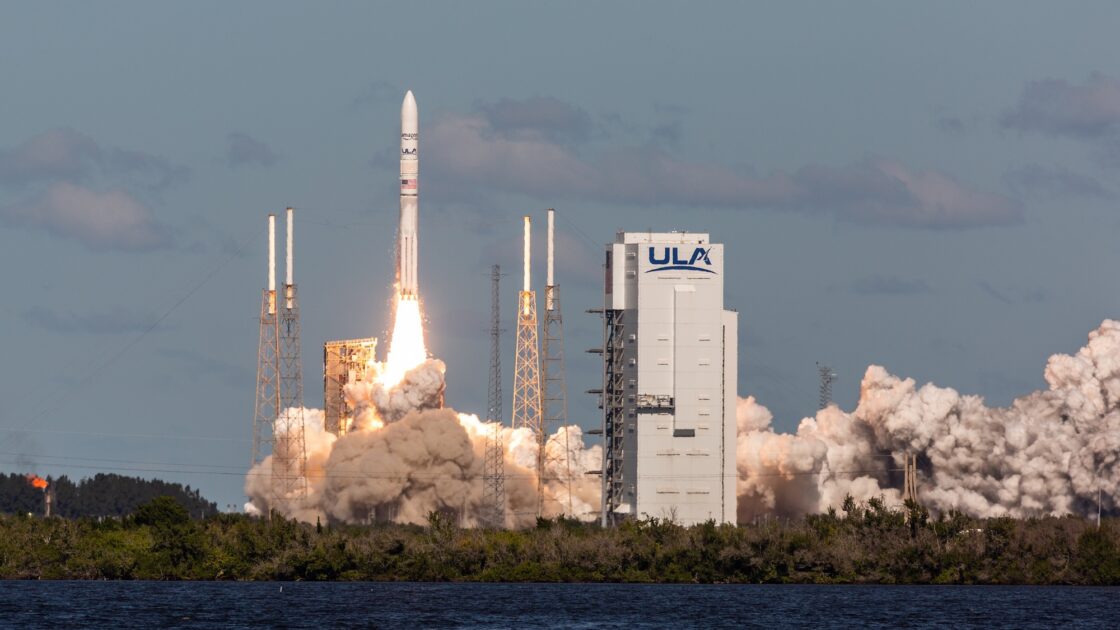
United Launch Alliance announced Wednesday that the failure of its Vulcan rocket during a launch on Sunday stemmed from an insufficient fuel supply to the engines.
In an official statement, the company explained that an initial integrated review of flight data from the Leo 1 launch anomaly has been completed. The firm noted that while investigations to determine the exact cause are ongoing, preliminary indications point to low booster thrust resulting from inadequate fuel delivery from the vehicle to the BE-4 engines, rather than any performance issues with the engines themselves.
As reported by Ars Technica earlier, this new finding confirms that the rocket’s malfunction was unrelated to the main engines supplied by Blue Origin. The revelation offers significant relief to various sectors of the United States aerospace community, especially Blue Origin and NASA.
Significance for Blue Origin
The BE-4 engine serves as the foundational propulsion system for Blue Origin’s New Glenn rocket, which utilizes a similar yet slightly more powerful variant. New Glenn encountered its own major failure in May during a ground test, which was subsequently traced back to a main oxygen valve on one of the BE-4 engines.
Following that incident, Blue Origin implemented retrofits to the main oxygen valve, including those used on Vulcan missions. The preliminary Vulcan investigation has cleared the BE-4 engine of blame, ensuring that this retrofit was not involved in the latest accident and allowing Blue Origin to proceed with its New Glenn return-to-flight mission as early as January.
Blue Origin stated Wednesday that it immediately collaborated with ULA to analyze flight data and assist with the investigation. The company added that together they determined the low booster thrust came from an inadequate fuel supply from the vehicle to the engines, and expressed eagerness to support Vulcan’s return to flight alongside their valued partner ULA.