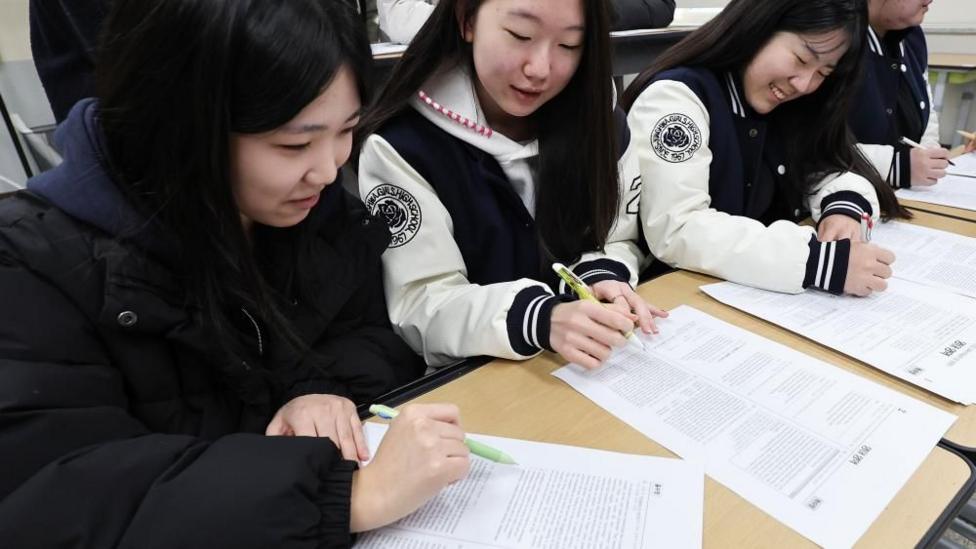
South Korea’s Education Minister Choi Kyo-jin has stepped down following a nationwide exam cheating scandal that provoked widespread public confusion. Choi stated that he bore full accountability for the last-minute policies implemented to prevent artificial intelligence-assisted cheating during Thursday’s crucial university entrance examination, the Suneung.
The Resignation and Exam Controversy
The minister explained on Sunday, as reported by South Korea’s Yonhap news agency, that he could not avoid criticism for inadequate preparation. President Lee Jae Myung subsequently approved the resignation. The high-stakes Suneung lasts up to nine hours and heavily influences the professional paths of millions of citizens.
Public apprehension regarding academic dishonesty escalated recently following revelations that the highest scorer in the national tax accountancy exam in April had utilized artificial intelligence tools. The 34-year-old individual, Han Won-seok, confessed in a video message to employing a microcamera and a smartphone to transmit questions to an artificial intelligence program after missing only a single question out of 160.
Following this confession, the education ministry reported that 111 test-takers were caught with prohibited smart devices during the recent Suneung, which involved approximately 500,000 students.
Emergency Alerts and Strict Security Measures
The late discovery forced officials to deploy emergency protocols shortly before the examination. For the first time, authorities utilized the national disaster warning network to target cheaters, broadcasting three emergency alerts between 08:00 and 15:00 local time on Thursday.
The broadcasts caused mobile phones nationwide to sound simultaneously, overriding silent settings and affecting international visitors utilizing data roaming services, though devices powered off or placed in airplane mode remained silent. Additional precautions required participants to conceal clothing buttons to prevent hidden camera usage, alongside thorough inspections of eyewear.
These stringent checks generated anxiety among honest participants. One senior high school student told the Korea Times he feared authorities would mistake his traditional horn-rimmed glasses for smart eyewear, while another student informed Yonhap that he switched from regular glasses to contact lenses to prevent suspicion.