Table of Contents
Authorities in Bangladesh have dispatched paramilitary forces across the country following a outbreak of political unrest sparked by supporters of ousted Prime Minister Sheikh Hasina. The clashes erupted after the current administration refused to process Hasina’s travel documents, preventing her planned return from self-imposed exile.
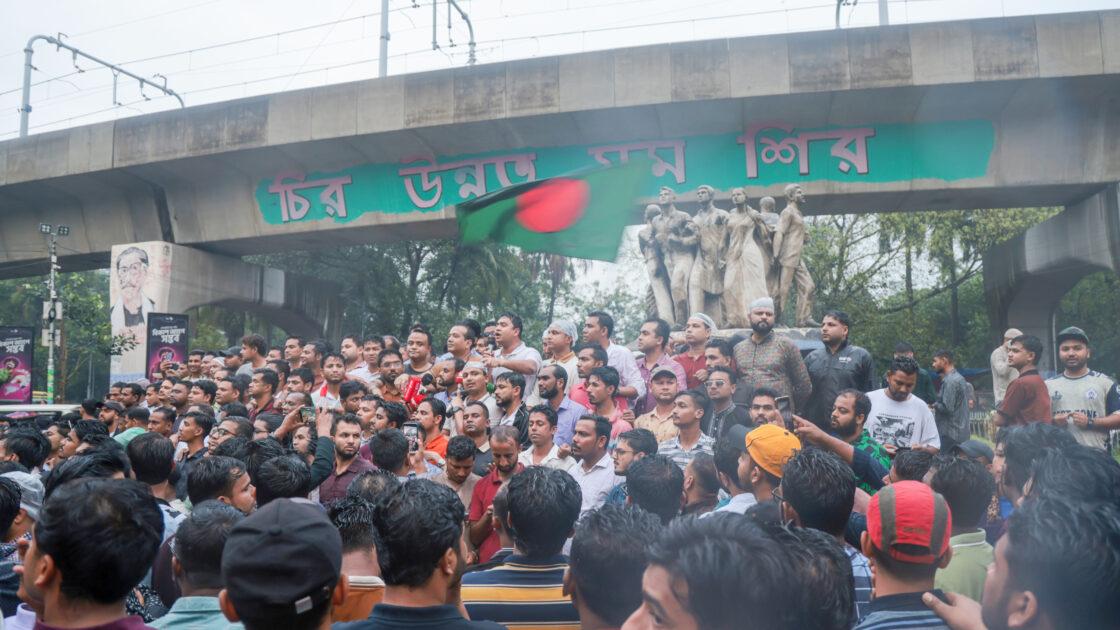
At least four fatalities have been confirmed as demonstrations escalated into arson and widespread destruction targeting financial institutions, police facilities, and property connected to prominent political figures.
Outbreak of Fatal Clashes and Property Destruction
The violence has impacted at least 28 districts since mid-November. Among the four recorded deaths since November 14 are three political activists and a bus worker who died when demonstrators set his vehicle ablaze. Tensions flared sharply in Narail district after two members of the ruling Bangladesh Nationalist Party (BNP) were killed, prompting retaliatory arson attacks against more than a dozen residences belonging to Awami League supporters.
Speaking to news agency AFP, one Narail resident reported that as many as 50 homes were damaged during the retaliation. “We are terrified by the clashes,” he said, adding that families had instructed women and children to remain indoors.
In Chittagong, arsonists targeted the ancestral residence of Nobel Peace Prize laureate Muhammad Yunus, who previously led the interim administration and faced intense political pressure during Hasina’s government. Chittagong Metropolitan Police spokesman Aminur Rashid stated that “criminals set fire to the eastern side of the house” which was being utilized for storage, confirming that no injuries occurred. Meanwhile, Grameen Bank reported that 22 of its branch offices were subjected to arson attacks.
To restore public order, 90 additional platoons of the Border Guard Bangladesh (BGB) were dispatched nationwide. National police chief Md Ali Hossain Fakir stated that security had been stabilized in Gopalganj, a primary stronghold for the Awami League, while urging “the peace-loving people of this area to stand against those involved in sabotage and disorder.”
Rejection of Return and Extradition Demands
The recent unrest was triggered after the administration under Prime Minister Tarique Rahman denied Hasina’s application for a new passport and national identity card on November 9. Hasina, who governed Bangladesh from 1996 to 2001 and again from 2009 until her removal in August 2024, fled to India following a massive student-led uprising. The International Crimes Tribunal in Dhaka subsequently issued a death sentence against her in absentia for crimes against humanity linked to the crackdown on those demonstrations, which the United Nations estimates claimed up to 1,400 lives.
Although Hasina told Reuters on November 9 that she intended to return home to present herself before the judicial system, Bangladeshi officials rejected her request. State Minister for Foreign Affairs Humaiun Kobir affirmed that “Bangladesh does not give passports to terrorists who kill thousands of people and flee,” stating that the country will utilize existing extradition treaties with India to secure her custody. Bangladeshi prosecutor Md Aminul Islam emphasized that “Sheikh Hasina has no option but to face the execution of the verdict.”
In a parliamentary address, Prime Minister Rahman directly criticized India for harboring the former leader, asserting that Awami League loyalists continue to take instructions from abroad to disrupt national stability.
Political Ramifications and Strategic Analysis
Khandakar Tahmid Rejwan, a lecturer at Independent University, Bangladesh and contributing analyst at the Jamestown Foundation, told Al Jazeera that the demonstrations appear largely localized rather than representing a nationwide surge. He noted that active protests remain concentrated in traditional Awami League strongholds such as Gopalganj, Faridpur, and Madaripur.
Rejwan explained to Al Jazeera that Hasina’s focus on returning stems from multiple factors, including ongoing domestic economic pressures faced by the current administration, discussions regarding the political status of the Awami League, and lingering diplomatic backing from India. However, senior Bangladeshi diplomat Mushfiqul Fazal Ansarey told Al Jazeera that Hasina has no genuine intention of facing justice. “In my assessment, her talk of a comeback is intended to rally supporters and destabilize Bangladesh,” Ansarey said, citing an incident where Awami League supporters allegedly targeted the entourage of Bangladeshi lawmaker Nahid Islam during a visit to Romford in east London.
To fortify political stability, Prime Minister Rahman has opened high-level dialogues with opposition leaders, including Jamaat-e-Islami chief Shafiqur Rahman. Jamaat Secretary-General Mia Golam Porwar welcomed the talks, indicating that a unified political framework could help advance democratic governance and counter potential security challenges.