Table of Contents
The U.S. Environmental Protection Agency’s (EPA) specialized chemical-detection aircraft, known as Aspect, is increasingly remaining grounded during major industrial disasters. Once a critical tool for monitoring toxic leaks, oil spills, and radiation, the plane has responded to only seven emergencies since early 2021, according to reporting by the non-profit newsroom Floodlight.
A Diminished Emergency Response
The Cessna aircraft was designed to provide rapid aerial analysis of hazardous chemical plumes, a capability that proved vital during events ranging from Hurricane Katrina to the Deepwater Horizon oil spill. However, recent incidents—including an ammonia leak in Oklahoma, a refinery fire in Texas, and a fatal explosion at an Ohio recycling plant—saw the plane remain idle. Mark Thomas, a former EPA official who managed the program for 18 years, told Floodlight that a decade ago, the aircraft would have been deployed to all such incidents.
A June report from the EPA’s inspector general identified a significant technical failure: the plane can no longer identify chemicals in real-time. Instead, data must be processed manually, a task that takes approximately one week. This delay renders the information ineffective for local officials who need immediate data to decide whether to order evacuations.
Management and Expertise Concerns
Former program staff attribute the decline to an internal reorganization in 2019, which forced experienced personnel to relocate to Texas or face termination. Thomas and other experts told Floodlight that the agency failed to replace these specialists with individuals skilled in airborne chemical detection. Furthermore, while managers previously took the initiative to track emergencies and push for the plane’s deployment, the agency now reportedly waits for local coordinators to request it.
The EPA stated that the plane’s current sensors are aging and expects replacement technology to be operational by mid-2027. However, former scientists Robert Kroutil and Rick Turville argue that the agency is addressing the wrong issue. They contend that the existing sensors remain functional and that the program’s failure stems from a loss of institutional expertise and operational initiative.
Failures in Recent Deployments
Investigations into recent missions have highlighted significant mismanagement. During the 2023 East Palestine, Ohio, train derailment, the plane was not requested for over two days, missing the critical “vent-and-burn” operation. When it finally deployed, it collected only eight minutes of data. An investigation by the EPA’s inspector general later concluded that the agency failed to properly document procedures or inform responders about the plane’s capabilities.
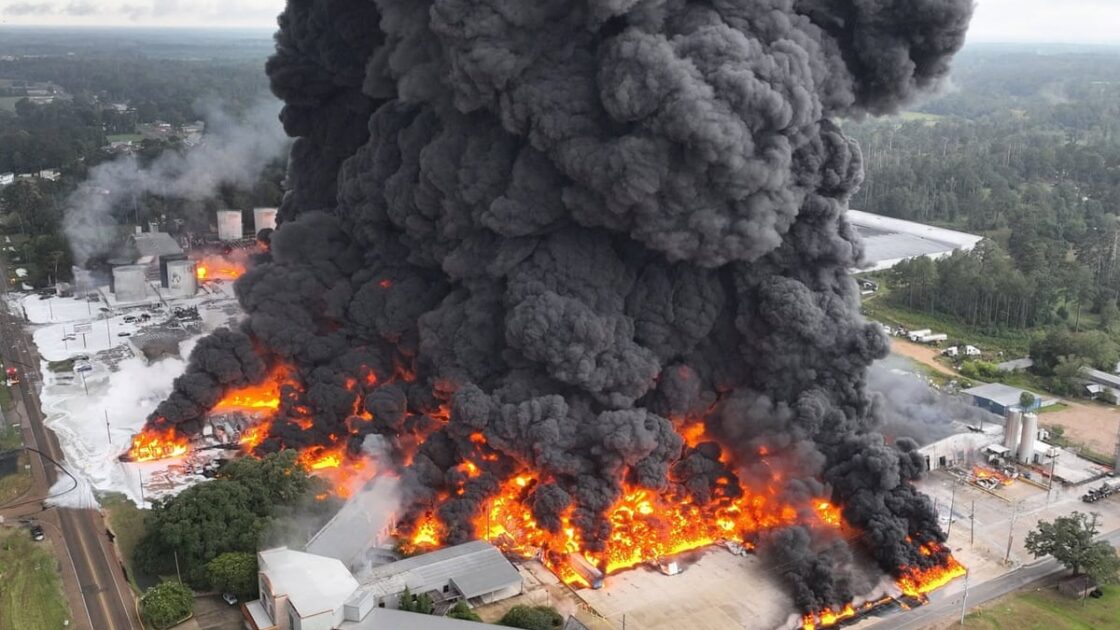
In August 2025, following an explosion at Smitty’s Supply in Louisiana, the EPA deployed the plane for the first time in 19 months. While the agency publicly declared the air safe, a subsequent analysis of the raw flight data by a former Aspect scientist revealed high concentrations of toluene, a neurotoxicant, and other carcinogens. Local residents, such as Ronnie Polezcek, reported that their property was covered in oily residue long after the EPA’s initial assessment.
Future of the Program
The EPA has awarded a $1.7 million contract to the Canadian firm Telops for new sensors, bypassing competitive bidding. While the parent company, Exosens, maintains that its systems can identify hundreds of chemicals, independent expert Chris Manning warned that the new technology may be less sensitive and slower than the original equipment. Former program leaders remain skeptical that the hardware upgrade will resolve the underlying issues.
“I fear that the public is at risk,” Kroutil told Floodlight. “It’s such an important program, and they’ve allowed it to waste away to nothing.” The EPA did not respond to inquiries regarding the program’s decline or the effectiveness of the planned sensor replacements.