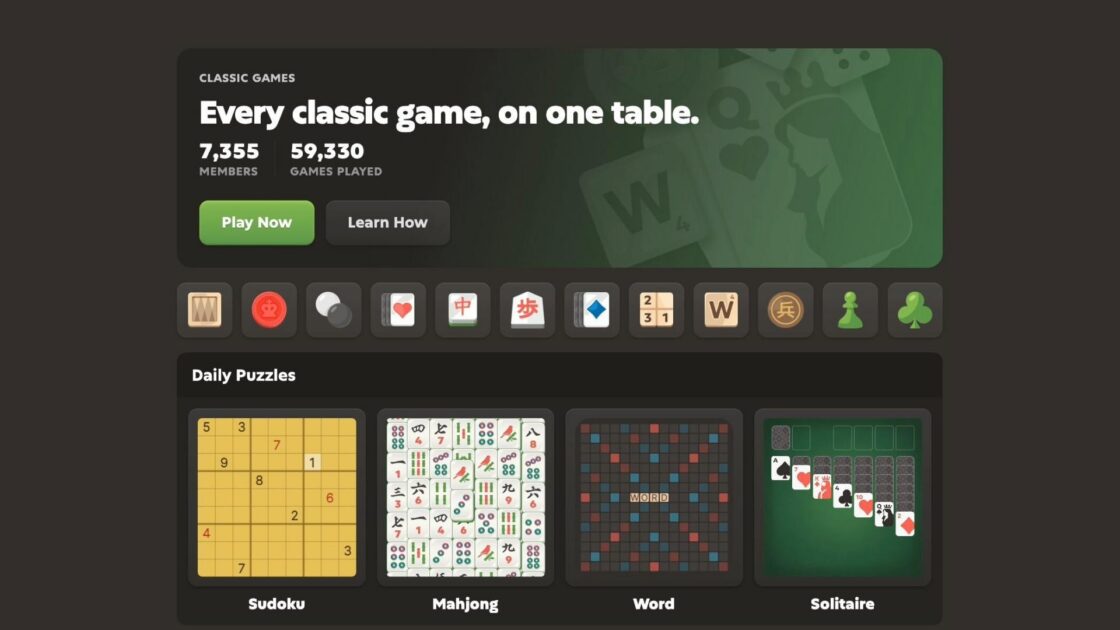
Chess.com is expanding its platform beyond chess by introducing 10 classic games, including backgammon, checkers, go, hearts, mahjong, shogi, sudoku, solitaire, xiangqi, and a word game. These additions form the new Classic Games platform, which is launching a public beta on the web and through a dedicated app for iOS and Android.
Filling a Community Gap
Chief growth officer Albert Cheng told The Verge that the expansion addresses a demand from users who run local game nights and lack a centralized platform like Chess.com. While some offerings like shogi and xiangqi are strategy games akin to chess, others include sudoku, solitaire, and word puzzles. Cheng explained to The Verge that the selection came from community feedback, market research, and confidence in serving each game well, focusing on titles with lifelong learning journeys and communities.
The new platform mirrors the familiar features of Chess.com, offering lessons, leaderboards, and rating systems for each game. Multiplayer options allow matches against other players or familiar bot characters such as Martin. Individual titles also feature specialized modes, including puzzles for word and mahjong, daily grids for sudoku, and daily deals for solitaire.
Core Focus and AI Development
Despite the broader expansion, Cheng stated that chess remains the company’s primary focus, noting that daily active users have reached historic highs. Less than 1 percent of the company is fully dedicated to building new games.
The rapid rollout of 11 new games in just months was achieved by a small team utilizing artificial intelligence primarily for coding tasks. Cheng told The Verge that the team used a similar approach to how they built the gambling-free poker site Gambit earlier this year. Building upon the existing Chess.com codebase, design system, and bot characters allowed the team to move quickly with AI assistance.
However, Cheng emphasized that AI was not utilized for art and design, which were carefully crafted by human creators. He noted that the company is actually hiring more people on the art and design side as creative roles become more important. Chess.com has a long history with artificial intelligence, noting that human players have learned alongside machines for about 30 years since Garry Kasparov played IBM’s Deep Blue supercomputer in 1996. Cheng indicated that the platform will likely continue to expand with even more games in the future.