Table of Contents
A mathematician at artificial intelligence company Anthropic announced he has solved the Riemann Hypothesis with assistance from the company’s AI tool, Claude. This development marks the second instance in recent months of an AI-linked breakthrough on a historic, unsolved mathematical problem.
A Historic Mathematical Claim
Levent Alpöge, a member of Anthropic’s technical staff, shared a four-page explanation on his website detailing how he believes he found a proof for the Riemann Hypothesis in collaboration with Claude. Formulated in 1859, the Riemann Hypothesis focuses on the distribution of prime numbers as they approach infinity.
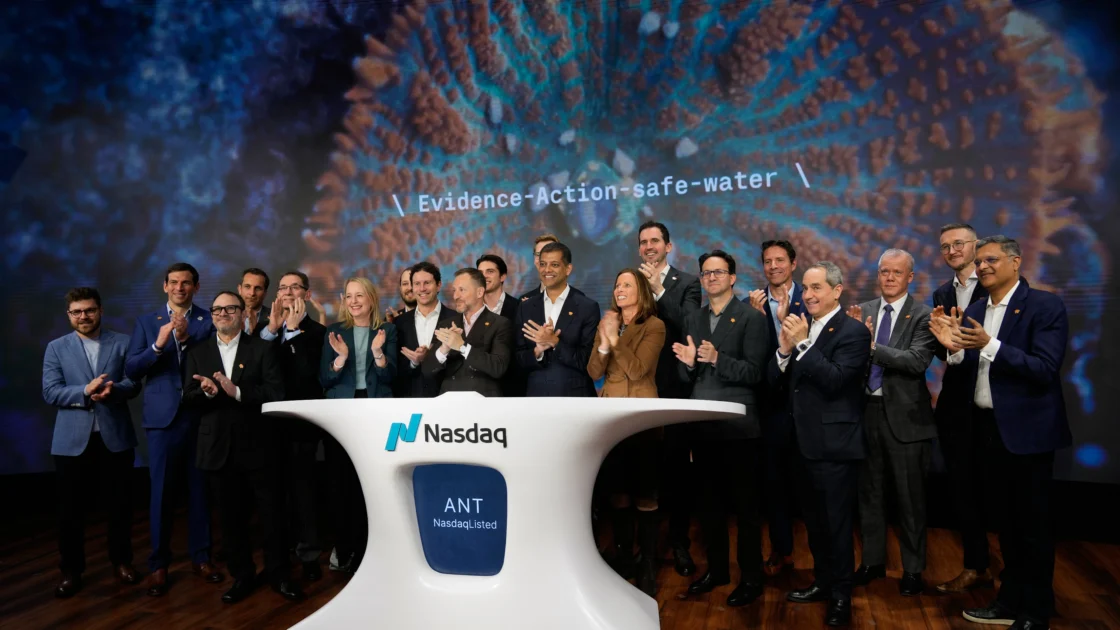
Alpöge stated that the discovery happened late Sunday night, prompting him to message Anthropic CEO Dario Amodei about making an announcement just as the San Francisco-based company prepared for its stock market debut. Anthropic did not respond to an email from The Associated Press requesting comment on the claim.
Verification and Code
Alpöge and Claude released the proof inside 17 million lines of Lean code, a programming language designed to verify mathematical theorems. Alex Kontorovich, a distinguished professor and department chair of mathematics at Rutgers University, explained that traditional findings are typically published in a formal paper that requires exhaustive human reading and verification.
Kontorovich noted that Claude followed the code and indicated the proof is correct. He added that while computers are exceptionally picky and satisfying them carries significant weight, human mathematicians still need to do the underlying work to fully understand the proof.
Evaluation Process
The Clay Mathematics Institute kept the Riemann Hypothesis listed as unsolved on its website hours after the announcement. In 2000, the institute selected the hypothesis as one of seven Millennium Prize Problems and attached a $1 million reward for its solution.
Martin Bridson, president of the institute, stated that verifying the solution will take time. He called the announcement a historically significant development that could radically transform how people perceive the limits of human mathematical understanding, while noting that the path to true comprehension will be long and difficult.
Alpöge acknowledged that he is presenting a complete argument before mastering the surrounding mathematics entirely, noting that his work with the AI produced more than 250,000 pages of material. Kontorovich highlighted that this follows a September announcement from OpenAI regarding a breakthrough with the Navier-Stokes fluid flow equations, calling the rapid succession of achievements an astonishing experience.
The announcement followed Anthropic’s record-breaking Wall Street debut, where the company raised $81 billion at a $1.5 trillion valuation. Amodei has previously expressed an optimistic outlook regarding AI’s potential to drive major advancements in scientific and mathematical research, while also cautioning against the risks associated with the technology.