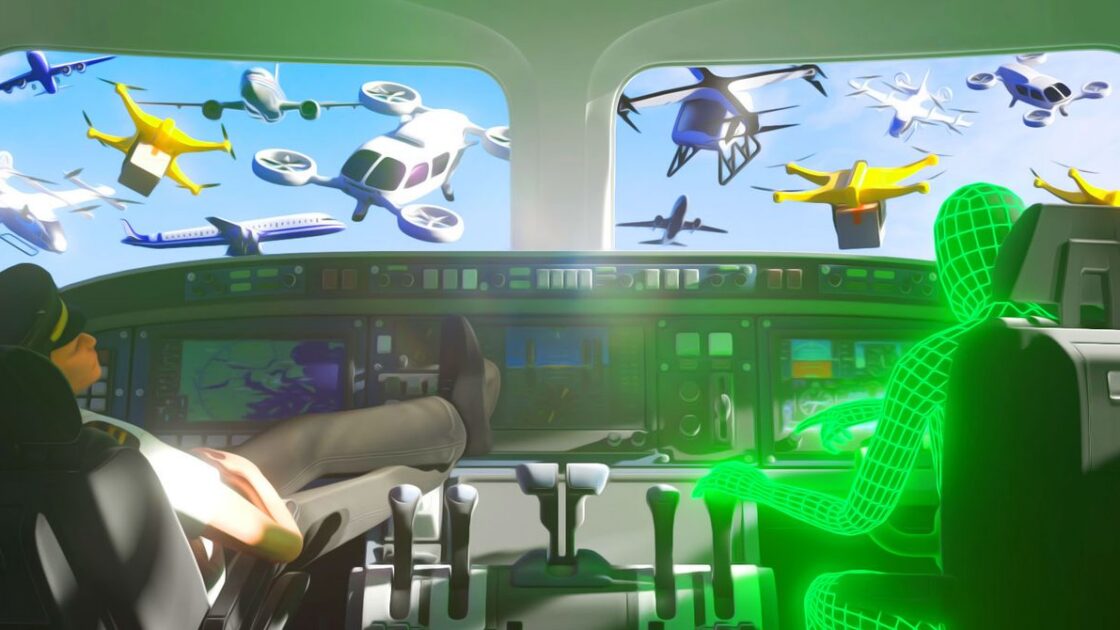
Artificial intelligence is rapidly reshaping the aviation industry, highlighted by a recent coast-to-coast flight of a single-engine Cessna Caravan that navigated busy airspace and avoided storms without any human touching the controls. While a safety pilot was aboard at all times during the 3,200-mile trip carried out by Joby Aviation, the pilotless journey marks a major milestone as the traditionally conservative air travel sector embraces automation.
The Rise of Drones and Electric Air Taxis
Following a 2007 federal mandate requiring aircraft to be equipped with ADS-B tracking signals, major companies like Amazon and Walmart have invested heavily in drone delivery services. At the same time, startups developed electric vertical takeoff and landing aircraft, or eVTOLs, designed to carry passengers on short hops. Joby unveiled its S4 model to carry a pilot and four passengers, though commercial launches faced delays as companies navigated airspace design, training, and economic frameworks.
In Europe, plans by Airbus and Dassault to permit single-pilot airliners met strong resistance from the European Cockpit Association, a union of airline pilots, leading the European Union aviation safety agency to shelve the proposal. Meanwhile, the Federal Aviation Administration has expanded delivery-drone permissions and launched the eVTOL Integration Pilot Program, with companies conducting demonstration flights in cities like New York.
New Air Traffic Management and Safety Concerns
The FAA deployed an AI-powered software called Strategic Management of Airspace, Routes and Trajectories (SMART) to predict scheduling snags and reduce flight delays. According to an FAA press release quoted by WIRED, administrator Bryan Bedford stated that combining SMART with hardware upgrades helps optimize traffic while maintaining safety standards. However, a recently retired FAA employee warned WIRED that pushing through new technology without understanding national airspace complexity could be disastrous.
Democratic lawmakers expressed concerns in a letter to the Government Accountability Office regarding potential safety-critical information hallucinations. Critics also worry the technology could worsen the air traffic controller shortage, especially after the FAA reduced active staffing targets. Conversely, supporters like Embry-Riddle Aeronautical University professor Michael McCormick told WIRED that predictive tools help spot conflicts early, noting that early awareness reduces the effort required to resolve them.
As researchers focus on deterministic neural networks to avoid hallucinations, future autonomous corridors near drone hubs and eVTOL vertiports will rely increasingly on AI to manage high volumes of air traffic. WIRED clarified Greg Bowles’s job title in an update to the report.