Table of Contents
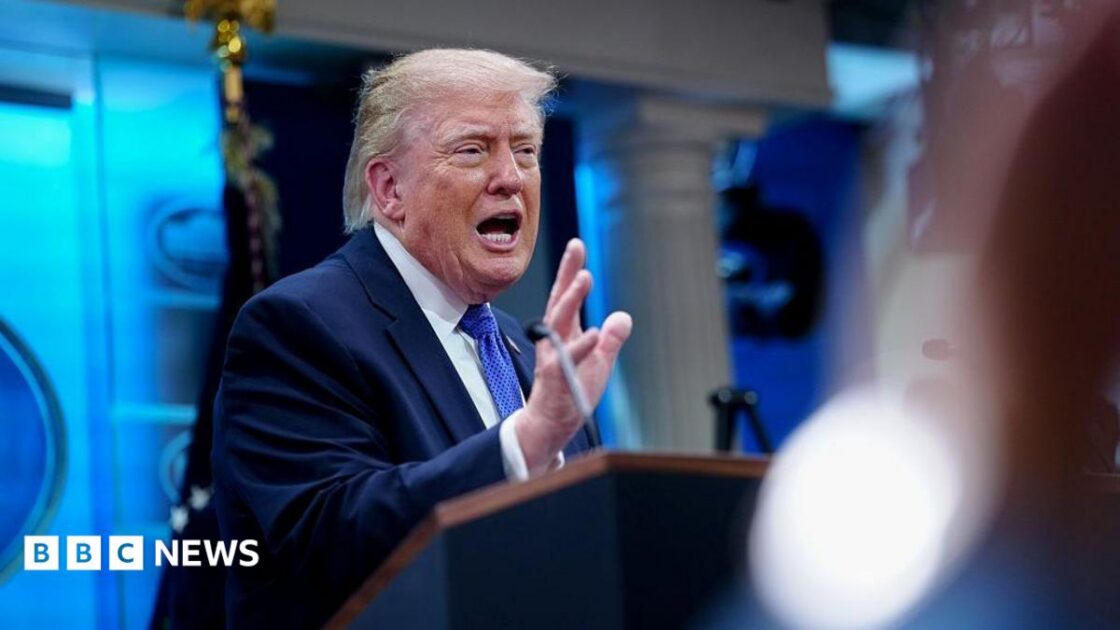
US President Donald Trump announced that he intends to ban American companies from constructing artificial intelligence data centres outside the United States, warning that tech firms doing so would face a heavy tax. During a press briefing following a trip to Asia, Trump stated his administration wants to keep all such infrastructure domestically to prevent China from gaining an advantage in artificial intelligence development.
Uncertainty Surrounding the Policy
Trump provided minimal details regarding the potential policy, admitting to reporters that members of his cabinet were hearing about the proposal for the first time. Major technology companies, including Meta and Google, have already established agreements to build data centres internationally, and it remains unclear how such a ban would be enforced if implemented.
The announcement follows a move by Washington to restrict exports of advanced computer chips and regulate access to computing power. Under the rules announced on Monday, companies require a licence to purchase advanced chips so officials can track whether the technology serves Chinese firms or is smuggled into China, a measure that affects Southeast Asian nations heavily invested in data centres.
The Role and Growth of Data Centres
Data centres serve as essential infrastructure for the artificial intelligence boom, housing the servers and advanced computer chips required to operate AI programmes like ChatGPT and Claude. Data from the Pew Research Centre indicates that roughly 3,000 data centres existed across the United States as of April, with an additional 1,500 in approval and construction phases.
Construction of these warehouse-style facilities often takes place in rural areas, sparking local concerns regarding energy consumption and noise pollution. These environmental and community issues became a central focus during the midterm elections in November, where various Democratic candidates won campaigns by pledging stricter regulations on data centre development.
Addressing these domestic concerns, Trump argued that communities should leverage the economic benefits of the facilities rather than reject them. He noted that numerous US locations possess the necessary energy and resources to serve as assets for such projects.
International Expansion by Tech Giants
As US communities push back against new builds, large technology companies have looked abroad. Canada has emerged as an alternative location with fewer local obstacles, resulting in Meta beginning construction on a data centre in Alberta and Anthropic signing a long-term agreement to lease a proposed facility in Nova Scotia.
Meanwhile, Google announced a €13bn ($15bn: £11bn) investment in September for AI infrastructure in Finland, encompassing three data centres, though construction on two of those sites was paused last month due to local concerns over clearing more than 300 hectares of forest. Trump specifically referenced the Finland project during his remarks, reiterating that his administration would prevent such overseas developments.
The BBC has contacted both Meta and Google for comment regarding the president’s statements.